Learn More

Description
The primary mechanism by which cytotoxic T cells eliminate virally infected cells is by granule exocytosis. The release of cytotoxic granule contents by cytotoxic T lymphocytes (CTL) triggers apoptotic target cell death. CTL granules contain a pore-forming protein, perforin, and a group of serine proteases called granzymes. In the classic model, perforins create holes in the target cell membrane, allowing entrance of the granzymes. Granzyme A and B are the predominant granzymes activated after CTL activation, but each act via an independent apoptotic pathway; granzyme B is activated immediately, while granzyme A acts hours later. Granzyme B does not induce cleavage of caspase-3, lamin B, rho-GTPase or PARP, but does cleave DNA-PKcs and nuclear mitotic apparatus protein (NuMA). The physiological substrates for granzyme A in the apoptotic pathway have not been identified. Studies involving mice which are deficient in both granzyme A and B suggest a model whereby the granzyme B pathway may have evolved as the major apoptotic pathway with the granzyme A pathway acting as a backup. However, further research is needed to delineate the components of the distinct pathways.
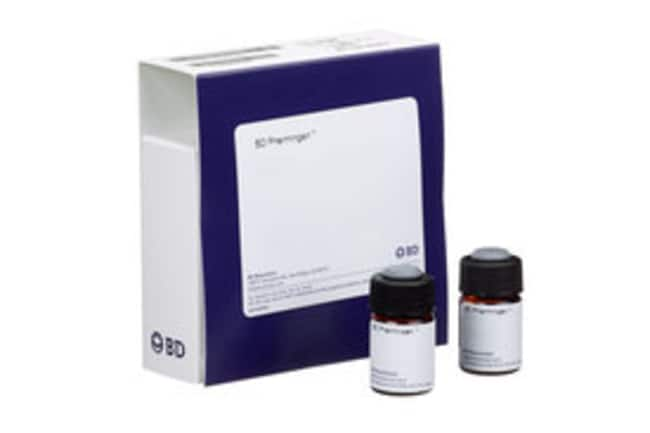
Clone CB9 recognizes human granzyme A. Purified human granzyme A was used as immunogen. Clone MOPC-21 is a mouse IgG1 isotype (negative) control. The MOPC-21 antibody has unknown specificity. CB9 and MOPC-21 FITC conjugates are optimized in F/P ratios.
The antibodies are routinely tested in parallel by flow cytometry. Other applications were tested at BD Biosciences Pharmingen during antibody development only or reported in the literature.

Specifications
Specifications
| Antigen | Granzyme A Set |
| Applications | Flow Cytometry |
| Classification | Monoclonal |
| Clone | CB9 |
| Conjugate | FITC |
| Host Species | Mouse |
| Purification Method | Affinity Purified |
| Quantity | 100 Tests |
| Regulatory Status | RUO |
| Primary or Secondary | Primary |
| Show More |
By clicking Submit, you acknowledge that you may be contacted by Fisher Scientific in regards to the feedback you have provided in this form. We will not share your information for any other purposes. All contact information provided shall also be maintained in accordance with our Privacy Policy.