Promotional price valid on web orders only. Your contract pricing may differ. Interested in signing up for a dedicated account number?
Learn More
Learn More
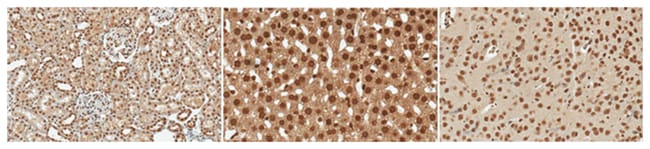
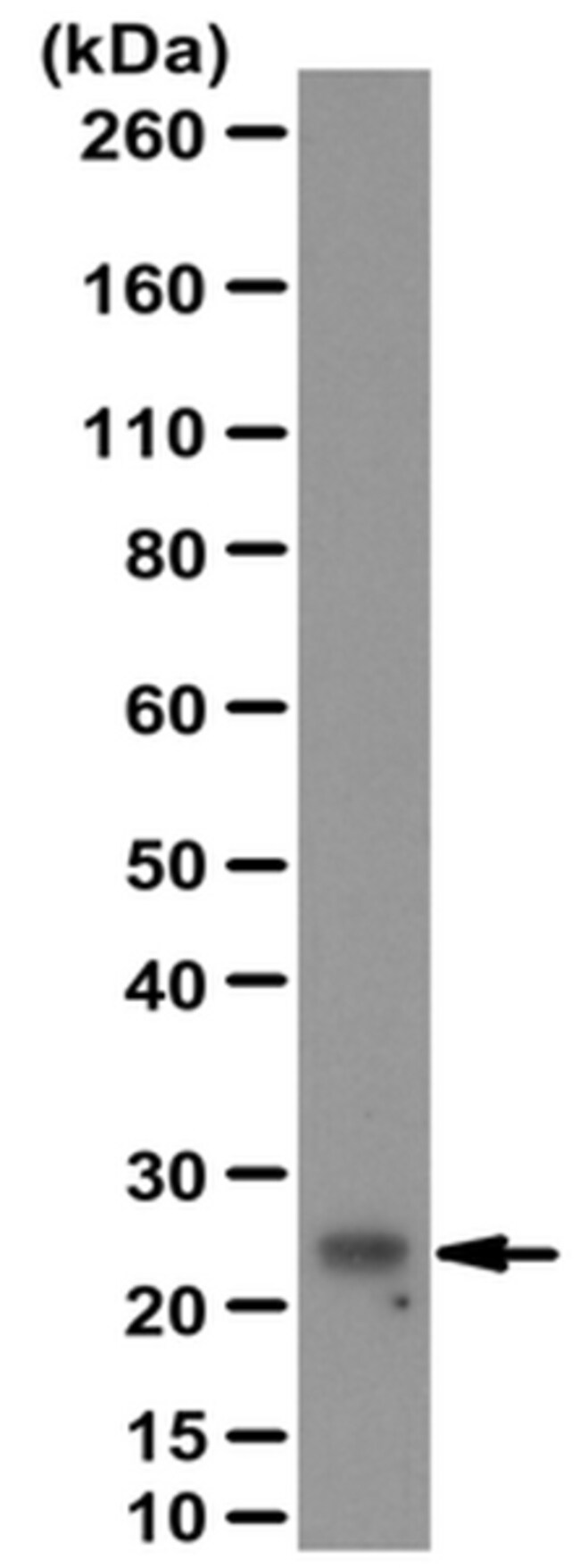
Description
Specifically detects GSTA4 Clone: in Mouse, Rat samples, and it is validated for Immunohistochemistry (Paraffin), Western Blotting
Glutathione S-transferase alpha-4 (EC:2.5.1.18; UniProt P14942; also known as Glutathione S-transferase A4, Glutathione S-transferase Yk, GST 8-8, GST A4-4, GST K, GST Yk) is encoded by the Gsta4 gene (Gene ID 300850) in rat. Glutathione S-transferases constitute a family of isozymes that are involved in detoxification by catalyzing the conjugation of the reduced form of glutathione (GSH) to xenobiotic substrates. The GST family can be subdivided into the cytosolic, mitochondrial, and microsomal (a.k.a. MAPEG) proteins. Mammalian GSTs exist either as homodimers or heterodimers. The individual monomers were historically characterized by their quaternary structure and size, Yf (24.5kDa), Yk (25kDa), Ya1 (25.5kDa), Ya2 (25.5kDa), Yn (26.5kDa), Yb1 (27kDa), Yb2 (27kDa) and Yc (28.5kDa). The Y designation refers to the Y fraction (as opposed to the X and Z fractions) that were found during purification by Sephadex G75 chromatography. Two GST superfamilies exist that comprise either cytosolic or membrane-bound proteins. Evidence suggests that cytosolic GST increases bodily resistance to carcinogens, products of oxidative stress, environmental pollutants and certain anti-cancer drugs. The cytosolic GSTs are further subdivided into eight classes, namely alpha (GSTA), mu (GSTM), pi (GSTP), sigma (GSTS), theta (GSTT), kappa (GSTK), zeta (GSTZ), and omega (GSTO). GSTA4 exists as a homodimer composed of two Yk subunits.

Specifications
Specifications
| Antigen | GSTA4 |
| Applications | Immunohistochemistry (Paraffin), Western Blot |
| Classification | Polyclonal |
| Conjugate | Unconjugated |
| Formulation | Rabbit polyclonal antibody in serum with 0.05% sodium azide. |
| Gene Accession No. | P14942 |
| Gene Symbols | Gsta4 |
| Host Species | Rabbit |
| Immunogen | Purified rat liver GST K (YkYk). |
| Purification Method | Unpurified |
| Show More |
For Research Use Only
Product Title
By clicking Submit, you acknowledge that you may be contacted by Fisher Scientific in regards to the feedback you have provided in this form. We will not share your information for any other purposes. All contact information provided shall also be maintained in accordance with our Privacy Policy.
Spot an opportunity for improvement?