Learn More
Description
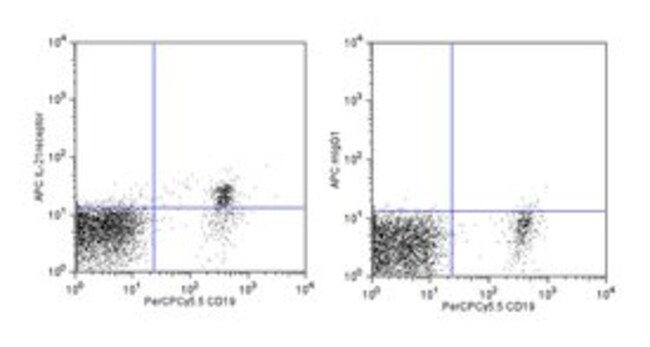
IL-21 receptor (IL-21R) encodes a 538 amino acid cytokine receptor with an extracellular domain consisting of one copy of the conserved WSXWS -containing cytokine-binding domain. The IL-21 receptor combines with the common cytokine-receptor γ-chain to form a functional receptor for IL-21. IL-21 is mainly produced by CD4+ T cells. IL-21R is preferentially expressed by B cells, T cells, NK cells, some populations of myeloid cells, keratinocytes, and dendritic cells. Binding of its ligand, IL-21, in these cells results in the activation of the Jak/Stat signal transduction pathway. The effects IL-21 ligand binding has pleiotropic actions such as augmenting the proliferation of T cells, driving of B cells into memory cells, terminally differentiating plasma cells and augmenting the activity of natural killer cells. IL-21 receptor has anti-tumor activity and might have a role in the development of autoimmunity; it has been reported that the IL-21 receptor affects the homeostasis of regulatory T cells and it could enhance T cell-activated responses in human immune-inflammatory diseases.
Host Species: Mouse
Clone: 17A12
Isotype: IgG1 κ
Species Reactivity: Human
Flow Cytometry

Specifications
Specifications
| Antigen | IL-21R |
| Applications | Flow Cytometry |
| Classification | Monoclonal |
| Clone | 17A12 |
| Conjugate | APC |
| Description | Interleukin-21 receptor; CD360; NILR |
| Formulation | Aqueous buffered solution containing BSA and ≤0.09% sodium azide. |
| Host Species | Mouse |
| Immunogen | Human IL-21R Transfected Cell Line |
| Purification Method | Affinity Purified |
| Show More |
By clicking Submit, you acknowledge that you may be contacted by Fisher Scientific in regards to the feedback you have provided in this form. We will not share your information for any other purposes. All contact information provided shall also be maintained in accordance with our Privacy Policy.