Learn More
Description
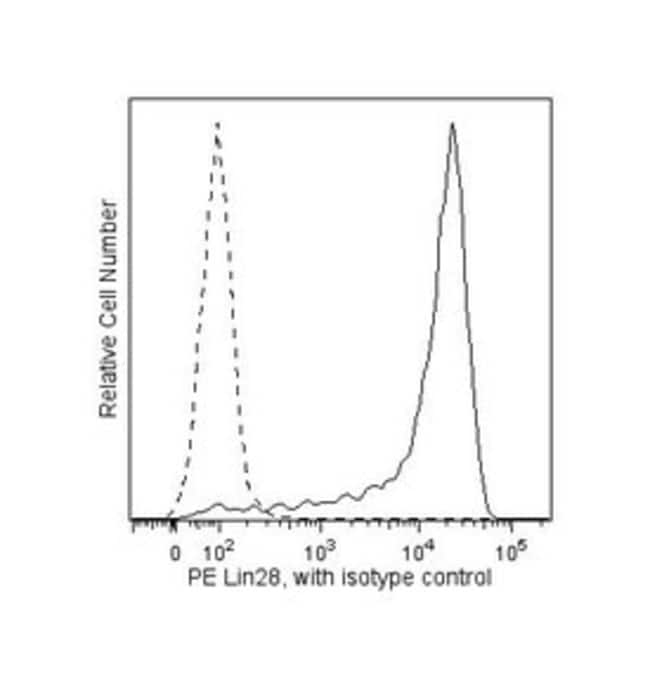
Lin-28 is an evolutionarily conserved RNA-binding protein that is expressed in embryonic tissue, embryonic stem cells, and some adult tissues (e.g. cardiac and skeletal muscle). Within these cells, it is localized to ribosomes, P-bodies, and stress granules. During embryonic development, Lin-28 acts as a “translational enhancer” by binding to certain mRNAs and increasing their translation efficiency. Additionally, Lin-28 is overexpressed in some human cancer cell lines and is associated with the malignant transformation of cells as well as advanced human malignancies. This role is thought to be tied to the binding of Lin-28 to pre-microRNA of let-7, which in its mature form promotes terminal differentiation of stem cells and suppresses tumors. The binding of Lin-28 to the immature version of let-7 blocks its cleavage into mature microRNA, thereby preventing it from carrying out its function in tumor suppression. Lin-28, in combination with additional factors, has been used to reprogram human somatic cells into induced pluripotent stem cells.

Specifications
Specifications
| Antigen | Lin-28 |
| Applications | Flow Cytometry |
| Classification | Monoclonal |
| Clone | 6D1F9 |
| Conjugate | PE |
| Description | Lin-28A, LIN28A, CSDD1, LIN28, ZCCHC1 |
| Formulation | Aqueous buffered solution containing BSA and ≤0.09% sodium azide. |
| Host Species | Mouse |
| Immunogen | Human Lin-28 Recombinant Protein |
| Purification Method | Affinity Purified |
| Show More |
By clicking Submit, you acknowledge that you may be contacted by Fisher Scientific in regards to the feedback you have provided in this form. We will not share your information for any other purposes. All contact information provided shall also be maintained in accordance with our Privacy Policy.