Learn More
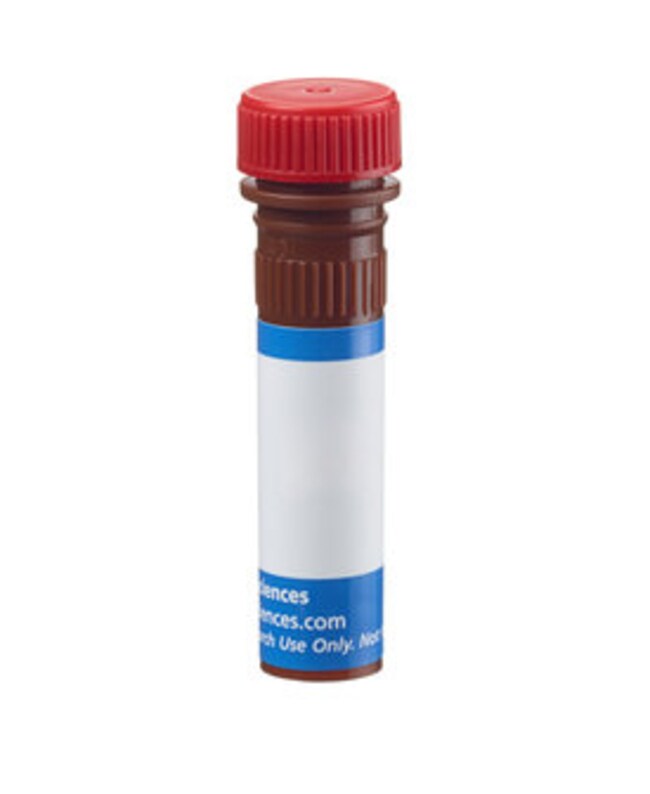


Description
Activation of the immune and inflammatory responses often involves the recognition of bacterial endotoxin (lipopolysaccharide or LPS). Binding of LPS by monocytes results in the production and release of proinflammatory cytokines, such as IL-1 and TNF. LPS-induced signaling cascades involve members of the Ser/Thr protein kinase family known as the Mitogen Activated Protein β (MAPK11), γ (MAPK12), and δ (MAPK13). These Ser/Thr kinases are activated by dual phosphorylation on threonine (T) and tyrosine (Y) within the motif Thr-Gly-Tyr located in kinase subdomain VIII. Activation of p38 MAPK is mediated specifically by the MAP Kinase Kinases, MKK3, MKK4, and MKK6. This leads to the activation of multiple transcription factors (NF-κB, ATF-2, Elk-1, and CHOP) that induce expression of many different genes, including proinflammatory cytokine genes. Thus, p38 MAPKs are central kinases in multiple signal transduction pathways.
The 36/p38 (pT180/pY182) monoclonal antibody recognizes the conserved dual phosphorylated site pT180/pY182 of p38α, β, γ, and δ.

Specifications
Specifications
| Antigen | p38 MAPK |
| Applications | Flow Cytometry |
| Classification | Monoclonal |
| Clone | 36/p38 (pT180/pY182) |
| Conjugate | PE |
| Description | MAPK14; p38 MAP kinase; p38 MAPK; RK; CSBP2 |
| Formulation | Aqueous buffered solution containing BSA and ≤0.09% sodium azide. |
| Host Species | Mouse |
| Immunogen | Phosphorylated Human p38 MAPK (pT180/pY182) Peptide |
| Purification Method | Affinity Purified |
| Show More |
Safety and Handling
By clicking Submit, you acknowledge that you may be contacted by Fisher Scientific in regards to the feedback you have provided in this form. We will not share your information for any other purposes. All contact information provided shall also be maintained in accordance with our Privacy Policy.