Learn More

Description
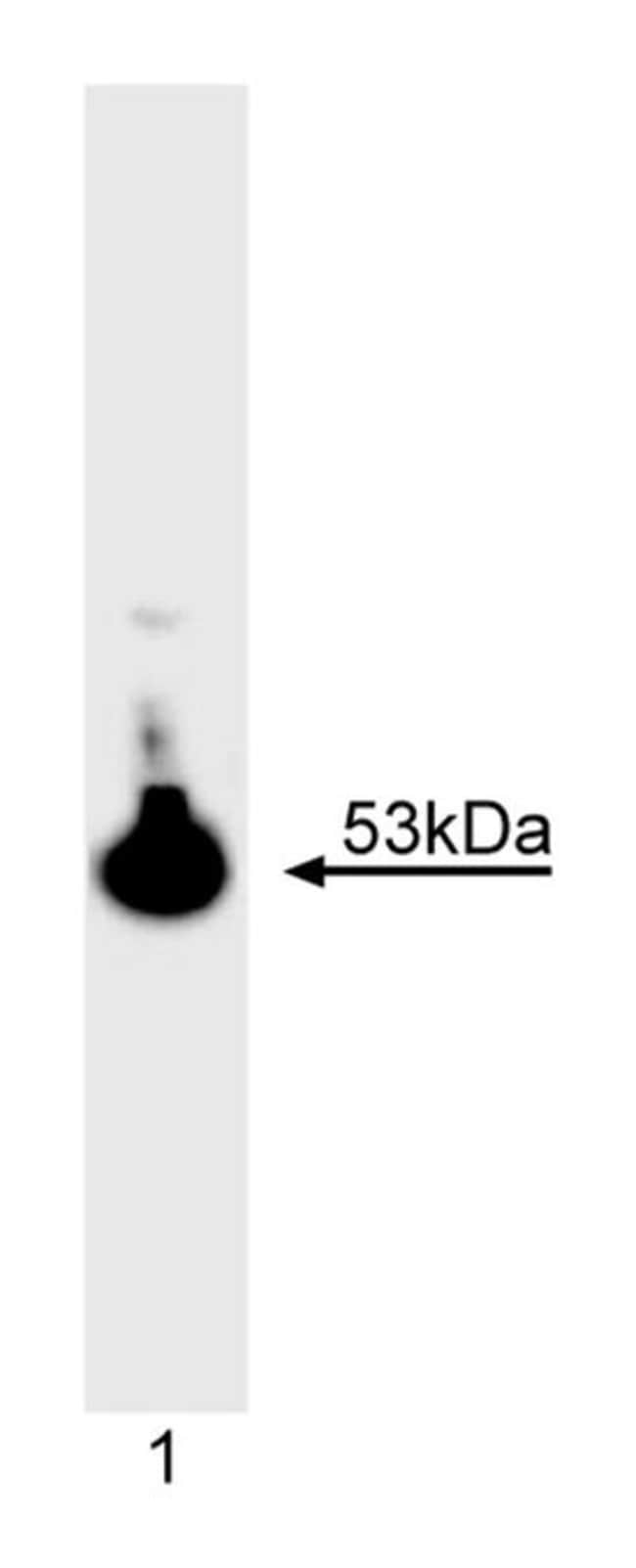
The gene for the nuclear phosphoprotein p53 is the most commonly mutated gene yet identified in human cancers. Missense mutations occur in tumors of the colon, lung, breast, ovary, bladder and several other organs. The mutant p53 is overexpressed in a variety of transformed cells and wild-type p53 forms specific complexes with several viral oncogenes including SV40 large T, E1B from adenovirus, and E6 from human papilloma virus. Wild type p53 plays a role as a checkpoint protein for DNA damage during the G1/S-phase of the cell cycle. However, it is still unclear, whether point mutated forms of p53 are simple null mutants and/or dominant negatively acting proteins. DO-1 reacts with human wild-type and mutant p53. It cross-reacts with bovine p53 but does not cross-react with mouse or rat p53. DO-1 recognizes an epitope between amino acids 1 and 45 of all known forms of human p53. Human recombinant p53 protein was used as immunogen.
Host Species: Mouse
Clone: DO-1
Isotype: IgG2a
Species Reactivity: Human
Immunogen: Human p53
Formula Weight [Chemical]: 53kDa
Immunohistochemistry, Immunohistochemistry (Frozen), Immunoprecipitation, Western Blotting

Specifications
Specifications
| Antigen | p53 |
| Applications | Western Blot |
| Classification | Monoclonal |
| Clone | DO-1 |
| Concentration | 0.5mg/mL |
| Conjugate | Unconjugated |
| Formulation | Aqueous buffered solution containing ≤0.09% sodium azide. |
| Host Species | Mouse |
| Immunogen | Human p53 |
| Purification Method | Affinity Purified |
| Show More |
For Research Use Only.
By clicking Submit, you acknowledge that you may be contacted by Fisher Scientific in regards to the feedback you have provided in this form. We will not share your information for any other purposes. All contact information provided shall also be maintained in accordance with our Privacy Policy.