Learn More
Description
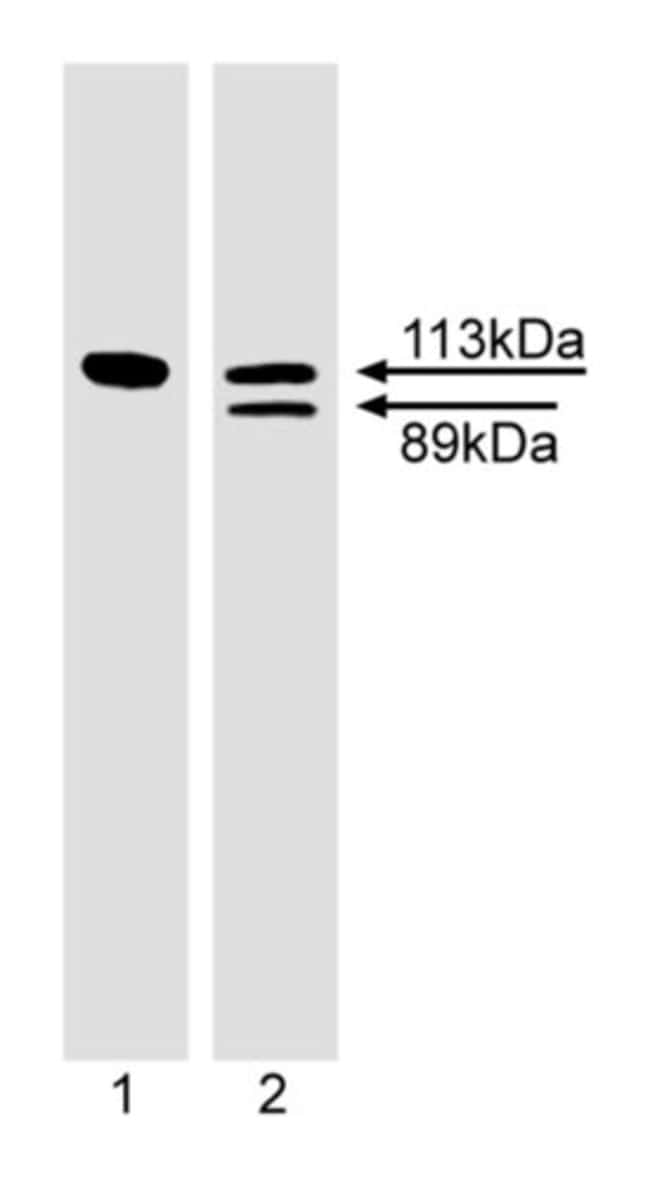
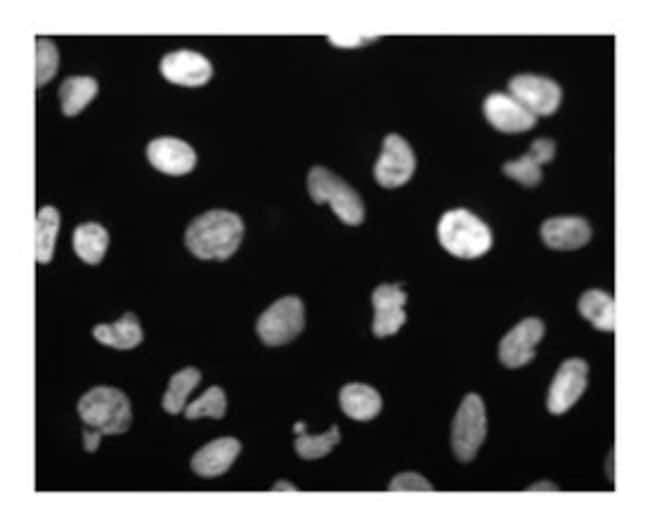
PARP [Poly(ADP-ribose) polymerase] is a 113kDa nuclear chromatin-associated enzyme that catalyzes the transfer of ADP-ribose units from NAD+ to a variety of nuclear proteins including topoisomerases, histones, and PARP itself. The catalytic activity of PARP is increased in non-apoptotic cells following DNA damage, and PARP is thought to play an important role in mediating the normal cellular response to DNA damage. Additionally, PARP is a target of the caspase protease activity associated with apoptosis. During apoptosis, PARP is cleaved from a 113kDa intact form into smaller 89kDa and 24kDa fragments. This process separates the amino-terminal DNA-binding domain of the enzyme from the carboxy-terminal catalytic domain resulting in the loss of normal PARP function. Although the role of PARP in apoptosis remains to be elucidated, PARP cleavage is considered to be a marker of apoptosis. The 4C10-5 antibody recognizes both the intact 113kDa form and 89kDa fragment of PARP. The 4C10-5 antibody has been reported to recognize both native and denatured PARP. Purified human PARP was used as the immunogen and the antibody reported to react with an epitope located in the NAD binding domain. In dot blot assays, the antibody reacts with the native enzyme in the presence or absence of bound DNA as well as after synthesis of covalently linked poly (ADP-ribose). The 4C10-5 antibody is routinely tested by western blot analysis of untreated Jurkat T cells and Jurkat T cells induced to undergo apoptosis. This antibody is routinely tested by Western blot analysis and immunofluorescent imaging. Other applications were tested at BD Biosciences Pharmingen during antibody development only or reported in the literature.
Host Species: Mouse
Clone: 4C10-5
Isotype: IgG1 κ
Species Reactivity: Human
Immunogen: Human PARP
Bioimaging, Dot Blotting, Flow Cytometry, Immunoprecipitation, Intracellular Staining, Western Blotting

Specifications
Specifications
| Antigen | PARP |
| Applications | Western Blot |
| Classification | Monoclonal |
| Clone | 4C10-5 |
| Concentration | 0.5mg/mL |
| Conjugate | Unconjugated |
| Formulation | Aqueous buffered solution containing ≤0.09% sodium azide. |
| Host Species | Mouse |
| Immunogen | Human PARP |
| Purification Method | Affinity Purified |
| Show More |
For Research Use Only.
By clicking Submit, you acknowledge that you may be contacted by Fisher Scientific in regards to the feedback you have provided in this form. We will not share your information for any other purposes. All contact information provided shall also be maintained in accordance with our Privacy Policy.