Promotional price valid on web orders only. Your contract pricing may differ. Interested in signing up for a dedicated account number?
Learn More
Learn More
Description
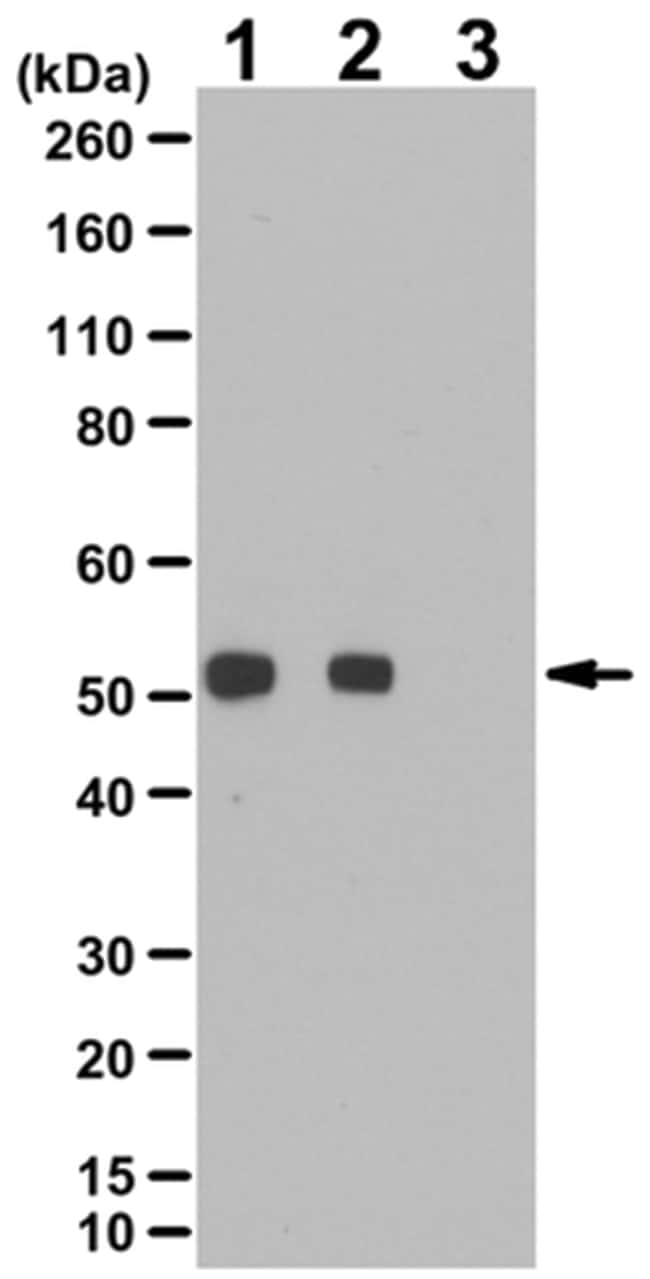
Specifically detects phospho PTEN (Ser385) Clone: in Human samples, and it is validated for Peptide Inhibition Assay, Western Blotting
Phosphatidylinositol 3,4,5-trisphosphate 3-phosphatase and dual-specificity protein phosphatase PTEN (EC 3.1.3.16, EC 3.1.3.48, EC 3.1.3.67; UniProt P60484; also known as Mitochondrial PTENalpha, Phosphatase and tensin-like protein, Mutated in multiple advanced cancers 1, Mitochondrial phosphatase and tensin protein alpha, MMAC1 phosphatase and tensin homolog deleted on chromosome 10, Phosphatidylinositol-3,4,5-trisphosphate 3-phosphatase and dual-specificity protein phosphatase PTEN) is encoded by the PTEN (also known as 10q23del, BZS, CWS1, DEC, GLM2, TEP1, MMAC1, MHAM, PTEN1) gene (Gene ID 5728) in human. PTEN protein catalyzes the removal of phosphate from phosphoserine, phosphothreonine, and phosphotyrosine residues on substrate proteins, as well as the phosphate in the D3 position of the inositol ring from phosphatidylinositol 3,4,5-trisphosphate, phosphatidylinositol 3,4-diphosphate, phosphatidylinositol 3-phosphate and inositol 1,3,4,5-tetrakisphosphate. PTEN plays a major role in controlling cell growth and proliferation, and PTEN gene mutains are found in a large number of cancers at high frequency. PTEN activity, stability, localization, and conformation are controlled through complex regulatory mechanisms, including the reversible phosphorylations of several Ser/Thr (S/T) residues in its unfolded C-terminal tail region (PTEN-Ctail, residues 351–403). PTEN S370, S380, T382, T383 and S385 are known target sites by casein kinase II (CK2), while S361, T363, S362, and T366 are phosphorylated by glycogen synthase kinase-3β (GSK3β). In addition, Polo-like kinase 1 (Plk1), Plk3, the microtubule associated serine/threonine (MAST) kinase family, the serine/threonine kinase 11 (STK11, LKB1), and the casein kinase 1 (CK1) have also been reported to phosphorylate PTEN.

Specifications
Specifications
| Antigen | phospho PTEN (Ser385) |
| Applications | Inhibition Assays, Western Blot |
| Classification | Polyclonal |
| Conjugate | Unconjugated |
| Formulation | Purified rabbit polyclonal antibody in buffer containing 0.1M Tris-Glycine (pH 7.4), 150mM NaCl with 0.05% sodium azide. |
| Gene Accession No. | P60484 |
| Gene Symbols | PTEN, MMAC1, TEP1 |
| Host Species | Rabbit |
| Immunogen | Peptide corresponding to amino acid region encompassing the human, mouse, and rat phospho-PTEN (Ser385). |
| Purification Method | Affinity Purified |
| Show More |
For Research Use Only
Product Title
By clicking Submit, you acknowledge that you may be contacted by Fisher Scientific in regards to the feedback you have provided in this form. We will not share your information for any other purposes. All contact information provided shall also be maintained in accordance with our Privacy Policy.
Spot an opportunity for improvement?