Learn More
Description
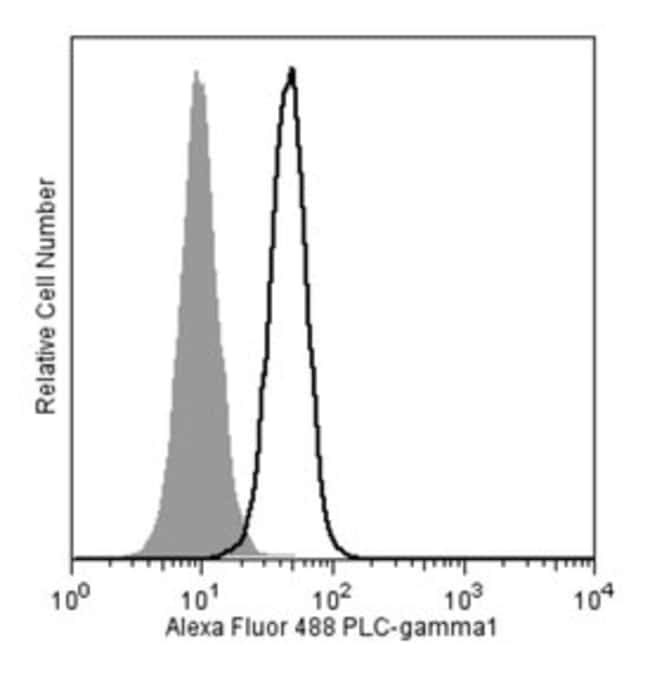
The Phospholipase C (PLC) isozymes hydrolyze phosphatidyl inositol biphosphate to inositol triphosphate and diacylglycerol. The former causes release of calcium from the endoplasmic reticulum, while the latter is an activator of Protein Kinase C. Within the PLC family, PLCγ is the only member that contains SH2 and SH3 domains. These domains enable it to interact with receptor tyrosine kinases and become enzymatically activated via phosphorylation. It exists as two isoforms: 1) PLCγ1, which is ubiquitously expressed, and 2) PLCγ2, found primarily in the lymphoid system. PLCγ is essential for growth factor-induced cell motility and mitogenesis. PLCγ1 null mice exhibit retarded embryonic growth and lethality in midgestation. Overexpression of PLCγ is evident in several forms of cancer, and it has been identified as a key mediator of PDGF-dependent cellular transformation. Thus regulation of PLCγ activity by growth factors is involved in cell growth and transformation. The 10/PLCgamma monoclonal antibody recognizes PLCγ1, regardless of phosphorylation status. It does not cross-react with PLCγ2.
Intracellular Staining

Specifications
Specifications
| Antigen | PLC-γ |
| Applications | Flow Cytometry |
| Classification | Monoclonal |
| Clone | 10/PLCGAMMA |
| Conjugate | Alexa Fluor 488 |
| Formulation | Aqueous buffered solution containing BSA and ≤0.09% sodium azide. |
| Host Species | Mouse |
| Immunogen | Cow PLCγ1 N-terminal region Peptide |
| Purification Method | Affinity Purified |
| Quantity | 50 Tests |
| Show More |
By clicking Submit, you acknowledge that you may be contacted by Fisher Scientific in regards to the feedback you have provided in this form. We will not share your information for any other purposes. All contact information provided shall also be maintained in accordance with our Privacy Policy.