Learn More
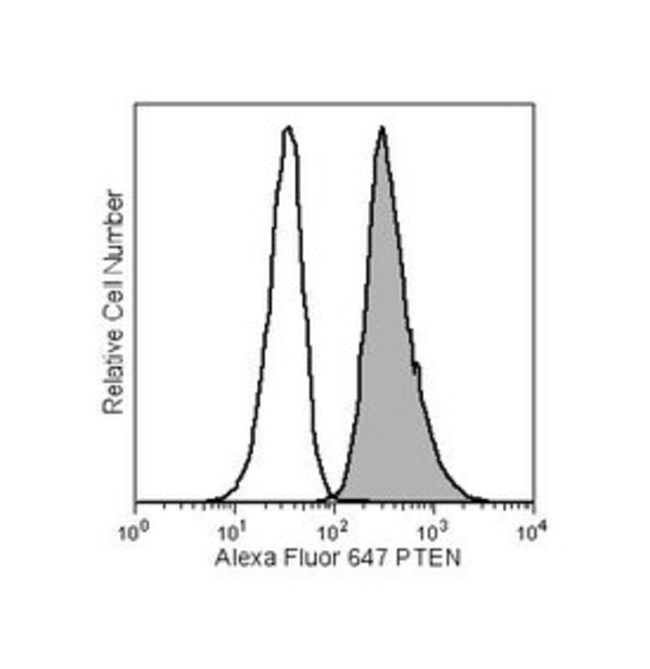

Description
Cancer can develop when cells escape normal growth control mechanisms through mutations in proto-oncogenes or tumor suppressor genes. A characteristic of most oncogene and tumor suppressor gene products is that they are components of signal transduction pathways that are essential for maintaining cellular homeostasis. PTEN (phosphatase and tensin homolog), also known as MMAC1 (mutated in multiple advanced cancers 1), is a tumor suppressor gene that is mutated at high frequency in multiple tumor types. The protein encoded by PTEN is a phosphatase that preferentially dephosphorylates phosphoinositide substrates. It is believed that a mechanism by which PTEN mutations cause tumors is the loss of its negative control on the phosphoinositide 3-kinase signaling pathway that regulates cell growth and survival. PTEN also plays a role in the maintenance of hematopoietic stem cells.
The A2B1 monoclonal antibody recognizes PTEN, regardless of phosphorylation status.

Specifications
Specifications
| Antigen | PTEN |
| Applications | Flow Cytometry |
| Classification | Monoclonal |
| Clone | A2B1 |
| Conjugate | Alexa Fluor 647 |
| Description | MMAC1, TEP1 |
| Formulation | Aqueous buffered solution containing BSA and ≤0.09% sodium azide. |
| Host Species | Mouse |
| Immunogen | Human C-terminal PTEN Peptide |
| Purification Method | Affinity Purified |
| Show More |
By clicking Submit, you acknowledge that you may be contacted by Fisher Scientific in regards to the feedback you have provided in this form. We will not share your information for any other purposes. All contact information provided shall also be maintained in accordance with our Privacy Policy.