Learn More
Description
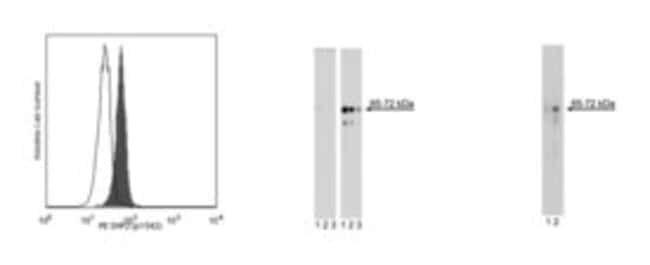
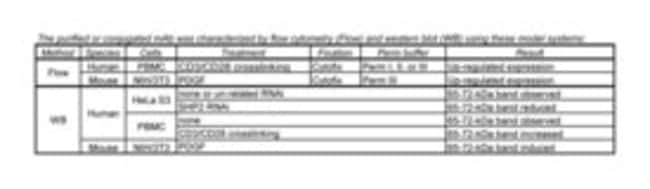
SHP2 is a member of the cytosolic class of protein-tyrosine phosphatases (PTPs). SHP2 reportedly contains two SH2 domains, both of which are N-terminal to the PTP catalytic domain. SH2 PTPs are believed to work in conjunction with protein-tyrosine kinases to maintain intracellular protein phosphotyrosine homeostasis and cell cycle progression. The expression of SHP2 has been reported to be highest in brain, heart, and kidney. SHP2 is phosphorylated at two C-terminal tyrosine residues: Y542 and Y580. Phosphorylation of Y542 creates an interaction in the N-terminal SH2 domain and appears to relieve basal inhibition of the PTP, while phosphorylation at Y580 creates an interaction at the C-terminal that stimulates PTP activity. The L99-921 monoclonal antibody recognizes the phosphorylated Y542 of SHP2 (PTP2C isoform 2). The homologous phosphorylation site in the PTP2Ci splice variant (isoform 1) is Y546. The specificity of this antibody was validated by confirming, using western blot analysis, that RNA-mediated interference (RNAi) of the specific protein was able to down-regulate the expression of SHP2 (pY542).
Host Species: Mouse
Clone: L99-921
Isotype: IgG1 κ
Species Reactivity: Human
Immunogen: Phosphorylated Human SHP2 Peptide
Intracellular Staining

Specifications
Specifications
| Antigen | SHP2 (pY542) |
| Applications | Flow Cytometry |
| Classification | Monoclonal |
| Clone | L99-921 |
| Conjugate | PE |
| Description | PTN11, PTP1D, PTP2C, PTPN11, SH-PTP2, SH-PTP3, SHP-2, SHPTP2 |
| Formulation | Aqueous buffered solution containing BSA and ≤0.09% sodium azide. |
| Host Species | Mouse |
| Immunogen | Phosphorylated Human SHP2 Peptide |
| Purification Method | Affinity Purified |
| Show More |
By clicking Submit, you acknowledge that you may be contacted by Fisher Scientific in regards to the feedback you have provided in this form. We will not share your information for any other purposes. All contact information provided shall also be maintained in accordance with our Privacy Policy.