Learn More
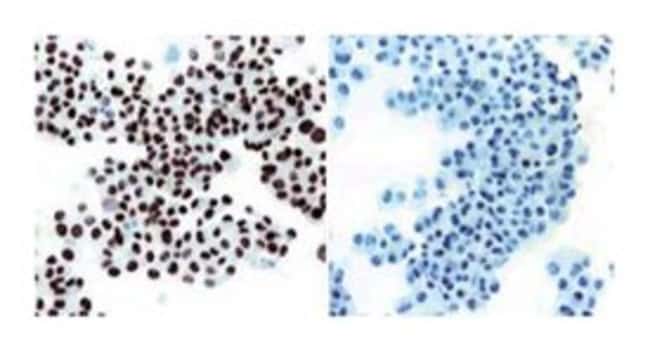
SV40 Large T and Small T Antigens Mouse, Biotin, Clone: PAB 108, BD
Shop All BD Biosciences ProductsDescription
Simian virus 40 (SV40) is a small DNA virus encoded by 5.2 kb of double-stranded DNA. SV40 large T-antigen (T-ag) is a multifunctional ∽85kDa phosphoprotein, which is the sole viral protein required for SV40 replication. All other factors are provided by the infected host cell. In addition to its role in SV40 DNA replication, T-ag also causes transformation of susceptible cell lines. Studies of various mutant T-ag proteins have shown that the replication and transformation fractions of T-ag can be separated. The multifunctional nature of this protein has resulted in its use as a model system in a wide variety of disciplines. T-ag exercises negative regulation on the transcription of SV40 early mRNA by feedback inhibition and exerts positive regulation on transcription from the late promoter. In addition to transcriptional regulation, T-ag is involved in viral DNA replication. Specific biochemical functions required for DNA synthesis that are inherent to the T-ag include high-affinity binding to sites within the viral origin of DNA synthesis, ATPase, and helicase activities. Other functions attributed to T-ag include cellular transformation, induction of cellular DNA synthesis, induction of rRNA synthesis, and provision of a host-range function for viral replication. However, functions of T-ag are influenced by a wide range of post-translational modifications including phosphorylation, glycosylation, acetylation, acylation, and adenylation. T-ag exists in monomeric as well as polymeric forms, and associates with the tumor suppressor proteins p53 and retinoblastoma protein (Rb). Most of T-ag is transported to the nucleus, while a small fraction is localized at the cell surface. Small t-Ag is a polypeptide which shares 82 N-terminal amino acids with large T antigen and has a unique C-terminal region. Clone PAb 108 recognizes an N-terminal epitope within the first 82 amino acids of T-ag and small t antigen (t-ag). B4 SV40-transformed BALB/c mouse fibroblasts were used as immunogen. PAb 108 was originally produced and characterized as part of a panel of antibodies designated PAb 102-117.
Host Species: Mouse
Clone: PAb 108
Isotype: IgG2a
Species Reactivity: Viral-transformed cells
Immunogen: SV40-transformed BALB/c mouse cells
Formula Weight [Chemical]: 90-100kDa
Immunocytochemistry, Immunofluorescence, Immunoprecipitation, Western Blotting

Specifications
Specifications
| Antigen | SV40 Large T and Small T Antigens |
| Applications | Immunofluorescence |
| Classification | Monoclonal |
| Clone | PAB 108 |
| Concentration | 0.5mg/mL |
| Conjugate | Biotin |
| Formulation | Aqueous buffered solution containing ≤0.09% sodium azide. |
| Host Species | Mouse |
| Immunogen | SV40-transformed BALB/c mouse cells |
| Purification Method | Affinity Purified |
| Show More |
For Research Use Only.
By clicking Submit, you acknowledge that you may be contacted by Fisher Scientific in regards to the feedback you have provided in this form. We will not share your information for any other purposes. All contact information provided shall also be maintained in accordance with our Privacy Policy.