Learn More

Description
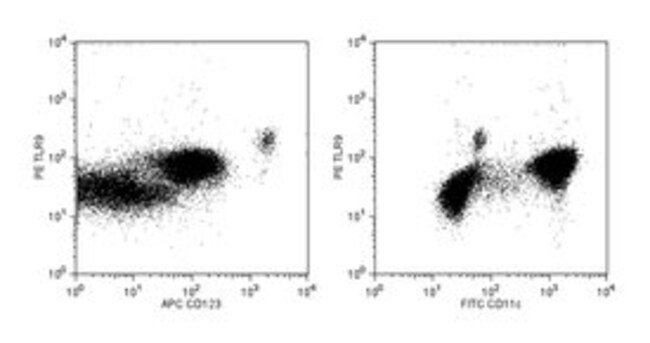
Toll-like receptor 9 (TLR9), also designated as CD289, is a type 1 transmembrane glycoprotein (∽110-119kDa calculated molecular weights for protein isoforms) encoded by the TLR9 gene in chromosome 3. TLR9 is a member of the Toll-like receptor (TLR) family whose members play fundamental roles in pathogen recognition and activation of innate immunity. TLR9 is highly expressed by plasmacytoid dendritic cells and B cells and at lower levels in some other cell types. TLR9 is expressed predominantly in the endoplasmic reticulum. It is recruited to endosomal and lysosomal compartments upon cellular stimulation by bacterial, viral or synthetic DNA molecules that contain unmethylated CpG dinucleotide sequences. TLR9 generated signals lead to the activation of genes that express type-I interferons and proinflammatory cytokines including IL-6 and IL-12. TLR9-mediated signaling is also implicated in acquired immune responses as well as in the pathogenesis of autoimmune diseases. The eB72-1665.1 mAb recognizes the human TLR9 epitope from the peptide sequence, amino acids 273-288.
Host Species: Rat
Clone: eB72-1665
Isotype: IgG2a κ
Species Reactivity: Human

Specifications
Specifications
| Antigen | TLR9 |
| Applications | Flow Cytometry |
| Classification | Monoclonal |
| Clone | EB72-1665 |
| Conjugate | PE |
| Description | CD289, toll-like receptor 9 |
| Formulation | Aqueous buffered solution containing BSA and ≤0.09% sodium azide. |
| Host Species | Rat |
| Purification Method | Affinity Purified |
| Quantity | 100 Tests |
| Show More |
By clicking Submit, you acknowledge that you may be contacted by Fisher Scientific in regards to the feedback you have provided in this form. We will not share your information for any other purposes. All contact information provided shall also be maintained in accordance with our Privacy Policy.