Learn More
Description
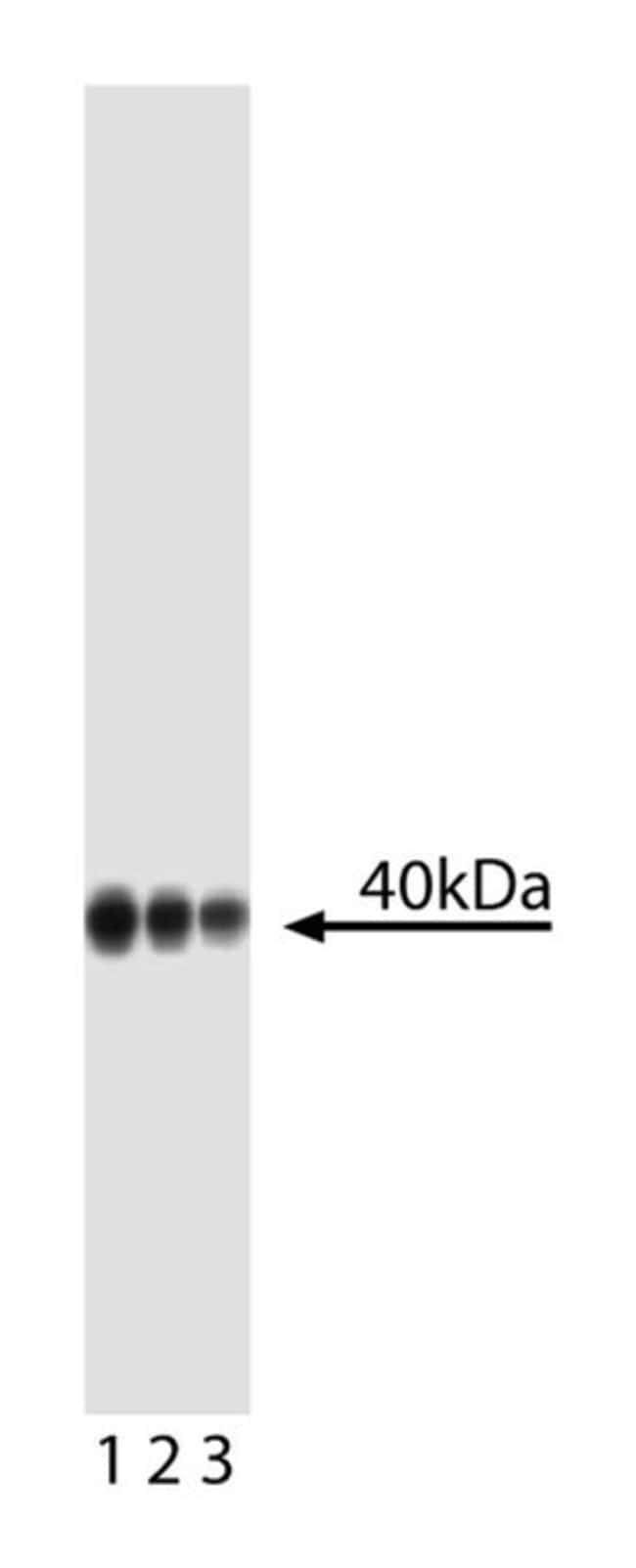
The Wnt gene family comprises a large group of signaling proteins involved in developmental pathways in vertebrates, Drosophilia, C. elegans and other organisms. The Wnt genes were first discovered in mouse (called int-1) and later in Drosophilia (called wingless, or wg) where the signaling pathways were unravelled. The Wnt proteins are involved in various developmental processes including embryonic induction, generation of cell polarity and the specification of cell fate. The vertebrate Wnt glycoproteins number at least 16 members and initiate signaling by being secreted and a subset of these glycoproteins bind to a class of receptors, called Frizzled, of which 11 have been identified. Stimulation of the Wnt pathway causes the phosphorylation of Dishevelled, which inhibits glycogen synthase kinase -3β (GSK3β) and allows β-catenin to accumulate in the cytosol. β-catenin then translocates to the nucleus to form a complex with Tcf/LEF family of transcription factors to activate transcription. In unstimulated cells, β-catenin forms a complex with the proteins Axin, adenomatous polyposis coli (APC), (GSK3β) and is unstable. Studies have shown that some members of this pathway become mutated in human cancers, such as colon carcinoma and melanoma. Futhermore, studies on the WNT-16 gene, have shown that it is activated by the E2A-Pbx fusion product in acute lymphoblastoid leukemia. Wnt16 has a predicted molecular weight of 40kDa (SWISS-PROT:Q9UBV4).
Host Species: Mouse
Clone: F4-1582
Isotype: IgG2b κ
Species Reactivity: Human
Immunogen: Human WNT16 Recombinant Protein
Formula Weight [Chemical]: 40kDa
Western Blotting

Specifications
Specifications
| Antigen | Wnt16 w/control |
| Applications | Western Blot |
| Classification | Monoclonal |
| Clone | F4-1582 |
| Concentration | 0.5mg/mL |
| Conjugate | Unconjugated |
| Formulation | Aqueous buffered solution containing ≤0.09% sodium azide. |
| Host Species | Mouse |
| Immunogen | Human WNT16 Recombinant Protein |
| Purification Method | Affinity Purified |
| Show More |
For Research Use Only.
By clicking Submit, you acknowledge that you may be contacted by Fisher Scientific in regards to the feedback you have provided in this form. We will not share your information for any other purposes. All contact information provided shall also be maintained in accordance with our Privacy Policy.