Learn More

Invitrogen™ Arginase 1 Monoclonal Antibody (sl6arg), eFluor™ 660, eBioscience™

Description
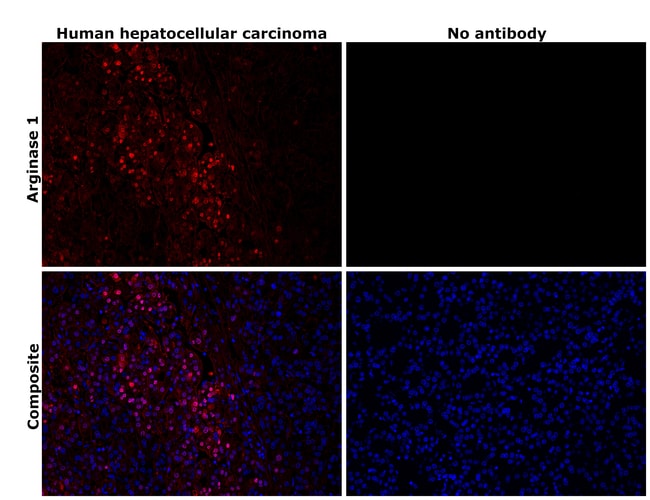
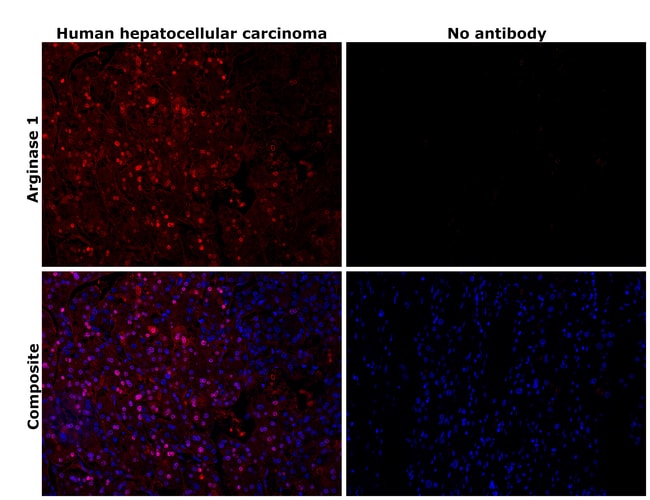
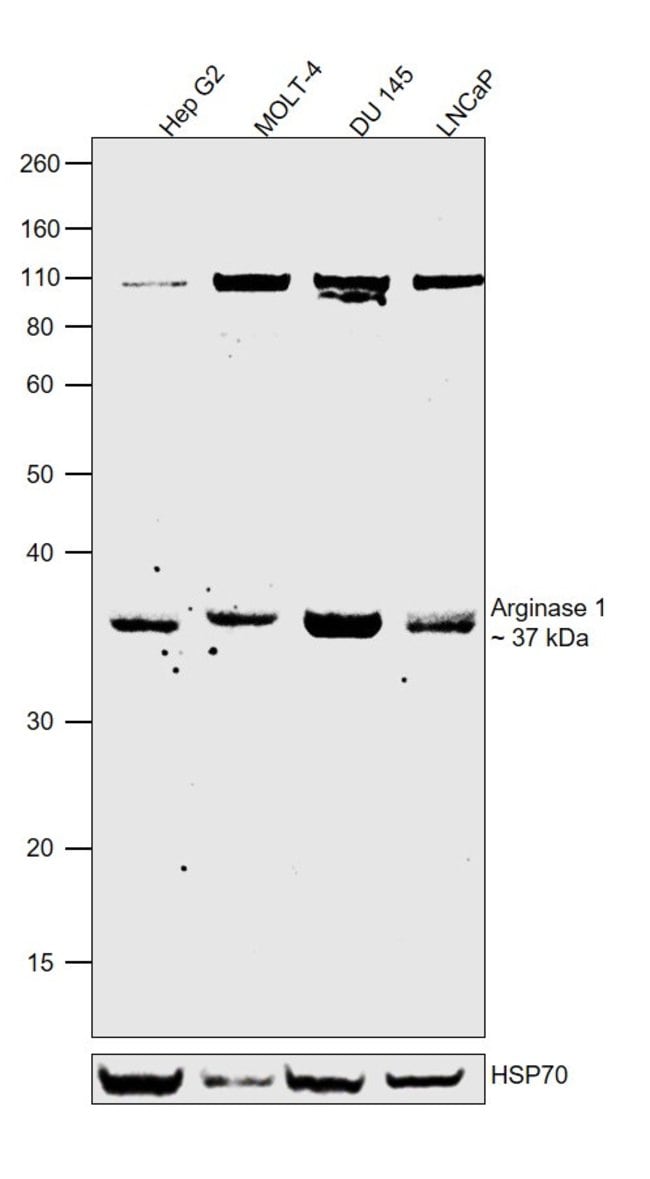
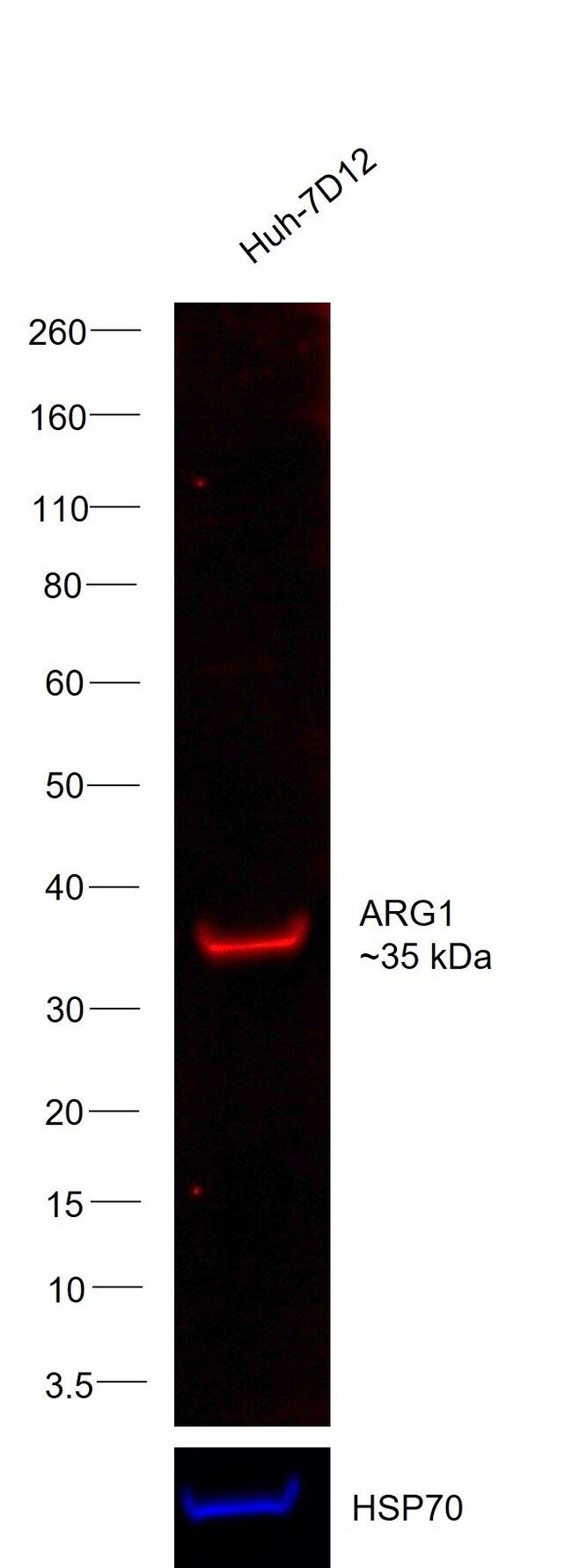
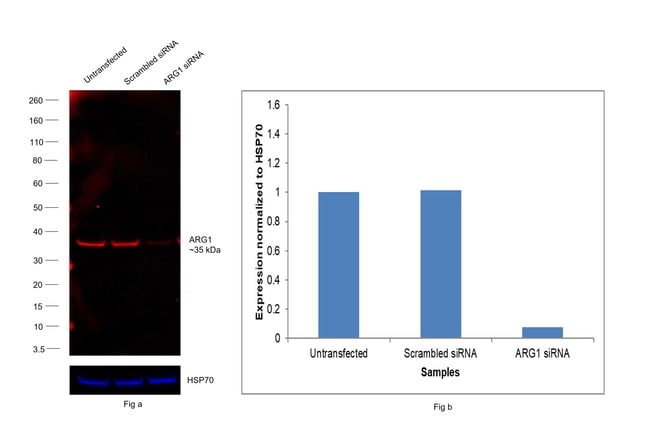
The monoclonal antibody sl6arg recognizes human Arginase-1, a 35 kDa enzyme that that helps eliminate nitrogen by converting L-arginine to urea and L-ornithine which further converts to polyamine. These polyamines are important for cell proliferation and removal of toxins that arise from protein degradation. Expression is found in the liver, neutrophils, as well as myeloid derived suppressor cells (MDSC) and neural stem cells. Expression in macrophages has not been determined in humans, while in mice expression in M2 macrophages is well established. Arginase-1 may be expressed in the myeloid population in breast cancer tumors and is typically found in the majority of hepatocellular carcinomas. Applications Reported: This sl6arg antibody has been reported for use in immunohistochemical staining of formalin-fixed paraffin embedded tissue sections, microscopy, immunohistochemical staining, and immunocytochemistry. Applications Tested: This sl6arg antibody has been tested by immunohistochemistry of formalin-fixed paraffin embedded human tissue using low pH antigen retreival and can be used at less than or equal to 5 μg/mL. It is recommended that the antibody be carefully titrated for optimal performance in the assay of interest. eFluor™ 660 is a replacement for Alexa Fluor™ 647. eFluor™ 660 emits at 659 nm and is excited with the red laser (633 nm). Please make sure that your instrument is capable of detecting this fluorochome. Excitation:...

Specifications
Specifications
| Antigen | Arginase 1 |
| Applications | Immunohistochemistry (Paraffin), Western Blot, Immunocytochemistry |
| Classification | Monoclonal |
| Clone | sl6arg |
| Concentration | 0.2 mg/mL |
| Conjugate | eFluor 660 |
| Formulation | PBS with 0.09% sodium azide; pH 7.2 |
| Gene | ARG1 |
| Gene Accession No. | P05089 |
| Gene Alias | AI; A-I; AI type I arginase; AI256583; Arg1; Arg-1; Arginase; arginase 1; arginase 1 liver; arginase 1, liver; arginase I; arginase, liver; Arginase1; arginase-1; HGNC:663; Liver Arginase; Liver-type arginase; PGIF; similar to arginase, type I; Type 1 Arginase; type I arginase |
| Show More |
Frequently Asked Questions (FAQs)
Yes, the eFluor Organic fluorochromes can be used for intracellular staining. The eFluor organic fluorochromes maintain bright signal and require minimal changes in compensation when fixed with eBioscience IC Fixation Buffer (Cat. No. 00-8222-49) and Permeabilization Buffer (Cat. No. 00-8333-56) or 1-step Fix/Lyse Solution (Cat. No. 00-5333-54, 00-5333-57) (as compared to live cells).
Yes, in-house studies have demonstrated that the eFluor 660 fluorochrome is recognized by Anti-Cy5/Alexa Fluor 647 beads. Side by side studies with Alexa Fluor 647 versus eFluor 660 conjugated antibodies have demonstrated comparable results.
The eFluor Organic fluorochromes and eVolve QDots can be used with flow staining buffers containing PBS and protein.
The eFluor Organic Dyes (eFluor 450, APC-eFluor 780, PerCP-eFluor 710, eFluor 710) are conventional fluorochromes. In contrast, the eVolve line of products are Quantum dots.
By clicking Submit, you acknowledge that you may be contacted by Fisher Scientific in regards to the feedback you have provided in this form. We will not share your information for any other purposes. All contact information provided shall also be maintained in accordance with our Privacy Policy.