Promotional price valid on web orders only. Your contract pricing may differ. Interested in signing up for a dedicated account number?
Learn More
Learn More
Invitrogen™ ASPH Polyclonal Antibody

Description
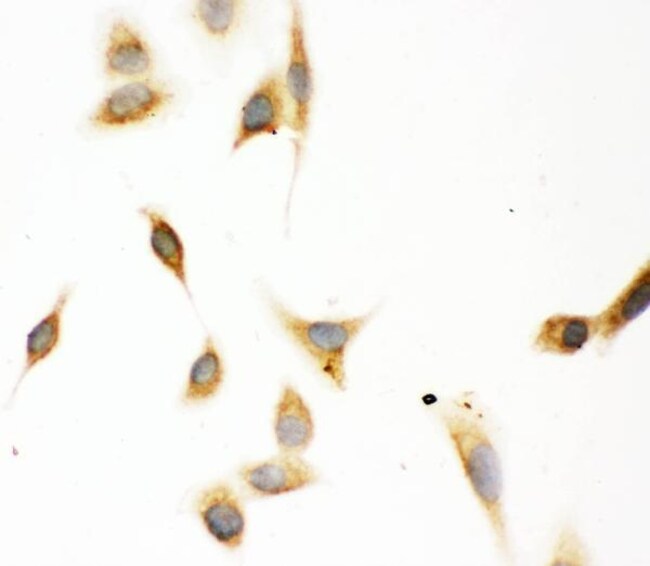
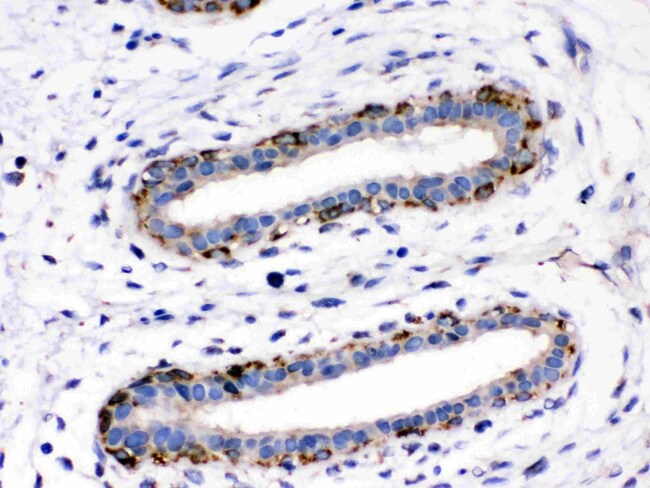
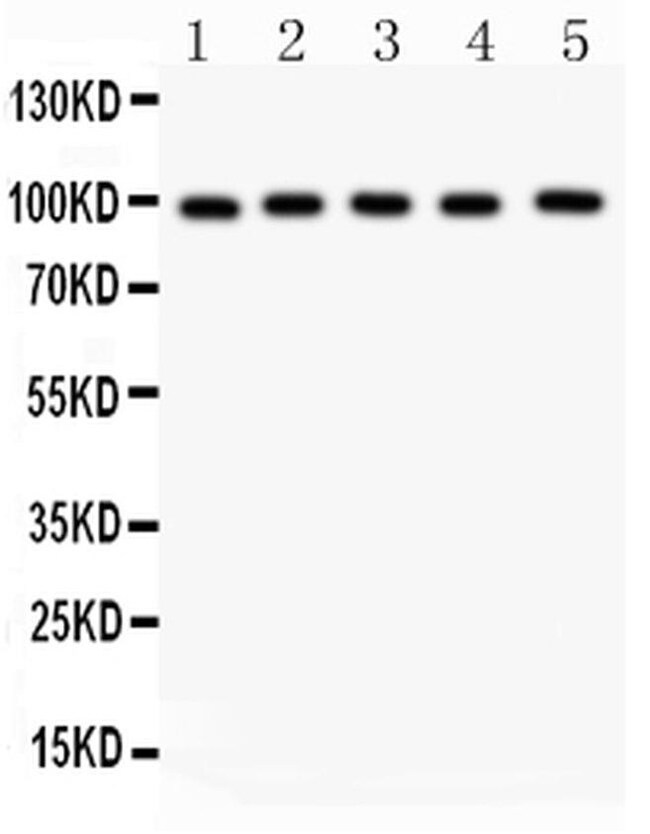
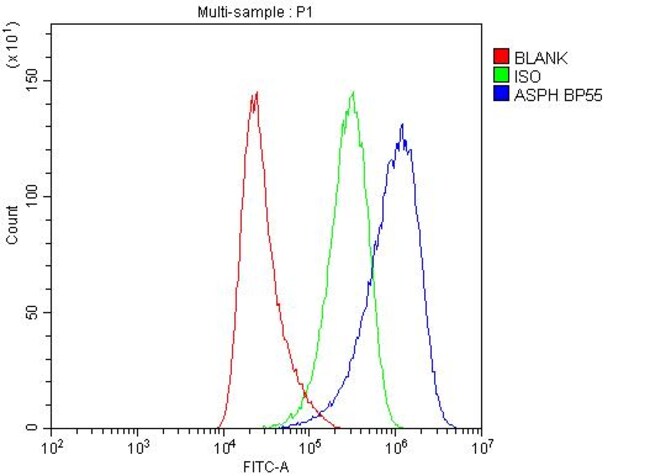
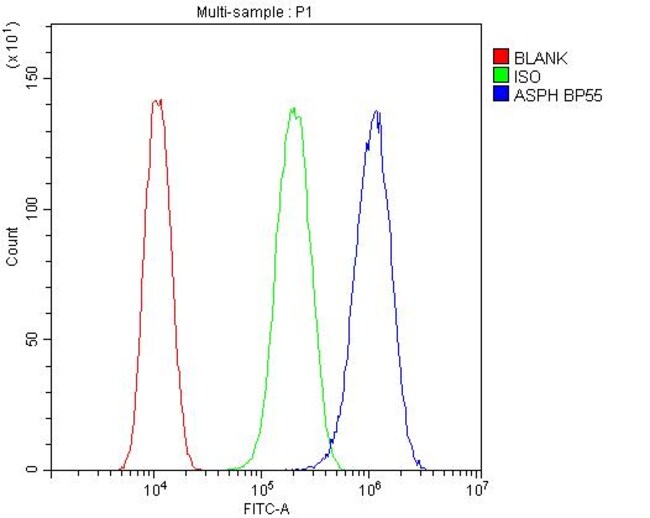
Reconstitute with 0.2 mL of distilled water to yield a concentration of 500 μg/mL. Positive Control - WB: Rat Brain Tissue, Rat Liver Tissue, HELA whole cell, HEPG2 whole cell, HEPA whole cell. IHC: Human Mammary Cancer tissue. ICC/IF: A549 cell. Flow: HeLa cell, U87 cell.
ASPH is thought to play an important role in calcium homeostasis. Alternative splicing of this gene results in five transcript variants which vary in protein translation, the coding of catalytic domains, and tissue expression. Variation among these transcripts impacts their functions which involve roles in the calcium storage and release process in the endoplasmic and sarcoplasmic reticulum as well as hydroxylation of aspartic acid and asparagine in epidermal growth factor-like domains of various proteins. This gene is thought to play an important role in calcium homeostasis. Alternative splicing of this gene results in five transcript variants which vary in protein translation, the coding of catalytic domains, and tissue expression. Variation among these transcripts impacts their functions which involve roles in the calcium storage and release process in the endoplasmic and sarcoplasmic reticulum as well as hydroxylation of aspartic acid and asparagine in epidermal growth factor-like domains of various proteins.

Specifications
Specifications
| Antigen | ASPH |
| Applications | Flow Cytometry, Immunohistochemistry, Immunohistochemistry (Paraffin), Western Blot, Immunocytochemistry |
| Classification | Polyclonal |
| Concentration | 500 μg/mL |
| Conjugate | Unconjugated |
| Formulation | PBS with 5mg BSA and 0.05mg sodium azide |
| Gene | Asph |
| Gene Accession No. | Q12797, Q8BSY0 |
| Gene Alias | 2310005F16Rik; 3110001L23Rik; A beta H-J-J; AAH; AI848629; ASP beta-hydroxylase; Aspartate beta-hydroxylase; aspartate-beta-hydroxylase; aspartyl (asparaginyl) beta hydroxylase; aspartyl beta-hydroxylase; aspartyl/asparaginyl beta-hydroxylase; aspartyl/asparaginyl beta-hydroxylase-like; aspartyl/asparaginyl-beta-hydroxylase; ASPH; AW261690; AW561901; BAH; C79816; calsequestrin-binding protein; cardiac junctin; CASQ2BP1; cI-37; FDLAB; HAAH; humbug; JCTN; jumbug; junctate; junctin; junctional sarcoplasmic reticulum protein; peptide-aspartate beta-dioxygenase; Unknown (protein for MGC:137539) |
| Gene Symbols | Asph |
| Show More |
Safety and Handling
WARNING: Cancer - www.P65Warnings.ca.gov
Product Title
By clicking Submit, you acknowledge that you may be contacted by Fisher Scientific in regards to the feedback you have provided in this form. We will not share your information for any other purposes. All contact information provided shall also be maintained in accordance with our Privacy Policy.
Spot an opportunity for improvement?