Promotional price valid on web orders only. Your contract pricing may differ. Interested in signing up for a dedicated account number?
Learn More
Learn More
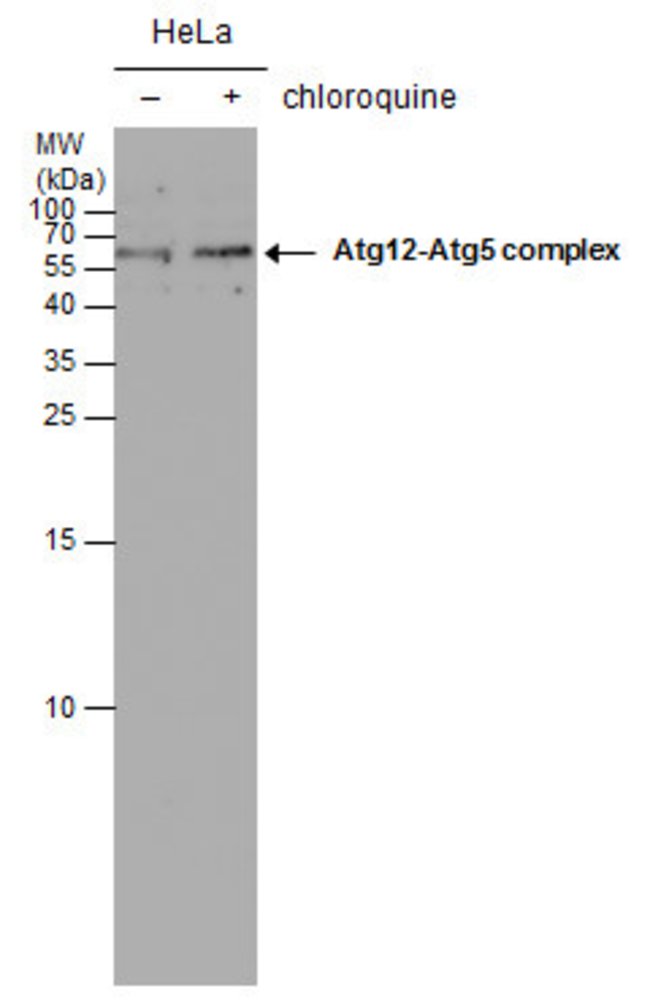
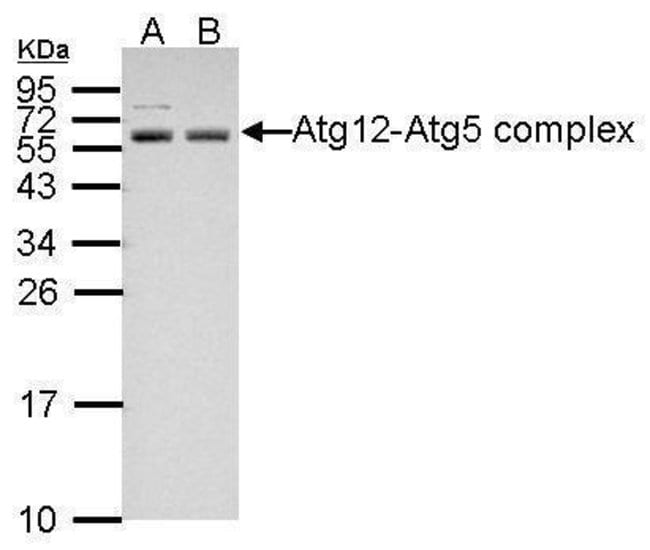
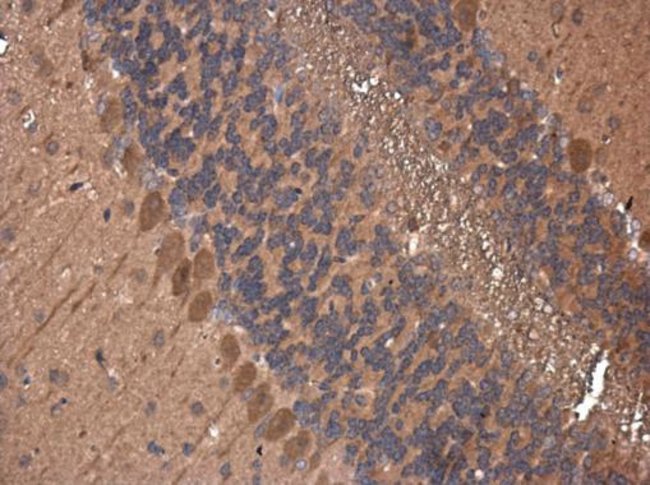
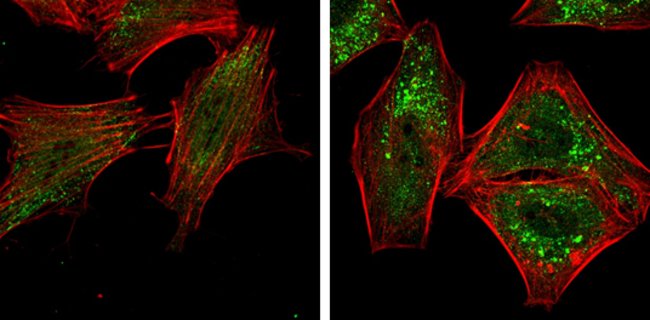
ATG5 Polyclonal Antibody, Invitrogen™
Description
Recommended positive controls: NT2D1, PC-3, HeLa, HeLa (chloroquine treatment for 24hr). Predicted reactivity: Mouse (95%), Xenopus laevis (81%), Chicken (87%), Bovine (95%). Store product as a concentrated solution. Centrifuge briefly prior to opening the vial.
ATG5 (Autophagy Related 5) is an important element for autophagy and may play an important role in the apoptotic process. ATG5 is also involved in other cellular processes that include mitochondrial quality control after oxidative damage, negative regulation of the innate anti-viral immune response, lymphocyte development and proliferation, MHC II antigen presentation, and adipocyte differentiation. Following conjugation to ATG12, the conjugate participates in the formation of autophagosome. ATG5 contributes to autophagic cell death by interacting with Fas-associated protein with death domain (FADD). The ATG5-ATG12 conjugate forms a cup-shaped isolation membrane that then detaches from the membrane immediately before or after autophagosome formation is completed. APG5 may play a role in the apoptotic process, possibly within the modified cytoskeleton. Further, APG5 expression is a relatively late event in the apoptotic process, occurring downstream of caspase activity. The APG5-APG12 conjugate also associates with innate immune response proteins such as RIG-I and VISA (also known as IPS-1), inhibiting type I interferon production and permitting viral replication in host cells. Diseases associated with ATG5 dysfunction include spinocerebellar ataxia.

Specifications
Specifications
| Antigen | ATG5 |
| Applications | Immunocytochemistry, Immunohistochemistry (Paraffin), Proximity Ligation Assay, Western Blot |
| Classification | Polyclonal |
| Concentration | 1 mg/mL |
| Conjugate | Unconjugated |
| Formulation | 0.1M tris glycine with 10% glycerol and 0.01% thimerosal; pH 7 |
| Gene | Atg5 |
| Gene Accession No. | Q99J83, Q9H1Y0 |
| Gene Alias | 2010107M05Rik; 3110067M24Rik; APG 5; APG5; APG5 autophagy 5 like (APG5L); APG5 autophagy 5-like protein; APG5 autophagy 5-like protein, isoform 1; APG5L; APG5-LIKE; apoptosis-specific protein; Apoptosis-specific protein (ASP); ASP; atg5; Atg-5; ATG5 autophagy related 5 homolog; ATG5 autophagy related 5 homolog (S. cerevisiae); atg5.L; Atg5l; Atg5-PA; autophagy 5-like protein; autophagy protein 5; autophagy related 5; autophagy related 5 L homeolog; autophagy related 5-like protein; Autophagy-related 5; autophagy-specific gene 5; AW319544; C88337; CG1643; CG1643-PA; DmAtg5; Dmel\CG1643; Dmel_CG1643; hAPG5; hypothetical protein LOC532686; LD34980p; Paddy; XELAEV_18027227mg; zgc:100934 |
| Gene Symbols | Atg5 |
| Show More |
Product Title
By clicking Submit, you acknowledge that you may be contacted by Fisher Scientific in regards to the feedback you have provided in this form. We will not share your information for any other purposes. All contact information provided shall also be maintained in accordance with our Privacy Policy.
Spot an opportunity for improvement?