Promotional price valid on web orders only. Your contract pricing may differ. Interested in signing up for a dedicated account number?
Learn More
Learn More
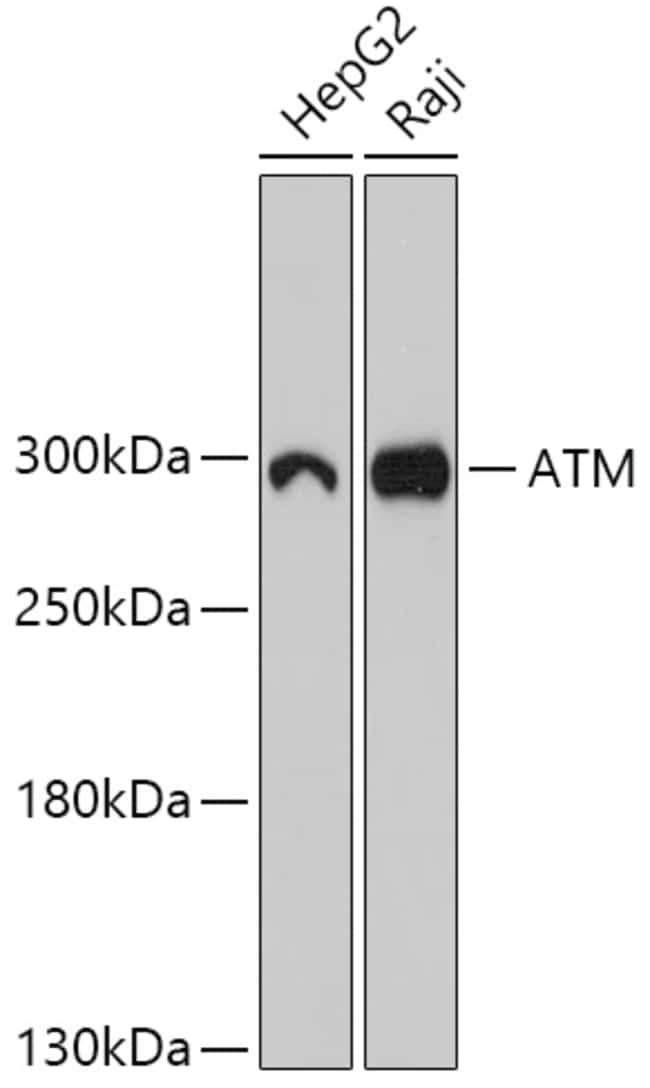
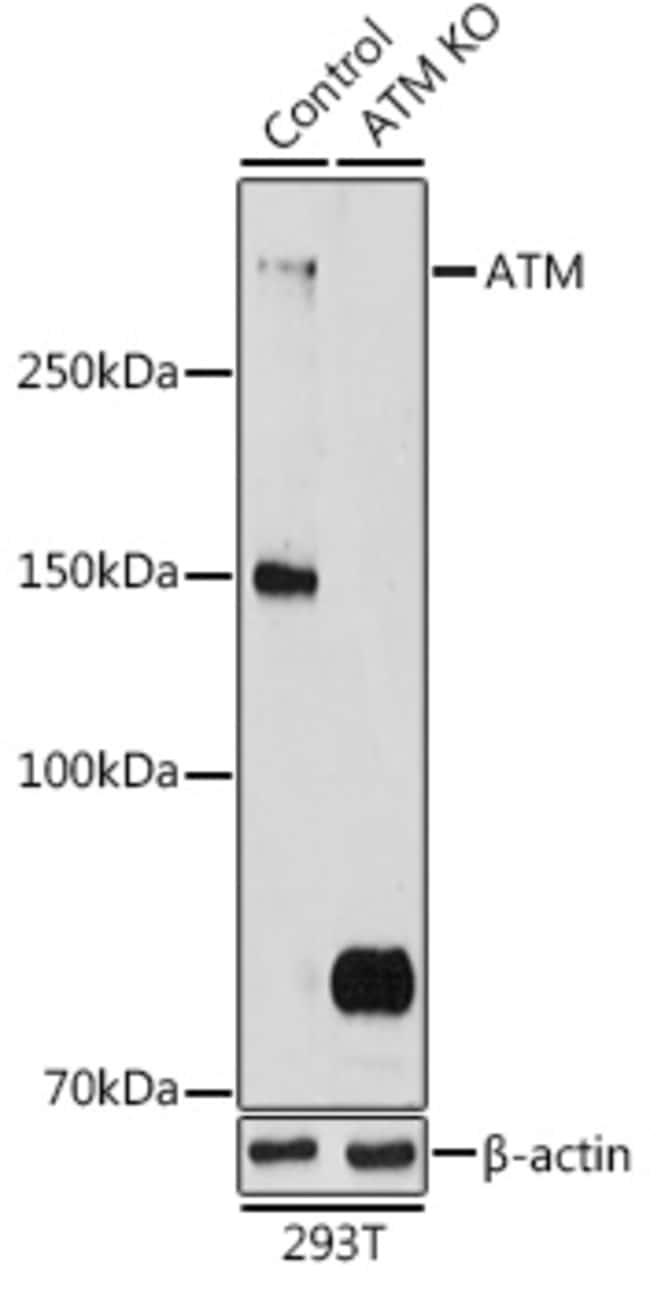
Invitrogen™ ATM Polyclonal Antibody

Description
Positive test controls include: 293T. The target is usually found in the following locations: Cytoplasmic vesicle, Nucleus. Immunogen sequence: DASCAANNPS LKLTYTECLR VCGNWLAETC LENPAVIMQT YLEKAVEVAG NYDGESSDEL RNGKMKAFLS LARFSDTQYQ RIENYMKSSE FENKQALLKR AKEEVGLLRE HKIQTNRYTV KVQRELELDE LALRALKEDR KRFLCKAVEN YINCLLSGEE HDMWVFRLCS LWLENSGVSE VNGMMKRDGM KIPTYKFLPL MYQLAARMGT KMMGGLGFHE VLNNLISRIS MDHPHHTLFI ILALANA.
Ataxia-telangiectasia Mutated (ATM) is a protein that belongs to the PI3/PI4 kinase family. Ataxia-telangiectasia is a rare autosomal recessive disorder characterized by progressive neurologic degeneration, immunologic deficiency, and an increased risk of lymphoid cancer. The ATM gene codes for a protein belonging to the phosphoinositide 3-kinase (PI3K) superfamily. ATM phosphorylates proteins instead of lipid and has many downstream targets that act as cell-cycle regulators including: P53, Mdm2, BRCA1, and SMC1. The ATM protein is responsible for repairing double-stranded DNA breaks that occur because of ionizing radiation and other mutagens. The ATM's C-terminal region has extensive homology to the catalytic domains of phosphatidylinositol 3-kinases (PI3 kinases). Studies have shown that ATM becomes autophosphorylated and upregulated by exposure to ionizing radiation. AT cells are hypersensitive to ionizing radiation, impaired in mediating the inhibition of DNA synthesis and display delays in p53 induction. Further, DNA damage caused by ionizing irradiation activates ATM-kinase, leading to a cascade of kinase reactions that regulate cell cycle, apoptosis, and DNA damage repair. Studies have linked ATM to apoptosis along with Nbs1 and Chk2 in the E2F1 pathway.

Specifications
Specifications
| Antigen | ATM |
| Applications | ELISA, Western Blot |
| Classification | Polyclonal |
| Concentration | 1.03 mg/mL |
| Conjugate | Unconjugated |
| Formulation | PBS with 50% glycerol and 0.01% thimerosal; pH 7.3 |
| Gene | ATM |
| Gene Accession No. | Q13315, Q62388 |
| Gene Alias | AI256621; AT mutated; A-T mutated; A-T mutated homolog; AT mutated protein; AT1; ATA; Ataxia t; Ataxia telangiectasia gene mutated in human beings; ataxia telangiectasia mutated; Ataxia telangiectasia mutated homolog; ATC; ATD; ATDC; ATE; Atm; ATM serine/threonine kinase; C030026E19Rik; DKFZp781A0353; EC 2.7.1.37; MGC74674; serine-protein kinase ATM; TEL1; TEL1, telomere maintenance 1, homolog; TELO1 |
| Gene Symbols | ATM |
| Show More |
Product Title
By clicking Submit, you acknowledge that you may be contacted by Fisher Scientific in regards to the feedback you have provided in this form. We will not share your information for any other purposes. All contact information provided shall also be maintained in accordance with our Privacy Policy.
Spot an opportunity for improvement?