Promotional price valid on web orders only. Your contract pricing may differ. Interested in signing up for a dedicated account number?
Learn More

Invitrogen™ ATP5H Polyclonal Antibody
GREENER_CHOICE

Catalog No. PIPA578840
Change view
Click to view available options
Quantity:
100 μg
1 product options available for selection
Product selection table with 1 available options. Use arrow keys to navigate and Enter or Space to select.
Catalog No. Quantity
PIPA578840 100 μg
Use arrow keys to navigate between rows. Press Enter or Space to select a product option. 1 options available.
1 options
Catalog No. PIPA578840 Supplier Invitrogen™ Supplier No. PA578840
Add to Cart
Add to Cart

Rabbit Polyclonal Antibody

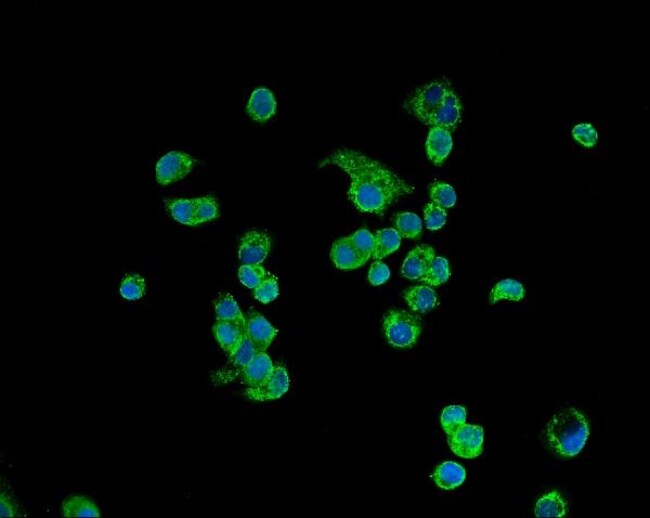
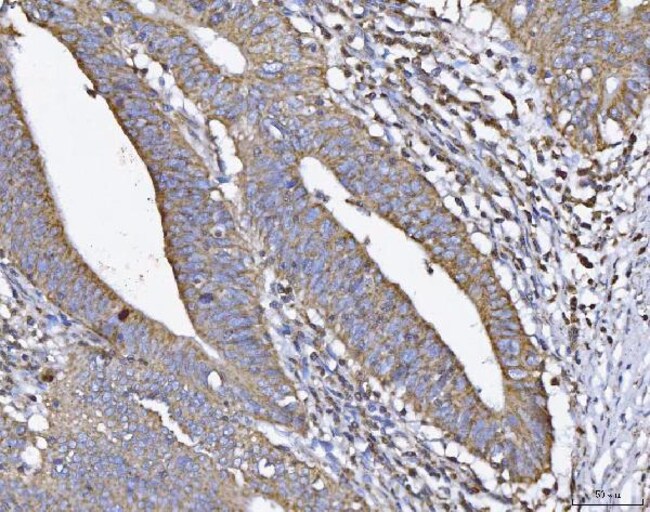
Reconstitute with 0.2 mL of distilled water to yield a concentration of 500 μg/mL. Positive Control - WB: human Hela whole cell, human HepG2 whole cell, human U-87MG whole cell, human A549 whole cell, monkey COS-7 whole cell, human SW620 whole cell, human Jurkat whole cell, human 293T whole cell, rat brain tissue, rat liver tissue, rat heart tissue, rat PC-12 whole cell, mouse brain tissue, mouse liver tissue, mouse heart tissue, mouse ANA-1 whole cell. IHC: human rectal cancer tissue. ICC/IF: T-47D cell.

This gene encodes a subunit of mitochondrial ATP synthase. Mitochondrial ATP synthase catalyzes ATP synthesis, using an electrochemical gradient of protons across the inner membrane during oxidative phosphorylation. ATP synthase is composed of two linked multi-subunit complexes: the soluble catalytic core, F1, and the membrane-spanning component, Fo, comprising the proton channel. The catalytic portion of mitochondrial ATP synthase consists of 5 different subunits (alpha, beta, gamma, delta, and epsilon) assembled with a stoichiometry of 3 alpha, 3 beta, and a single representative of the other 3. The proton channel consists of three main subunits (a, b, c). This gene encodes the alpha subunit of the catalytic core. Alternatively spliced transcript variants encoding the same protein have been identified. Pseudogenes of this gene are located on chromosomes 9, 2, and 16.
TRUSTED_SUSTAINABILITY

Specifications

Antigen ATP5H
Applications Immunohistochemistry (Paraffin), Western Blot, Immunocytochemistry
Classification Polyclonal
Concentration 500 μg/mL
Conjugate Unconjugated
Formulation PBS with 4mg trehalose and no preservative
Gene ATP5PD
Gene Accession No. O75947, P31399, Q9DCX2
Gene Alias 0610009D10Rik; ATP synthase D chain, mitochondrial; ATP synthase peripheral stalk subunit d; ATP synthase subunit d, mitochondrial; ATP synthase, H+ transporting, mitochondrial F0 complex, subunit d; ATP synthase, H+ transporting, mitochondrial F0 complex, subunit d isoform a; ATP synthase, H+ transporting, mitochondrial F1F0, subunit d; ATP synthase, H+ transporting, mitochondrial Fo complex subunit D; ATP synthase, H+ transporting, mitochondrial Fo complex, subunit d; Atp5h; Atp5jd; Atp5pd; ATPase subunit d; ATPQ; My032; My032 protein; unnamed protein product; zgc:73071
Gene Symbols ATP5PD
Host Species Rabbit
Immunogen E.coli-derived human ATP5H recombinant protein (Position: A2-L161).
Purification Method Antigen affinity chromatography
Quantity 100 μg
Regulatory Status RUO
Primary or Secondary Primary
Gene ID (Entrez) 10476, 641434, 71679
Target Species Human, Mouse, Rat, Monkey
Content And Storage -20°C
Product Type Antibody
Form Lyophilized
Isotype IgG
Show More Show Less
Product Title
Select an issue

By clicking Submit, you acknowledge that you may be contacted by Fisher Scientific in regards to the feedback you have provided in this form. We will not share your information for any other purposes. All contact information provided shall also be maintained in accordance with our Privacy Policy.