Learn More
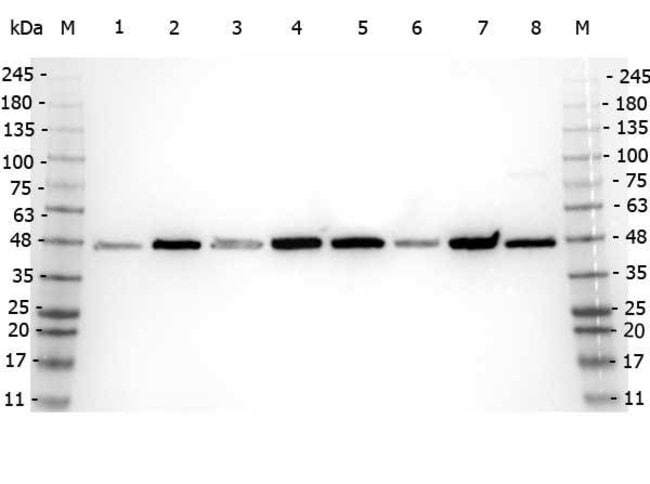
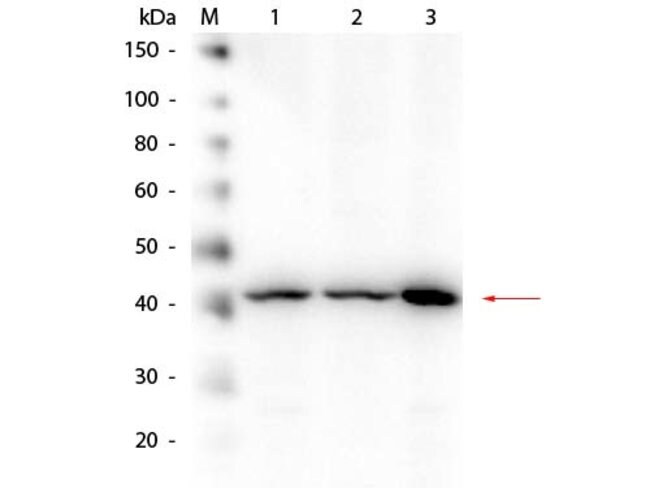
beta Amyloid Polyclonal Antibody, Rockland™


Description
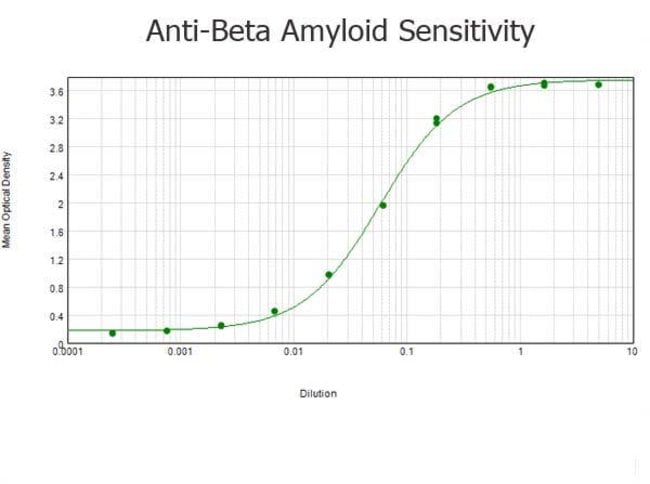
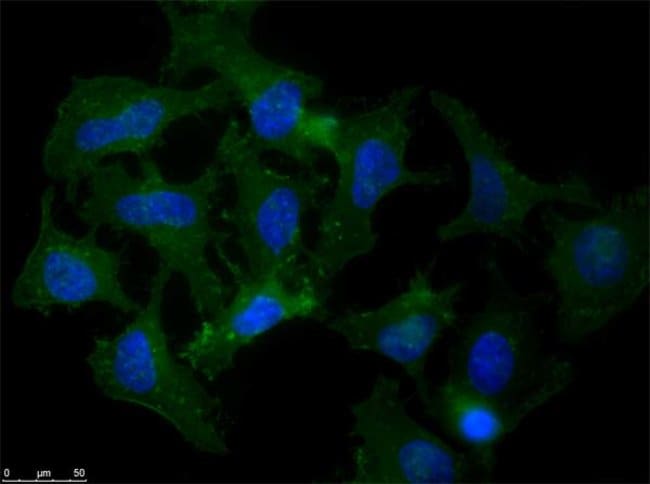
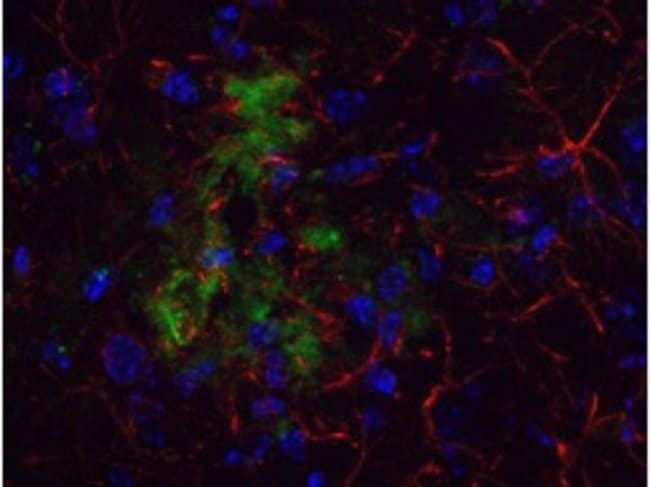
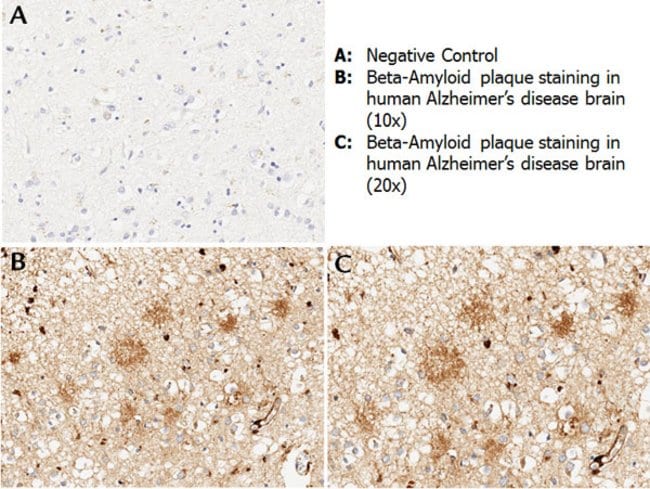
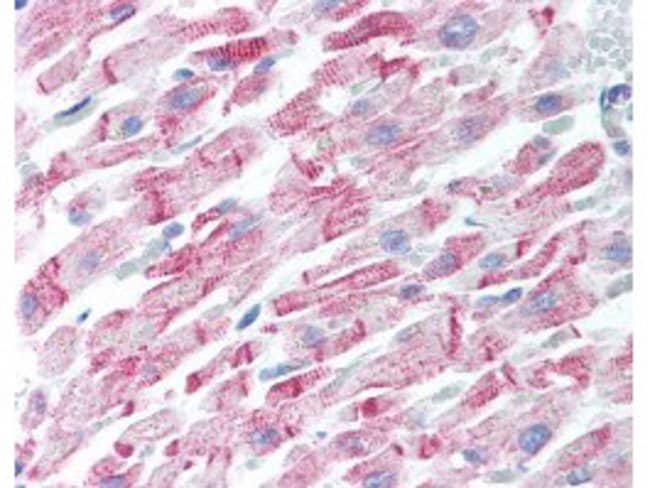
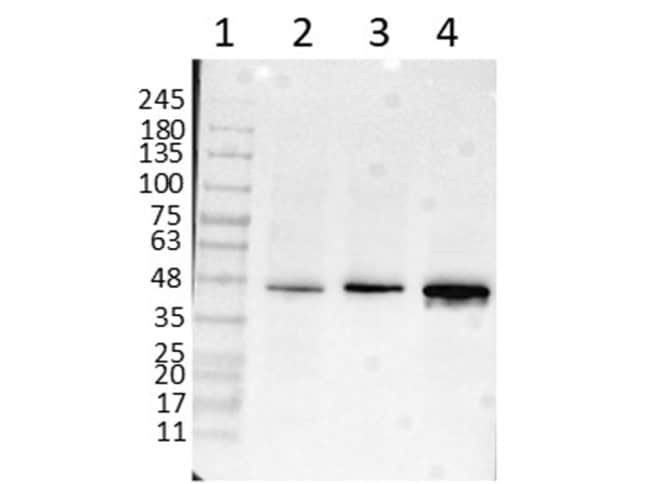
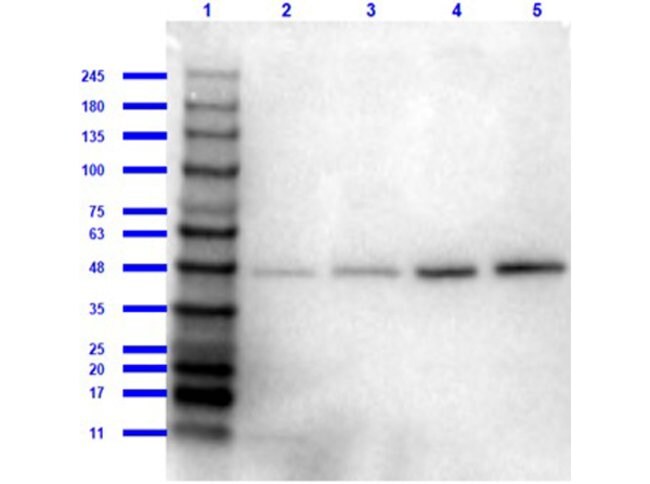
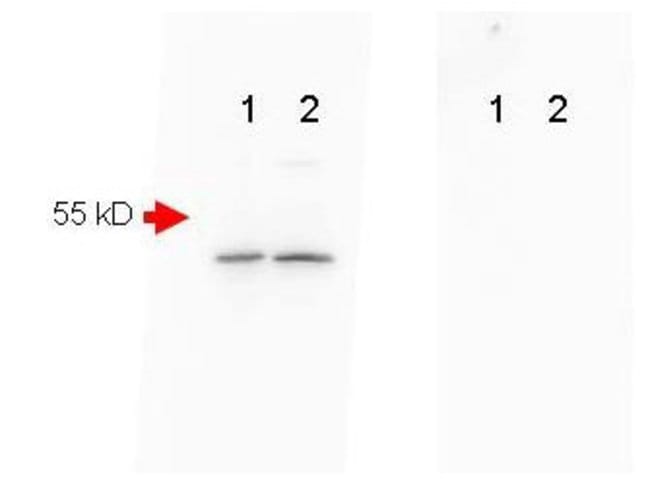
Store vial at -20°C prior to opening. Aliquot contents and freeze at -20°C or below for extended storage. Avoid cycles of freezing and thawing. Centrifuge product if not completely clear after standing at room temperature. This product is stable for several weeks at 4°C as an undiluted liquid. Dilute only prior to immediate use. This affinity-purified antibody is directed against the amino terminal end of beta amyloid and is useful in determining its presence in various assays. Polyclonal anti-beta amyloid detects human and mouse beta amyloid. Cross reactivity with beta amyloid from other species is likely but has not been determined.
Specifications
Specifications
| Antigen | beta Amyloid |
| Applications | ELISA, Immunofluorescence, Immunohistochemistry, Immunohistochemistry (Paraffin), Immunoprecipitation, Western Blot |
| Classification | Polyclonal |
| Concentration | 1 mg/mL |
| Conjugate | Unconjugated |
| Formulation | 0.02M potassium phosphate with 0.15M NaCl and 0.01% sodium azide; pH 7.2 |
| Gene | APP |
| Gene Accession No. | P05067, P12023 |
| Gene Alias | A4; AAA; ABETA; Abeta40; Abeta42; ABPP; AD1; Adap; AG; AICD-50; AICD-57; AICD-59; AID(50); AID(57); AID(59); Alpha-CTF; Alpha-secretase C-terminal fragment; Alzheimer disease; Alzheimer disease amyloid A4 protein homolog; Alzheimer disease amyloid protein; Amyloid; amyloid A4; Amyloid b; Amyloid beta; amyloid beta (A4) precursor protein; amyloid beta (A4) precursor protein (peptidase nexin-II, Alzheimer disease); amyloid beta A4 protein; amyloid beta precursor protein; Amyloid intracellular domain 50; Amyloid intracellular domain 57; Amyloid intracellular domain 59; Amyloid precursor protein; Amyloid ß; Amyloid-beta A4 protein; Amyloid-beta precursor protein; amyloid-beta protein 40; Amyloid-beta protein 42; Amyloidogenic glycoprotein; APP; APP-C57; APP-C59; APP-C99; APPI; appican; beta-amyloid peptide; beta-amyloid peptide(1-40); beta-amyloid peptide(1-42); beta-amyloid precursor protein; betaApp; Beta-APP40; Beta-APP42; Beta-CTF; Beta-secretase C-terminal fragment; C31; C80; C83; C99; Cerebral vascular amyloid peptide; CTF gamma; CTF-alpha; CTFgamma; CVAP; E030013M08Rik; Gamma-CTF(50); Gamma-CTF(57); Gamma-CTF(59); Gamma-secretase C-terminal fragment 50; Gamma-secretase C-terminal fragment 57; Gamma-secretase C-terminal fragment 59; N-APP; OTTHUMP00000096096; P3(40); P3(42); Pan-Abeta; peptidase nexin-II; PN2; PN-II; PreA4; PreA4 751; protease nexin II; Protease nexin-II; S-APP-alpha; S-APP-beta; Soluble APP-alpha; Soluble APP-beta; testicular tissue protein Li 2 |
| Gene Symbols | APP |
| Show More |
By clicking Submit, you acknowledge that you may be contacted by Fisher Scientific in regards to the feedback you have provided in this form. We will not share your information for any other purposes. All contact information provided shall also be maintained in accordance with our Privacy Policy.