Promotional price valid on web orders only. Your contract pricing may differ. Interested in signing up for a dedicated account number?
Learn More
Learn More
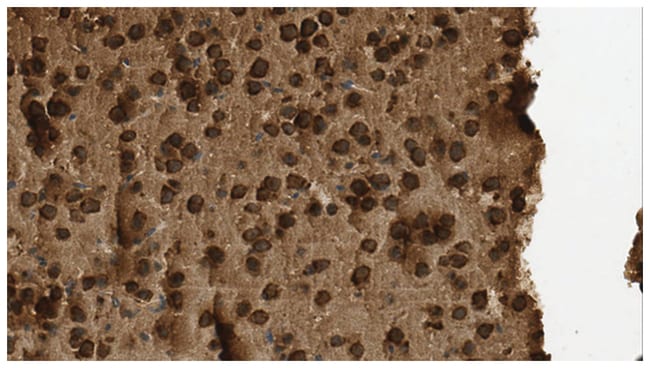
MilliporeSigma™ Beta-glucosidase 2 (GBA2), Rat, Unlabeled, Clone: 4A12,
Shop All MilliporeSigma ProductsDescription
Non-lysosomal glucosylceramidase (EC 3.2.1.45; UniProt Q69ZF3; also known as Beta-glucocerebrosidase 2, Beta-glucosidase 2, Glucosylceramidase 2, NLGase) is encoded by the Gba2 (also known as Kiaa1605) gene (Gene ID 230101) in murine species. Glucosidases GBA1, GBA2, and GBA3 are structurally unrelated proteins with similar hydrolase activity that mediates glucosylceramide (GlcCer) degradation. GBA1 mediates GlcCer degradation in the lysosome lumen following its transport via the endosomal pathway. GBA2 is localized at the cytosolic surface of the ER and Golgi, with a predominant presence at the cis-Golgi in close proximity to the site of GlcCer synthesis and sphingomyelin conversion. GlcCer is also delivered to the ER through FAPP2-dependent transport and then flips to ER lumenal side by low specificity phospholipid flippases. GBA2 ER localization allows it to regulate GlcCer level at the cytosolic side of the ER and limit the amount of GlcCer from entering the ER lumenal side for higher order glycosphingolipid synthesis. Impaired GBA1 activity causes accumulation of GlcCer in lysosomes of tissue macrophages, causing liver and spleen enlargement and impairment of the central nervous system in patients with Gaucher disease. GBA2 activity is found downregulated in fibroblasts from a patient with type II Gaucher disease and fibroblasts from Gba1-deficient mice, suggesting a cross-talk between GBA1 and GBA2 that could affect the phenotype of Gaucher disease. GBA3 is a cytosolic Klotho-related protein whose physiological function is not yet known.

Specifications
Specifications
| Antigen | Beta-glucosidase 2 (GBA2) |
| Applications | Immunohistochemistry (Paraffin), Western Blot |
| Classification | Monoclonal |
| Clone | 4A12 |
| Concentration | Please refer to lot specific datasheet. |
| Conjugate | Unconjugated |
| Formulation | Purified rat IgG1 in buffer containing 0.1M Tris-Glycine (pH 7.4), 150mM NaCl with 0.05% Sodium Azide. |
| Gene | Gba2, Kiaa1605 |
| Gene Accession No. | Q69ZF3 |
| Host Species | Rat |
| Show More |
For Research Use Only. Not for use in diagnostic procedures.
Product Title
By clicking Submit, you acknowledge that you may be contacted by Fisher Scientific in regards to the feedback you have provided in this form. We will not share your information for any other purposes. All contact information provided shall also be maintained in accordance with our Privacy Policy.
Spot an opportunity for improvement?