Promotional price valid on web orders only. Your contract pricing may differ. Interested in signing up for a dedicated account number?
Learn More
Learn More
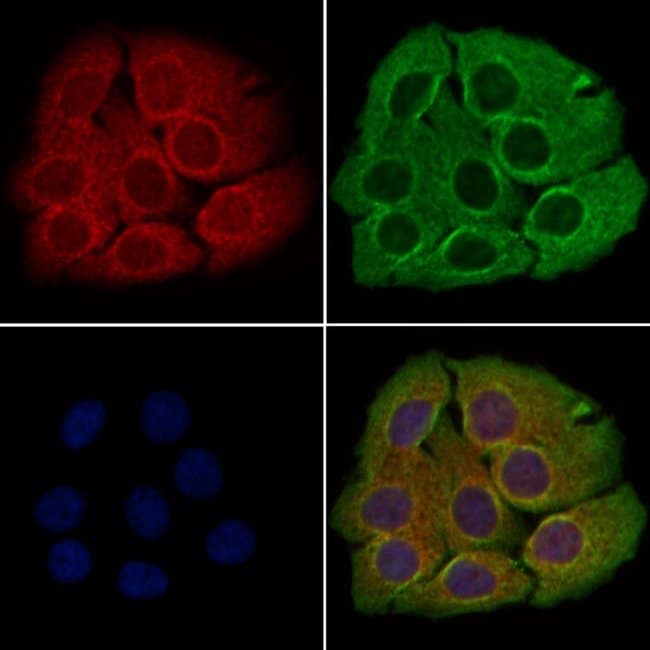
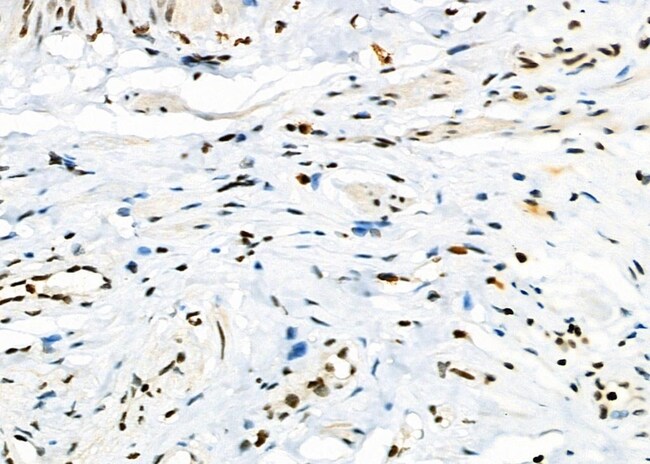
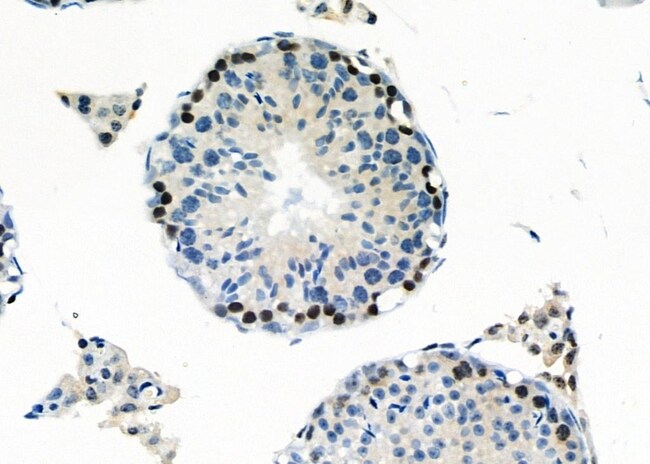
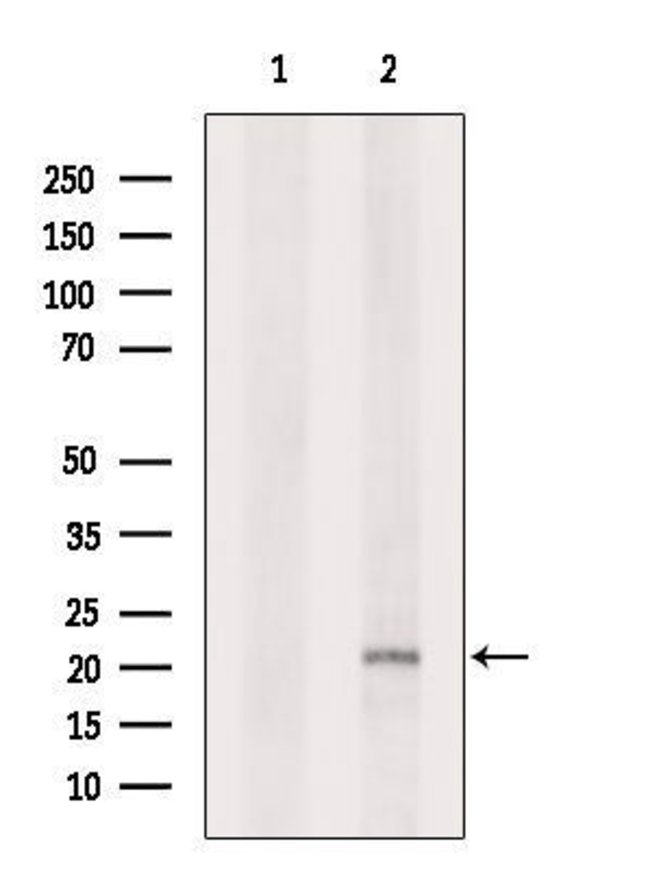
Invitrogen™ C1orf57 Polyclonal Antibody

Description
Antibody detects endogenous levels of total C1orf57.
Belonging to the THEP1 NTPase family, C1orf57 (also known as nucleoside triphosphate phosphohydrolase), and its mouse homolog, 2310079N02Rik, are 190 amino acid proteins that has nucleotide phosphatase activity towards ATP, GTP, TTP, CTP and UTP. Acting as a monomer, it also hydrolyzes nucleoside diphosphates with lower efficiency. The gene encoding C1orf57 maps to human chromosome 1, the largest human chromosome spanning about 260 million base pairs and making up 8% of the human genome. There are about 3,000 genes on chromosome 1, and considering the great number of genes there are also a large number of diseases associated with chromosome 1. Notably, the rare aging disease Hutchinson-Gilford progeria is associated with the LMNA gene which encodes lamin A. When defective, the LMNA gene product can build up in the nucleus and cause characteristic nuclear blebs. The mechanism of rapidly enhanced aging is unclear and is a topic of continuing exploration. The MUTYH gene is located on chromosome 1 and is partially responsible for familial adenomatous polyposis. Stickler syndrome, Parkinson's, Gaucher disease and Usher syndrome are also associated with chromosome 1.

Specifications
Specifications
| Antigen | C1orf57 |
| Applications | Immunohistochemistry (Paraffin), Western Blot, Immunocytochemistry |
| Classification | Polyclonal |
| Concentration | 1 mg/mL |
| Conjugate | Unconjugated |
| Formulation | PBS with 50% glycerol and 0.02% sodium azide; pH 7.4 |
| Gene | Ntpcr |
| Gene Accession No. | Q9BSD7, Q9CQA9 |
| Gene Alias | 2310079N02Rik; AI449709; C1orf57; cancer-related nucleoside-triphosphatase; Cancer-related nucleoside-triphosphatase homolog; CH1073-266P11.1; HCR-NTPase; NTPase; Ntpcr; Nucleoside triphosphate phosphohydrolase; nucleoside-triphosphatase C1orf57 homolog; nucleoside-triphosphatase, cancer-related; RGD1306192; RP4-659I19.2; RP4-678E16.2; zgc:92420 |
| Gene Symbols | Ntpcr |
| Show More |
Product Title
By clicking Submit, you acknowledge that you may be contacted by Fisher Scientific in regards to the feedback you have provided in this form. We will not share your information for any other purposes. All contact information provided shall also be maintained in accordance with our Privacy Policy.
Spot an opportunity for improvement?