Learn More
Invitrogen™ CAR Polyclonal Antibody

Description
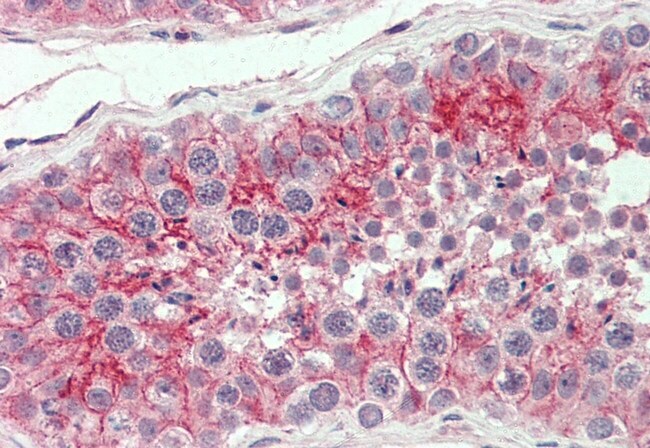
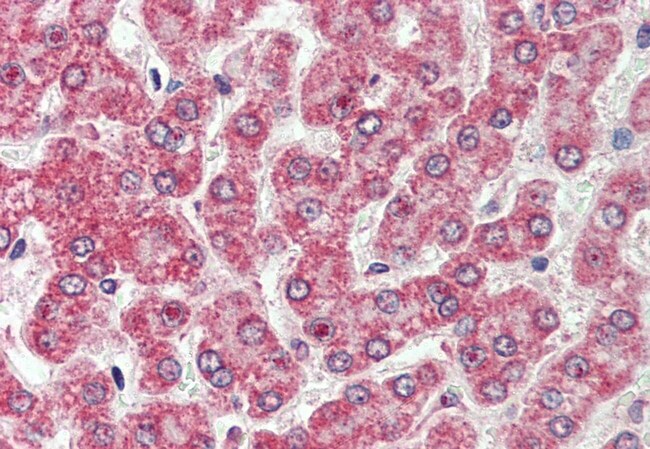
Percent identity with other species by BLAST analysis: Human, Chimpanzee, Gorilla, Orangutan, Gibbon, Monkey, Galago, Marmoset, Mouse, Rat, Hamster, Elephant, Panda, Bat, Bovine, Rabbit, Horse, Pig, Opossum, Guinea pig (100%); Zebra finch, Platypus, Lizard (93%); Xenopus, Stickleback, Pufferfish, Zebrafish (80%). For IHC(P), use heat induced antigen retrieval in pH 6.0 citrate buffer. After incubation with the primary antibody, slides were incubated with biotinylated secondary antibody, followed by alkaline phosphatase-streptavidin and chromogen.

Specifications
Specifications
| Antigen | CAR |
| Applications | Immunohistochemistry (Paraffin) |
| Classification | Polyclonal |
| Concentration | 1 mg/mL |
| Conjugate | Unconjugated |
| Formulation | PBS with 0.1% sodium azide |
| Gene | CXADR |
| Gene Accession No. | P78310, P97792, Q8WMV3, Q9R066 |
| Gene Alias | 2610206D03Rik; 46 kD coxsackievirus and adenovirus receptor (CAR) protein; AU016810; AW553441; CAR; Car1; CAR4/6; coxsackie virus and adenovirus receptor; coxsackievirus and adenovirus receptor; Coxsackievirus and adenovirus receptor homolog; coxsackievirus B-adenovirus receptor; CVB3-binding protein; Cxadr; HCAR; HCVADR; MCAR; MCVADR; rCAR |
| Gene Symbols | CXADR |
| Show More |
Safety and Handling
By clicking Submit, you acknowledge that you may be contacted by Fisher Scientific in regards to the feedback you have provided in this form. We will not share your information for any other purposes. All contact information provided shall also be maintained in accordance with our Privacy Policy.