Promotional price valid on web orders only. Your contract pricing may differ. Interested in signing up for a dedicated account number?
Learn More

Invitrogen™ Cathepsin D Monoclonal Antibody (CTD-19)
GREENER_CHOICE

Catalog No. PIMA532991
Change view
Click to view available options
Quantity:
100 μg
1 product options available for selection
Product selection table with 1 available options. Use arrow keys to navigate and Enter or Space to select.
Catalog No. Quantity
PIMA532991 100 μg
Use arrow keys to navigate between rows. Press Enter or Space to select a product option. 1 options available.
1 options
Catalog No. PIMA532991 Supplier Invitrogen™ Supplier No. MA532991
Only null left
Add to Cart
Add to Cart

Mouse Monoclonal Antibody

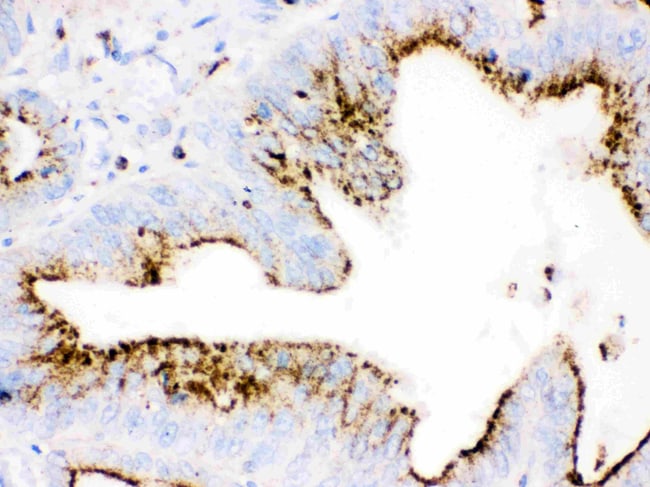
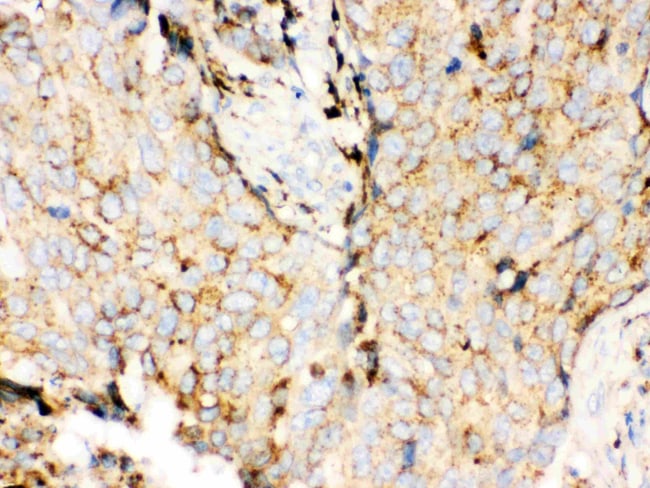
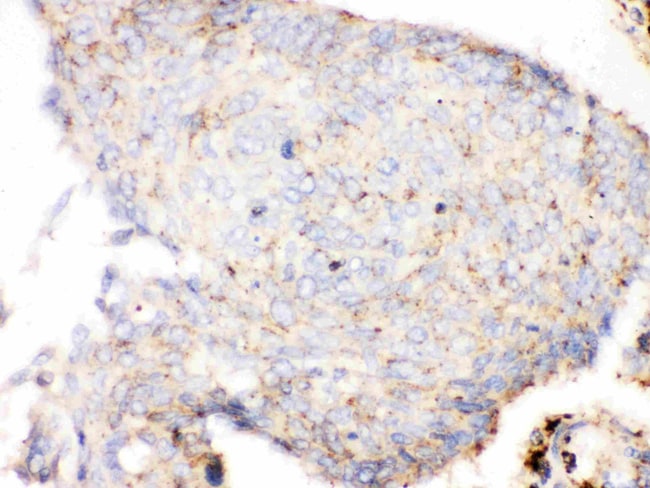
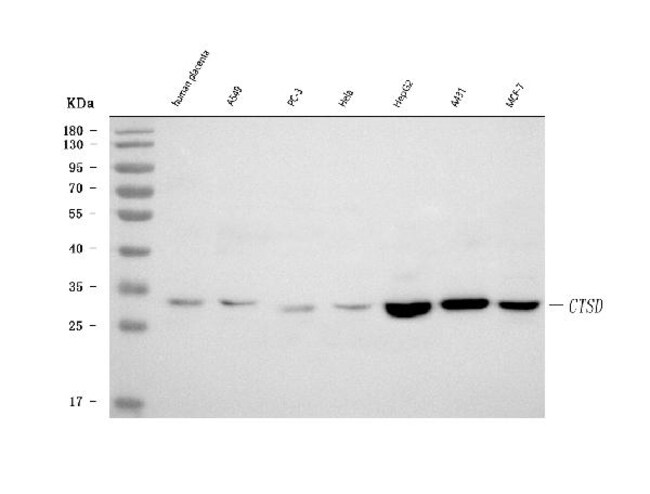
Reconstitute with 1 mL of PBS to yield a concentration of 100 μg/mL. Positive Control - WB: human placenta tissue, human A549 whole cell, human PC-3 whole cell, human Hela whole cell, human HepG2 whole cell, human A431 whole cell, human MCF-7 whole cell. IHC: human intestine cancer tissue, human lung cancer tissue, human mammary cancer tissue. Store at -20°C for one year from date of receipt. After reconstitution, at 4°C for one month. It can also be aliquotted and stored frozen at -20°C for six months. Avoid repeated freeze-thaw cycles.

Cathepsin D is a gene located on chromosome 11p15.5 that encodes a lysosomal aspartic protease involved in the degradation of proteins. This enzyme is widely expressed in various tissues but is particularly abundant in the liver, kidneys, and brain, where it plays a crucial role in intracellular protein catabolism and turnover. Cathepsin D is synthesized as an inactive precursor, procathepsin D, which is activated in the acidic environment of lysosomes. Beyond its fundamental role in protein degradation, Cathepsin D has been implicated in several physiological and pathological processes, including apoptosis, hormone processing, and antigen presentation. Dysregulation of Cathepsin D expression or activity is associated with various diseases, such as neurodegenerative disorders, cancer, and cardiovascular diseases. In the context of cancer, Cathepsin D overexpression has been linked to tumor progression and metastasis, making it a potential biomarker and therapeutic target. Research continues to explore its diverse biological functions and therapeutic implications in various medical conditions.
TRUSTED_SUSTAINABILITY

Specifications

Antigen Cathepsin D
Applications Immunohistochemistry (Paraffin), Western Blot
Classification Monoclonal
Clone CTD-19
Concentration Conc. Not Determined
Conjugate Unconjugated
Formulation Ascites, 1.2% sodium acetate with 2mg BSA and 0.01mg sodium azide
Gene Ctsd
Gene Accession No. P07339
Gene Alias CatD; Cathepsin D; Cathepsin D heavy chain; Cathepsin D light chain; CathepsinD; CD; Ceroid lipofuscinosis neuronal 10; ceroid-lipofuscinosis, neuronal 10; CLN10; CPSD; CTSD; epididymis secretory sperm binding protein Li 130P; HEL-S-130P; lysosomal aspartyl peptidase; lysosomal aspartyl protease; MGC2311; OTTHUMP00000196039; OTTHUMP00000198692
Gene Symbols Ctsd
Host Species Mouse
Immunogen Human liver cathepsin D.
Quantity 100 μg
Regulatory Status RUO
Primary or Secondary Primary
Gene ID (Entrez) 1509
Target Species Human
Content And Storage -20°C
Product Type Antibody
Form Lyophilized
Isotype IgG2a
Show More Show Less
Product Title
Select an issue

By clicking Submit, you acknowledge that you may be contacted by Fisher Scientific in regards to the feedback you have provided in this form. We will not share your information for any other purposes. All contact information provided shall also be maintained in accordance with our Privacy Policy.