Learn More

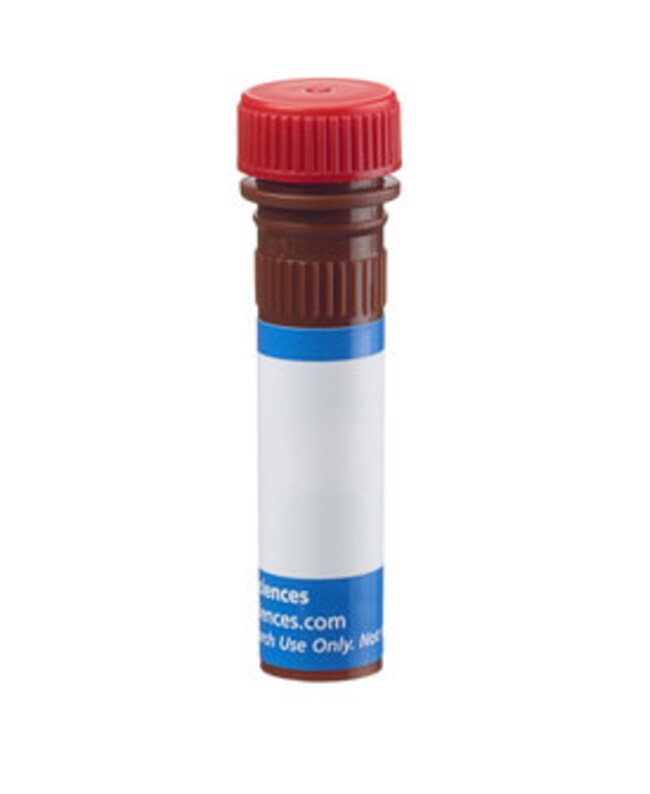
Description
The J43 antibody reacts with CD279 (PD-1), a 50-55-kDa glycoprotein encoded by the Pdcd1 gene of the CD28 family of the Ig superfamily. The expression of Pdcd1 mRNA and PD-1 protein is tightly regulated. PD-1 is transiently expressed on CD4-CD8thymocytes, it is upregulated on some cell lines upon induction of apoptosis, it is induced on thymocytes and splenic T and B lymphocytes after stimulation through their antigen receptors, and it is induced on activated myeloid cells. In addition, Pdcd1 mRNA is transiently expressed in developing B lymphocytes at the pro-B-cell stage. The presence of an ITIM (Immunoreceptor nhibitory Motif) on PD-1's intracytoplasmic region and the development of splenomegaly and breakdown of peripheral tolerance in PD-1[-/-] mice suggest that PD-1 may be involved in the negative regulation of immune responses. The PD-1 ligands, B7-H1 (also known as PD-L1) and B7-DC (PD-L2), are members of the B7 family of the Ig superfamily. The J43 antibody blocks the binding of PD-1 to its two ligands.

Specifications
Specifications
| Antigen | CD279 |
| Applications | Flow Cytometry |
| Classification | Monoclonal |
| Clone | J43 |
| Concentration | 0.2mg/mL |
| Conjugate | PE |
| Description | PD-1 |
| Formulation | Aqueous buffered solution containing ≤0.09% sodium azide. |
| Host Species | Hamster |
| Immunogen | Syrian Hamster kidney cell line BKH transfected with Pdcd1 cDNA |
| Show More |
For Research Use Only.
By clicking Submit, you acknowledge that you may be contacted by Fisher Scientific in regards to the feedback you have provided in this form. We will not share your information for any other purposes. All contact information provided shall also be maintained in accordance with our Privacy Policy.