Promotional price valid on web orders only. Your contract pricing may differ. Interested in signing up for a dedicated account number?
Learn More

Invitrogen™ CD39 Polyclonal Antibody
GREENER_CHOICE

Catalog No. PIPA5120870
Change view
Click to view available options
Quantity:
100 μL
1 product options available for selection
Product selection table with 1 available options. Use arrow keys to navigate and Enter or Space to select.
Catalog No. Quantity
PIPA5120870 100 μL
Use arrow keys to navigate between rows. Press Enter or Space to select a product option. 1 options available.
1 options
This item is not returnable. View return policy
Catalog No. PIPA5120870 Supplier Invitrogen™ Supplier No. PA5120870
Add to Cart
Add to Cart
This item is not returnable. View return policy

Rabbit Polyclonal Antibody

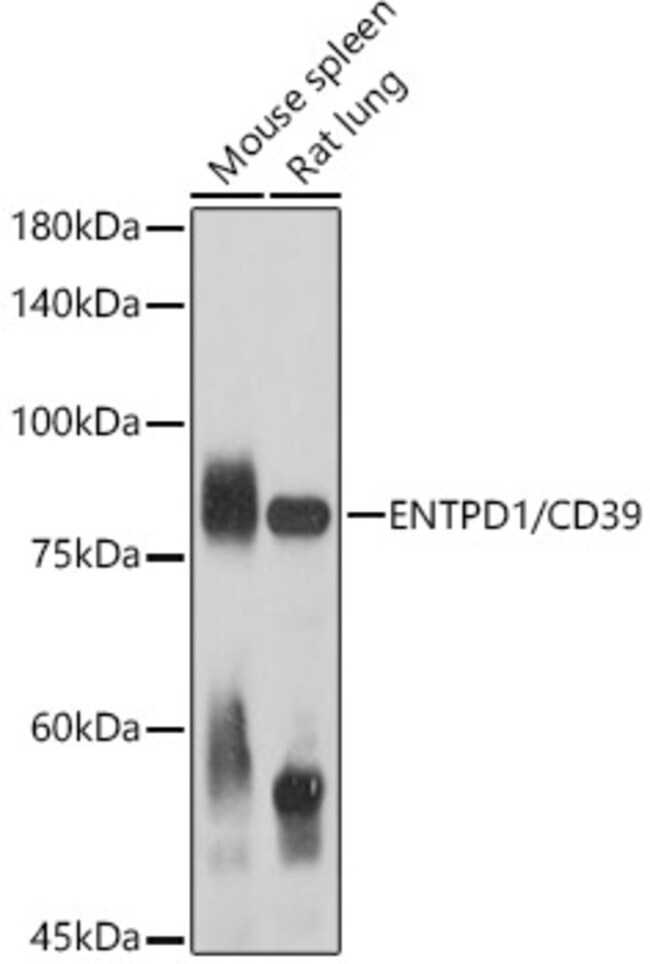
Positive test controls include: U-251MG, HeLa, A-549, LO2, HL-60, MCF7, Mouse lung, Mouse spleen, Rat kidney. The target is usually found in the following locations: Membrane, Multi-pass membrane protein. Immunogen sequence: MESEELADRV LDVVERSLSN YPFDFQGARI ITGQEEGAYG WITINYLLGK FSQKTRWFSI VPYETNNQET FGALDLGGAS TQVTFVPQNQ TIESPDNALQ FRLYGKDYNV YTHSFLCYGK DQALWQKLAK DIQVASNEIL RDPCFHPGYK KVVNVSDLYK TPCTKRFEMT LPFQQFEIQG.

CD39 is an integral membrane protein characterized by two transmembrane domains and forms a homotetramer structure. It is recognized as the most prominent ectoenzyme within the immune system, primarily functioning to remove toxic extracellular ATP by converting it into ADP or AMP. CD39 works in conjunction with CD73 to hydrolyze ATP and is well characterized on Langerhans cells. Originally identified on activated lymphocytes, CD39 is expressed on a variety of immune cells, including peripheral blood B cells, monocytes, and T cell clones. It is also found on a subset of T cells, B cells, and dendritic cells, with weaker expression observed on monocytes and granulocytes. The CD39 cell surface antigen is a 70-100kD molecule, and its expression is induced on T cells and increases on B cells as a late activation antigen. CD39 possesses intrinsic ecto-ATPase activity, playing a crucial role in modulating extracellular nucleotide levels and contributing to immune regulation.
TRUSTED_SUSTAINABILITY

Specifications

Antigen CD39
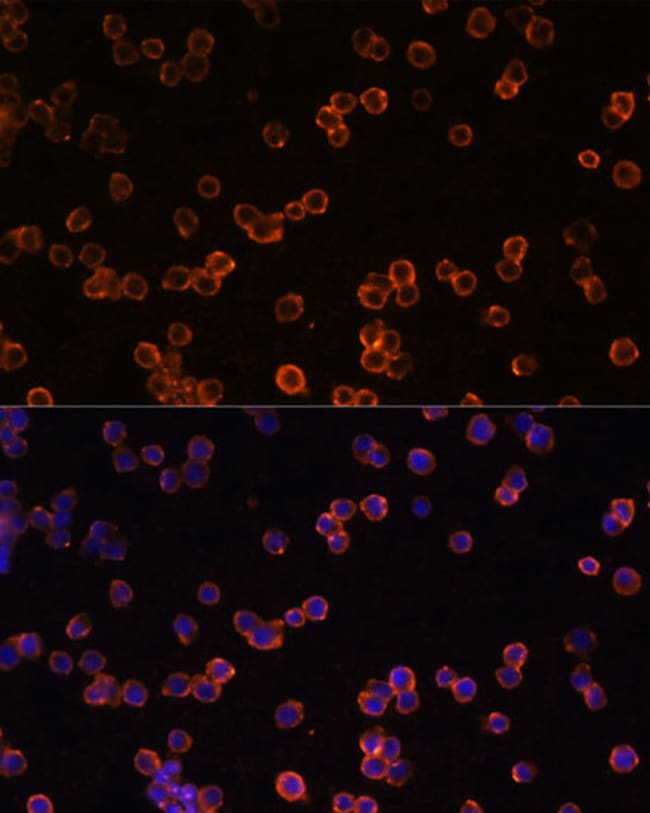
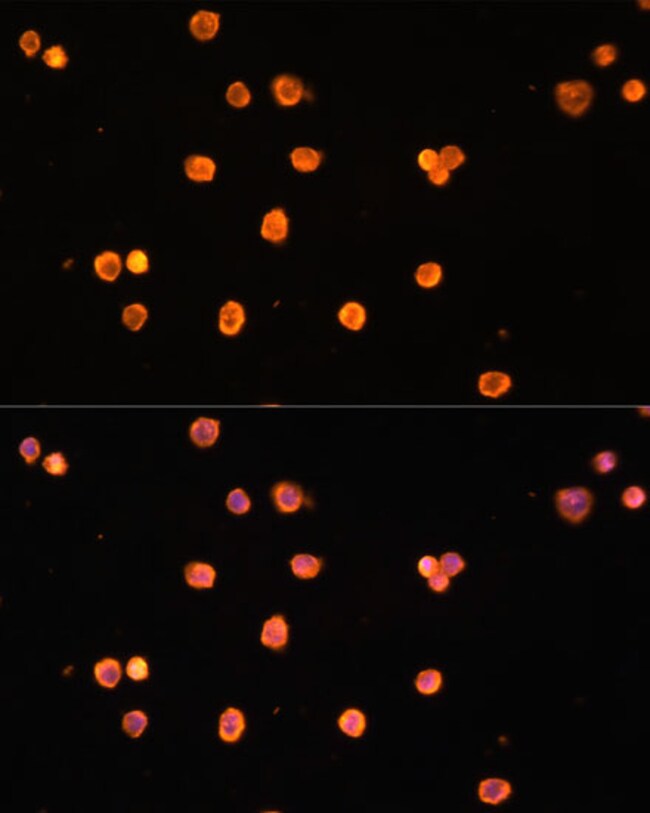
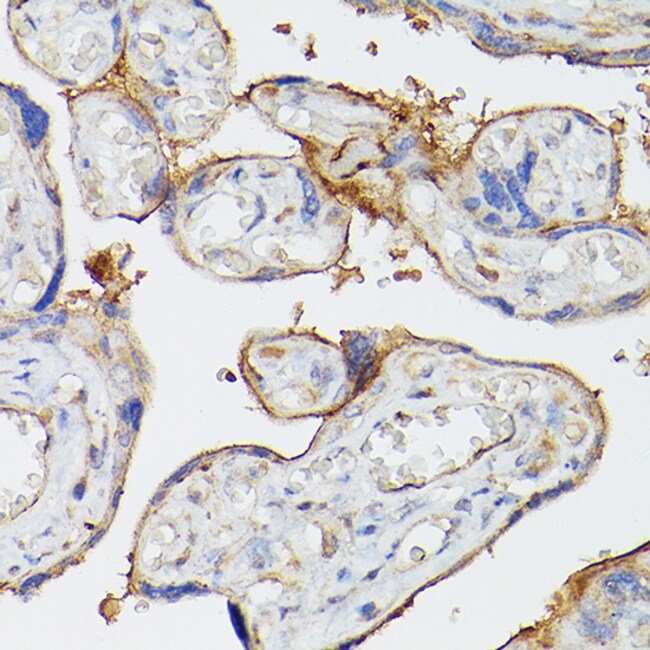
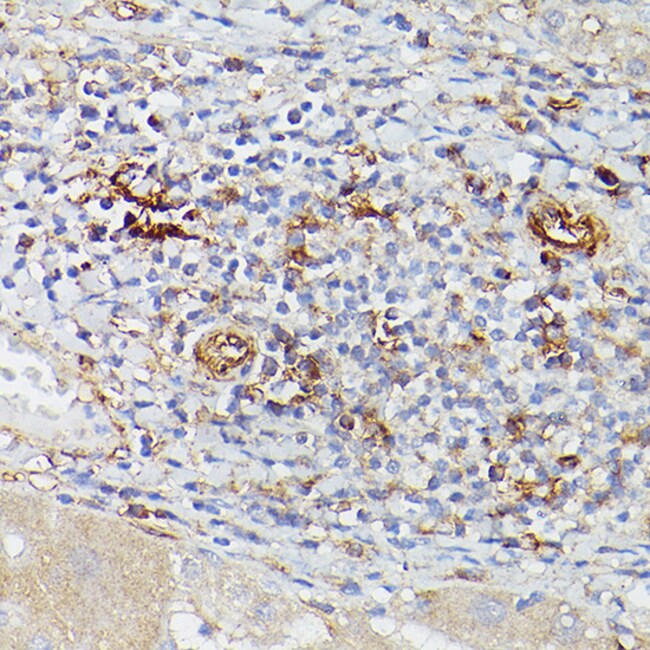
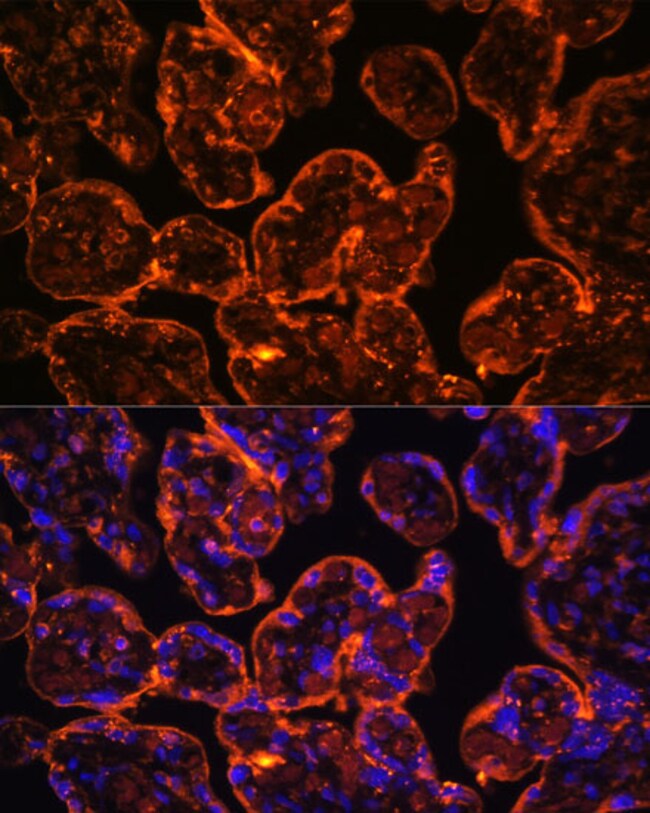
Applications ELISA, Immunohistochemistry (Paraffin), Western Blot, Immunocytochemistry
Classification Polyclonal
Concentration 0.35 mg/mL
Conjugate Unconjugated
Formulation PBS with 50% glycerol and 0.05% ProClin 300; pH 7.3
Gene ENTPD1
Gene Accession No. P49961, P55772, P97687
Gene Alias 2610206B08Rik; AA408691; ATPDase; Cd39; CD39 antigen; DKFZp686D194; DKFZp686I093; ecto-apyrase; Ecto-ATP diphosphohydrolase 1; ecto-ATPase 1; ecto-ATPDase 1; Ectonucleoside triphosphate diphosphohydrolase 1; ENTPD1; FLJ40921; FLJ40959; Lymphoid cell activation antigen; NTPDase 1; NTPDase-1; SPG64
Gene Symbols ENTPD1
Host Species Rabbit
Immunogen Recombinant protein (or fragment).
Purification Method Affinity Chromatography
Quantity 100 μL
Regulatory Status RUO
Primary or Secondary Primary
Gene ID (Entrez) 12495, 64519, 953
Target Species Human, Mouse, Rat
Content And Storage -20°C, Avoid Freeze/Thaw Cycles
Product Type Antibody
Form Liquid
Isotype IgG
Show More Show Less
Product Title
Select an issue

By clicking Submit, you acknowledge that you may be contacted by Fisher Scientific in regards to the feedback you have provided in this form. We will not share your information for any other purposes. All contact information provided shall also be maintained in accordance with our Privacy Policy.