Learn More
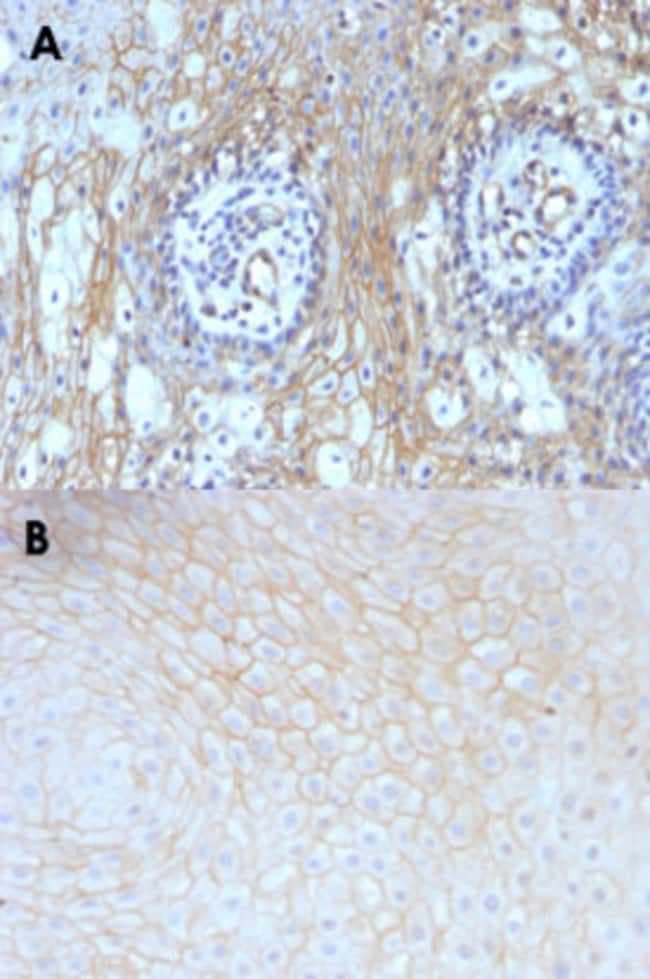
Description
This gene encodes a cell surface glycoprotein that regulates complement-mediated cell lysis, and it is involved in lymphocyte signal transduction. This protein is a potent inhibitor of the complement membrane attack complex, whereby it binds complement C8 and/or C9 during the assembly of this complex, thereby inhibiting the incorporation of multiple copies of C9 into the complex, which is necessary for osmolytic pore formation. This protein also plays a role in signal transduction pathways in the activation of T cells. Mutations in this gene cause CD59 deficiency, a disease resulting in hemolytic anemia and thrombosis, and which causes cerebral infarction. Multiple alternatively spliced transcript variants, which encode the same protein, have been identified for this gene. [provided by RefSeq]
Specifications
Specifications
| Antigen | CD59 |
| Applications | Flow Cytometry, Immunofluorescence, Immunohistochemistry (PFA fixed) |
| Classification | Monoclonal |
| Clone | MACIF/629 |
| Conjugate | Unconjugated |
| Description | Mouse monoclonal antibody raised against full length recombinant human CD59. |
| Dilution | Flow Cytometry (0.5-1 ug/106 cells in 0.1 mL) Immunofluorescence (0.5-1 ug/mL) Immunohistochemistry (Formalin/PFA-fixed paraffin-embedded sections) (1-2 ug/mL) The optimal working dilution should be determined by the end user. |
| Formulation | In 10mM PBS (0.05% BSA, 0.05% sodium azide). |
| Gene Alias | 16.3A5/1F5/EJ16/EJ30/EL32/FLJ38134/FLJ92039/G344/HRF-20/HRF20/MAC-IP/MACIF/MEM43/MGC2354/MIC11/MIN1/MIN2/MIN3/MIRL/MSK21/p18-20 |
| Gene Symbols | CD59 |
| Show More |
By clicking Submit, you acknowledge that you may be contacted by Fisher Scientific in regards to the feedback you have provided in this form. We will not share your information for any other purposes. All contact information provided shall also be maintained in accordance with our Privacy Policy.