Promotional price valid on web orders only. Your contract pricing may differ. Interested in signing up for a dedicated account number?
Learn More

Invitrogen™ CD61 Polyclonal Antibody
GREENER_CHOICE

Catalog No. PIPA596157
Change view
Click to view available options
Quantity:
100 μL
1 product options available for selection
Product selection table with 1 available options. Use arrow keys to navigate and Enter or Space to select.
Catalog No. Quantity
PIPA596157 100 μL
Use arrow keys to navigate between rows. Press Enter or Space to select a product option. 1 options available.
1 options
Catalog No. PIPA596157 Supplier Invitrogen™ Supplier No. PA596157
Add to Cart
Add to Cart

Rabbit Polyclonal Antibody

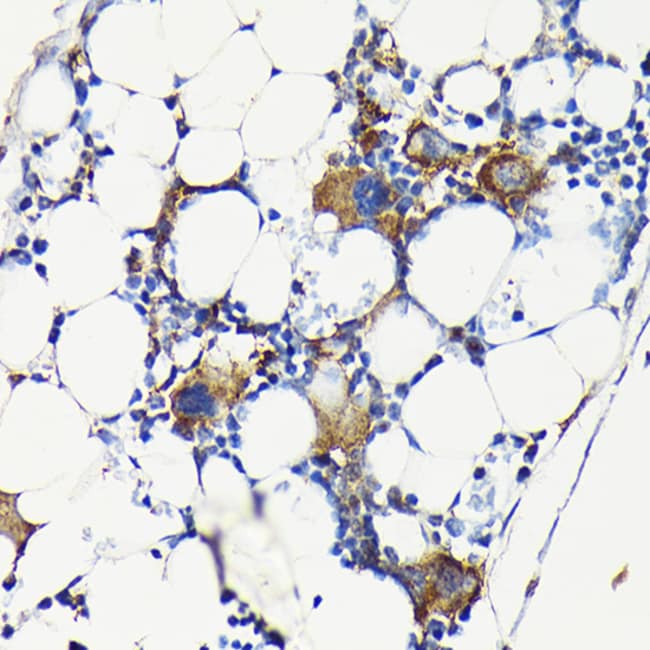
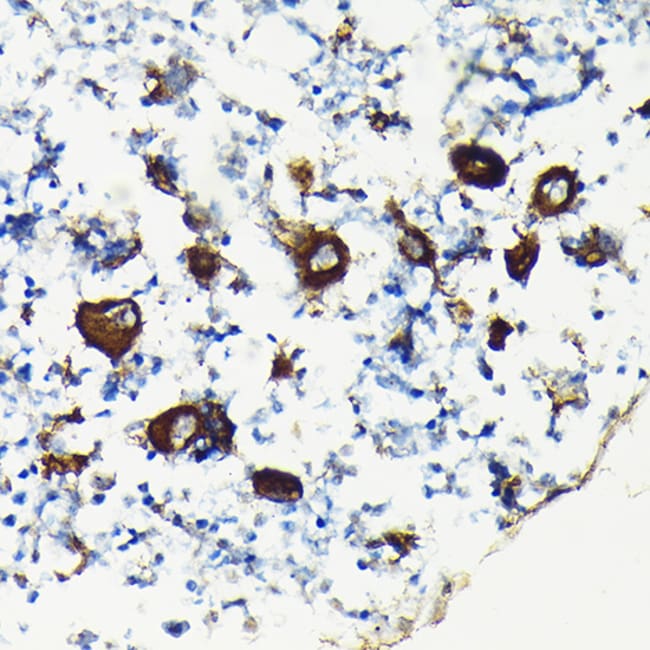
Positive Samples: LO2, HL-60; Cellular Location: Cell junction, Cell membrane, Cell projection, Single-pass type I membrane protein, focal adhesion, lamellipodium membrane Immunogen sequence: IEFPVSEARV LEDRPLSDKG SGDSSQVTQV SPQRIALRLR PDDSKNFSIQ VRQVEDYPVD IYYLMDLSYS MKDDLWSIQN LGTKLATQMR KLTSNLRIGF GAFVDKPVSP YMYISPPEAL ENPCYDMKTT CLPMFGYKHV LTLTDQVTRF NEEVKKQSVS RNRDAPEGGF DAIMQATVCD EKIGWRNDAS HLLVFTTDAK THIALDGRLA GIVQPNDGQC HVGSDNHYSA STTMDYPSLG LMTEKLSQKN INLIFAVTEN VVNLYQNYSE LIPGTTVGVL SMDSSNVLQL IVDAYGKIRS KVELEVRDLP EELSLSFNAT CLNNEVIPGL KSCMGLKIGD TVSFSIEAKV R.

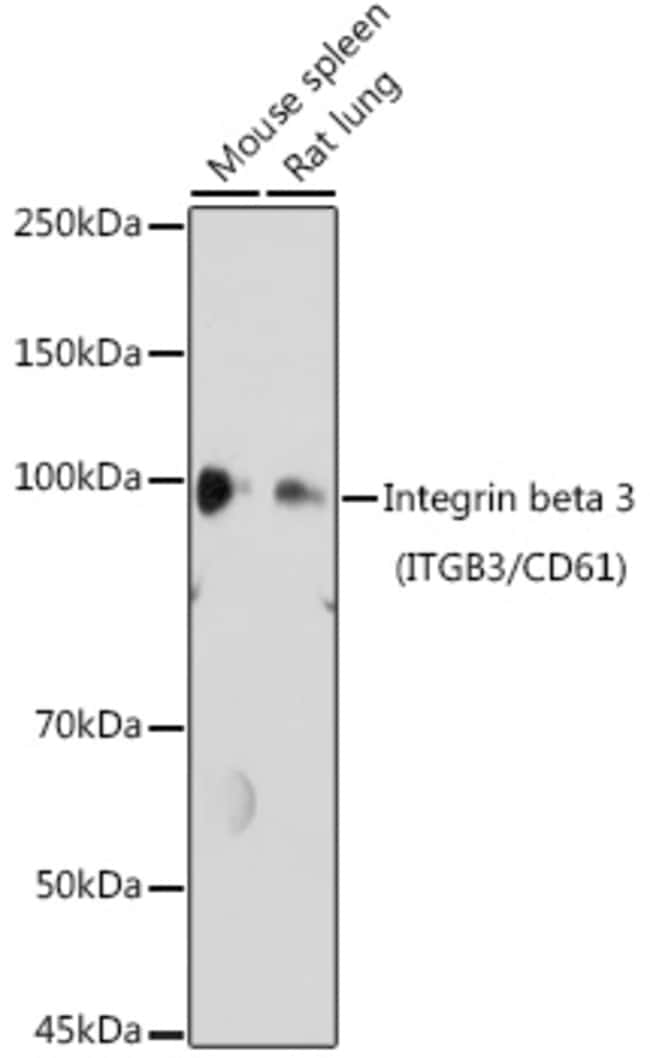
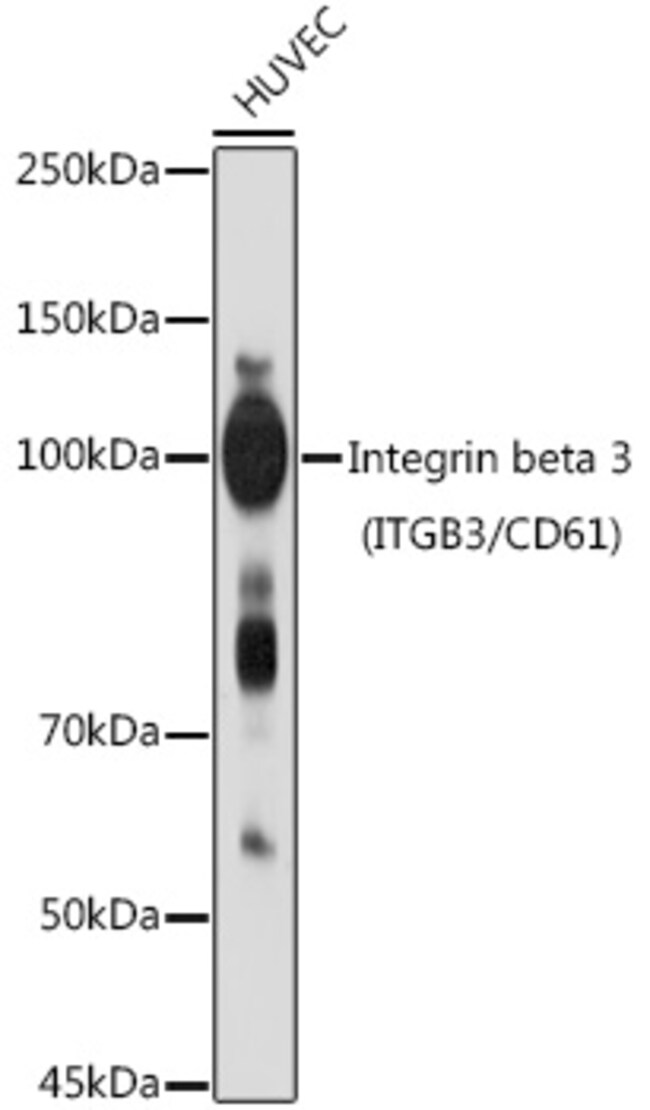
CD61, also known as GPIIIa or ITGB3, is a 105 kDa glycoprotein expressed on activated T cells, granulocytes, megakaryocytes, platelets, and their precursors. It plays a crucial role in platelet aggregation and functions as a receptor for fibrinogen, fibronectin, von Willebrand factor, vitronectin, and thrombospondin. CD61 forms heterodimeric complexes by associating non-covalently with integrin alpha subunits: alphaV (CD51) to create the Vitronectin Receptor and alphaIIb (CD41) to form gpIIb/IIIa. These complexes are responsible for adhesion to extracellular matrix components, facilitating cell adhesion and cell-surface mediated signaling. CD61 is expressed on platelets and megakaryocytes in association with CD41, and on endothelial cells, monocytes, and osteoclasts in association with CD51. The protein product of CD61 is composed of an alpha chain and a beta chain, which can combine with multiple partners to form different integrins. Its involvement in cell adhesion and signaling underscores its importance in normal physiological processes. Dysfunction of CD61 is associated with diseases such as Glanzmann Thrombasthenia and Platelet type-16 Bleeding Disorder, highlighting its critical role in hemostasis and platelet function.
TRUSTED_SUSTAINABILITY

Specifications

Antigen CD61
Applications ELISA, Immunohistochemistry (Paraffin), Western Blot
Classification Polyclonal
Concentration 1.04 mg/mL
Conjugate Unconjugated
Formulation PBS with 50% glycerol and 0.02% sodium azide; pH 7.3
Gene ITGB3
Gene Accession No. O54890, P05106
Gene Alias antigen CD61; BDPLT16; BDPLT2; beta3 integrin; CD61; EGK_08849; glycoprotein GPIIIa; glycoprotein IIIa; GP3A; GPIIIa; GT; INGRB3; integrin beta 3; integrin beta 3 (Cd61); integrin beta-3; integrin beta-3 subunit; integrin subunit beta 3; integrin, beta 3; integrin, beta 3 (platelet glycoprotein IIIa, antigen CD61); ITGB3; platelet glycoprotein IIIa; platelet glycoprotein IIIa integrin subunit beta 3; platelet gpIIIa; platelet membrane glycoprotein IIIa
Gene Symbols ITGB3
Host Species Rabbit
Immunogen Recombinant protein (or fragment).
Purification Method Affinity Chromatography
Quantity 100 μL
Regulatory Status RUO
Primary or Secondary Primary
Gene ID (Entrez) 16416, 29302, 3690
Target Species Human, Mouse, Rat
Content And Storage -20°C, Avoid Freeze/Thaw Cycles
Product Type Antibody
Form Liquid
Isotype IgG
Show More Show Less
WARNING: Cancer - www.P65Warnings.ca.gov
Product Title
Select an issue

By clicking Submit, you acknowledge that you may be contacted by Fisher Scientific in regards to the feedback you have provided in this form. We will not share your information for any other purposes. All contact information provided shall also be maintained in accordance with our Privacy Policy.