Promotional price valid on web orders only. Your contract pricing may differ. Interested in signing up for a dedicated account number?
Learn More
Learn More

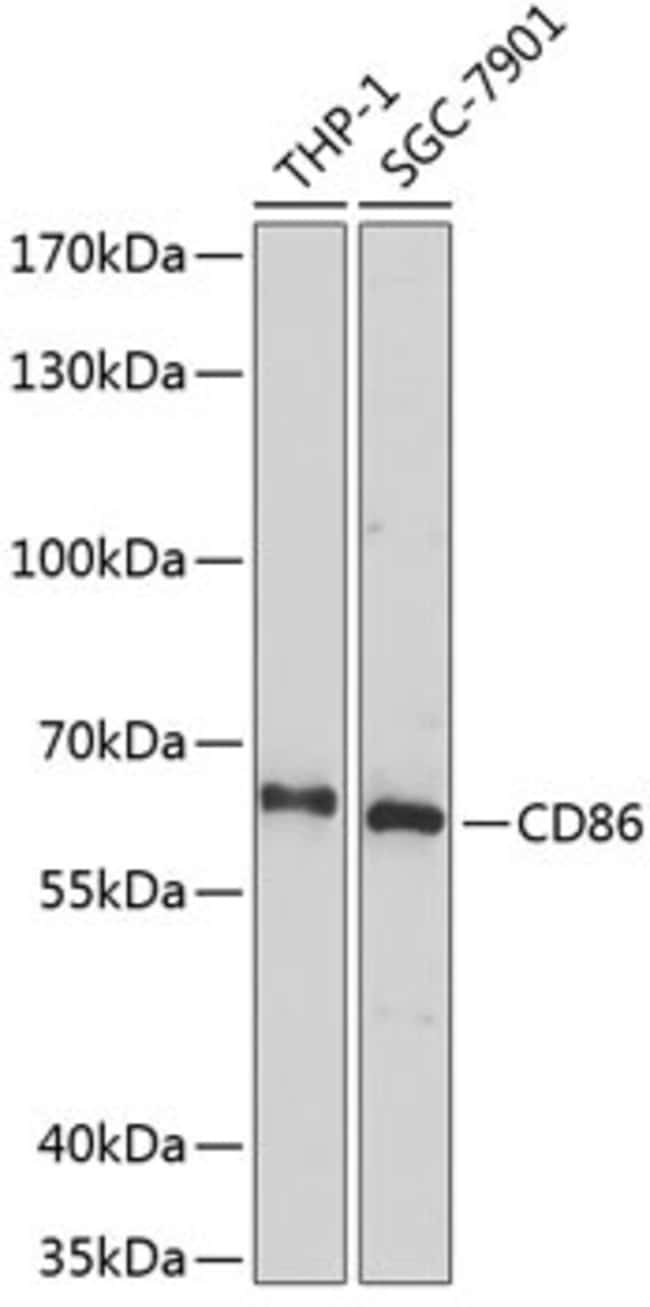
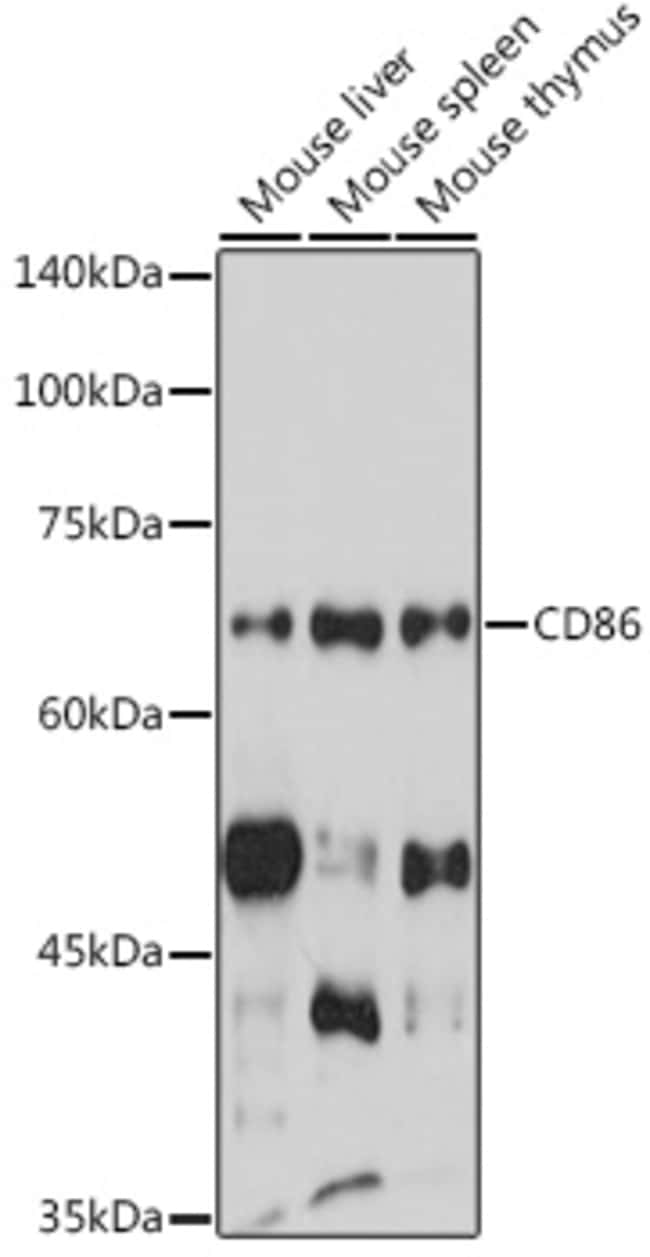
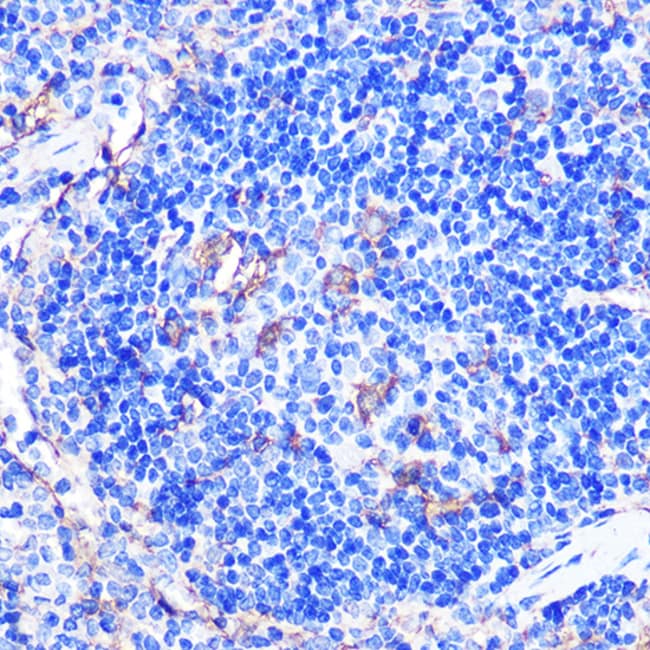
CD86 Polyclonal Antibody, Invitrogen™
Description
Immunogen sequence: APLKIQAYFN ETADLPCQFA NSQNQSLSEL VVFWQDQENL VLNEVYLGKE KFDSVHSKYM GRTSFDSDSW TLRLHNLQIK DKGLYQCIIH HKKPTGMIRI HQMNSELSVL ANFSQPEIVP ISNITENVYI NLTCSSIHGY PEPKKMSVLL RTKNSTIEYD GIMQKSQDNV TELYDVSISL SVSFPDVTSN MTIFCILETD KTRLLSSPFS IELEDPQPPP DHIP Positive Samples: THP-1, SGC-7901; Cellular Location: Cell membrane, Single-pass type I membrane protein
CD86 is one of two ligands (the other CD80) for CTLA4 and CD28. CD86 acts as costimulatory molecule in eliciting T-cell help during antigen presentation. Antigen presentation in the absence of sufficient co-stimulation involving CD86/CD80 can induce tolerance. CD80 appears to play a role distinct from CD80 in T helper cell differentiation. CD86 is a type I membrane protein that is a member of the immunoglobulin superfamily. The CD86 protein is expressed by antigen-presenting cells, and it is the ligand for two proteins at the cell surface of T cells, CD28 antigen and cytotoxic T-lymphocyte-associated protein 4. Binding of CD86 with CD28 antigen is a costimulatory signal for activation of the T-cell. Binding of CD86 with cytotoxic T-lymphocyte-associated protein 4 negatively regulates T-cell activation and diminishes the immune response. Alternative splicing results in two transcript variants encoding different isoforms of CD86. Additional transcript variants have been described for CD86, but their full-length sequences have not been determined. Diseases associated with CD86 dysfunction include gallbladder squamous cell carcinoma and myocarditis.

Specifications
Specifications
| Antigen | CD86 |
| Applications | Immunohistochemistry (Paraffin), Western Blot |
| Classification | Polyclonal |
| Concentration | 3.2 mg/mL |
| Conjugate | Unconjugated |
| Formulation | PBS with 50% glycerol and 0.01% thimerosal, pH 7.3 |
| Gene | CD86 |
| Gene Accession No. | P42081, P42082 |
| Gene Alias | activation B7-2 antigen, B lymphocyte activation antigen B72, B7, B7.2, B70, B7-2, B-lymphocyte activation antigen B7-2, BU63, CD28 antigen ligand 2, Cd28l2, CD28LG2, CD86, CD86 antigen, CD86 antigen (CD28 antigen ligand 2, B7-2 antigen), CD86 antigen precursor, CD86 molecule, CLS1, CTLA-4 counter-receptor B7.2, early T cell costimulatory molecule-1, early T-cell costimulatory molecule 1, Early T-cell co-stimulatory molecule 1, ETC-1, FUN-1, LAB72, Ly58, Ly-58, MB7, MB7-2, membrane glycoprotein, MGC34413, T-lymphocyte activation antigen CD86, TS/A-2 |
| Gene Symbols | CD86 |
| Show More |
Safety and Handling
WARNING: Cancer - www.P65Warnings.ca.gov
Product Title
By clicking Submit, you acknowledge that you may be contacted by Fisher Scientific in regards to the feedback you have provided in this form. We will not share your information for any other purposes. All contact information provided shall also be maintained in accordance with our Privacy Policy.
Spot an opportunity for improvement?