Promotional price valid on web orders only. Your contract pricing may differ. Interested in signing up for a dedicated account number?
Learn More

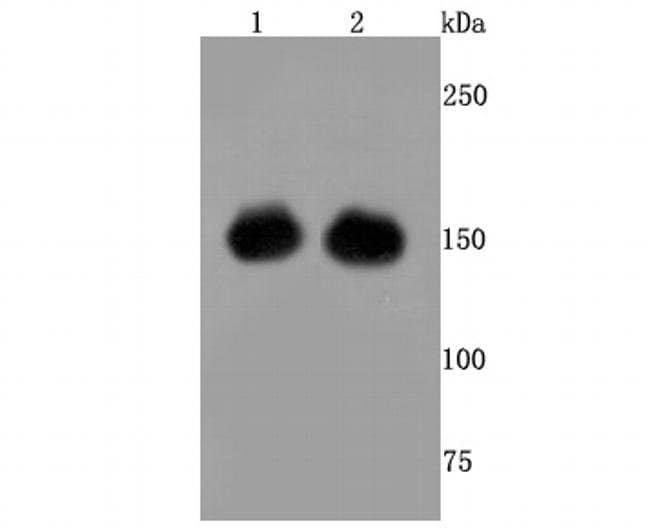
Invitrogen™ Cas9 Recombinant Rabbit Monoclonal Antibody (JM11-55)
GREENER_CHOICE

Catalog No. PIMA532636
Change view
Click to view available options
Quantity:
100 μL
1 product options available for selection
Product selection table with 1 available options. Use arrow keys to navigate and Enter or Space to select.
Catalog No. Quantity
PIMA532636 100 μL
Use arrow keys to navigate between rows. Press Enter or Space to select a product option. 1 options available.
1 options
Catalog No. PIMA532636 Supplier Invitrogen™ Supplier No. MA532636
Only null left
Add to Cart
Add to Cart

Rabbit Recombinant Monoclonal Antibody

Recombinant rabbit monoclonal antibodies are produced using in vitro expression systems. The expression systems are developed by cloning in the specific antibody DNA sequences from immunoreactive rabbits. Then, individual clones are screened to select the best candidates for production. The advantages of using recombinant rabbit monoclonal antibodies include: better specificity and sensitivity, lot-to-lot consistency, animal origin-free formulations, and broader immunoreactivity to diverse targets due to larger rabbit immune repertoire.

Cas9 is an RNA-guided DNA endonuclease enzyme associated with the CRISPR (Clustered Regularly Interspaced Short Palindromic Repeats) adaptive immunity system in bacteria and genetic engineering. The system is unique and flexible due to its dependence on RNA as the element that targets the nuclease to a desired DNA sequence. It can be used to induce indel mutations, specific sequence replacements/insertions, and large deletions or genomic rearrangements at any desired location in the genome. In addition, Cas9 can also be used to mediate upregulation of specific endogenous genes or to alter histone modifications or DNA methylation. Cas9 may be derived from Streptococcus pyogenes (SpCas9) or Staphylococcus aureus (SaCas9). SaCas9 has a number of properties that make it advantageous for genome editing, including its small size, high efficiency, nickase activity, and apparent specificity. SaCas9 principally recognizes an NNGRRT protospacer adjacent motif (PAM) and cleaves target DNA at rates comparable to SpCas9 with an ideal spacer lengths of 24 to 20 nucleotides. In comparison to SpCas9, SaCas9 is smaller (1368 AA versus 1053 AA) and generates indels at a comparable rate when directed against target DNA with the mutually permissive NGGRRT PAM. This makes it the preferred enzyme for all-in-one delivery of Cas9 and multiple gRNA expression cassettes with Adeno-associated vectors.
TRUSTED_SUSTAINABILITY

Specifications

Antigen Cas9
Applications Flow Cytometry, Immunohistochemistry, Western Blot, Immunocytochemistry, Western Blot
Classification Recombinant Monoclonal
Clone JM11-55
Concentration 1 mg/mL
Conjugate Unconjugated
Formulation TBS with 40% Glycerol, 0.05% BSA and 0.05% sodium azide; pH 7.4
Gene cas9
Gene Accession No. J7RUA5, Q99ZW2
Gene Alias cas9; CRISPR9; CRISPR-Cas9; s aureus
Gene Symbols cas9
Host Species Rabbit
Immunogen Recombinant protein within Streptococcus pyogenes cas9 aa 730-990.
Purification Method Protein A
Quantity 100 μL
Regulatory Status RUO
Primary or Secondary Primary
Gene ID (Entrez) 0, 901176
Target Species Bacteria
Content And Storage Store at 4°C short term. For long term storage, store at -20°C, avoiding freeze/thaw cycles.
Product Type Antibody
Form Liquid
Isotype IgG
Show More Show Less
Product Title
Select an issue

By clicking Submit, you acknowledge that you may be contacted by Fisher Scientific in regards to the feedback you have provided in this form. We will not share your information for any other purposes. All contact information provided shall also be maintained in accordance with our Privacy Policy.