Learn More
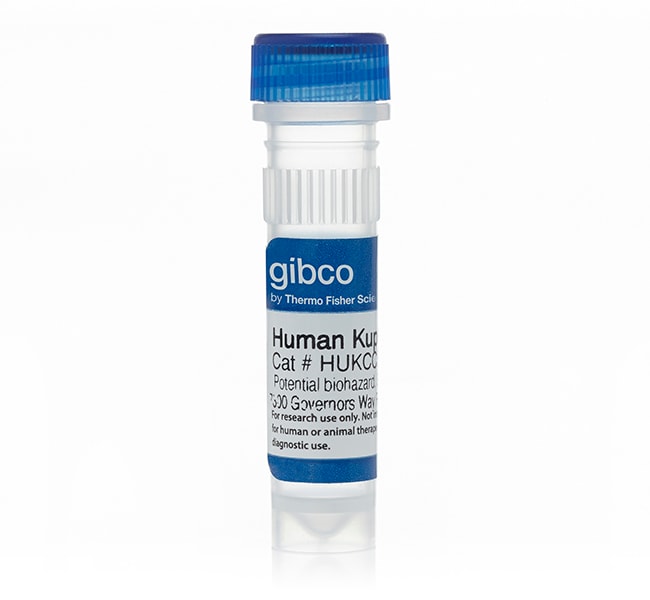
Gibco™ Cryopreserved Human Kupffer Cells

Description
Kupffer Cells Provide for Improved Physiological Modeling
Growing evidence shows that under both normal and pathological conditions, many hepatocyte functions are regulated by substances released from neighboring non-parenchymal cells (NPC). These cells, particularly Kupffer cells, play an important role in the modulation of xenobiotic metabolism in the liver. Kupffer cells secrete potent mediators of the inflammatory response that controls liver inflammation. These cytokine mediators control hepatocyte metabolic rates through direct interactions with phase I and phase II enzymes. Kupffer cell and hepatocyte co-cultures can self-assemble within 72 hours of treatment with pro-inflammatory cytokines or LPS, and can function by effectively modulating P450 expression, thus giving a more physiologically relevant result. Studies indicate that co-culture of hepatocytes with NPCs better represent both normal liver physiology as well as disease states.

Specifications
Specifications
| Content And Storage | 1 vial of 1 million viable human Kupffer cells. Store in a cryostorage dewar or -135°C freezer. |
| Cell Type | Macrophage Cells |
| Culture Type | Adherent Cell Culture |
| Form | Cryopreserved |
| Species | Human |
| Donor Source | Single Donor |
| No. of Cells | 1 x 10⁶ |
| Product Type | Human Kupffer Cell |
| Quantity | 1 vial |
Frequently Asked Questions (FAQs)
Our hepatocytes are prequalified and sold according to application, such as induction, short-term metabolism, and transporter uptake. If you require hepatocytes with particular P450 values or donor specifications, contact our Hepatic Biology Tech Support Team (hepaticproducts@thermofisher.com.com) or (866) 952-3559 to help with specific lot recommendations.
Thermo Fisher Scientific has a dedicated team to answer questions regarding hepatocyte cell culture. You can send a question by email (hepaticproducts@thermofisher.com) or contact us by phone: US toll-free: (866) 952-3559
Thermofisher Scientific works with a variety of human tissue sources, including Tissue and Organ Procurement Organizations, qualified Research Tissue Organizations and prominent academic and medical centers through collaborations that follow rigorous regulations, certifications and/or accreditations (“Source Facilities”). Tissues obtained through source facilities are consistent with the applicable legal and ethical practices of the United States.
Source Facilities are required by federal law to maintain accurate records and donor confidentiality as well as adhere to certain applicable laws governing tissue used for research globally. These include, but are not limited to:
- 45 CFR Part 46, subparts A, B, C, D where applicable (US federal guidance on the use of human subjects in research)
- Health Insurance Portability and Accountability Act (HIPAA) (addressing issues of confidentiality of personal information)
- National Organ Transplant Act (42 CFR Part 482)
- The Uniform Anatomical Gift Act (UAGA) of 1968, revised 1984
The human liver cells are derived from tissue obtained from accredited institutions. Consent is obtained by these institutions from the donor or the donor’s legal next of kin, for the use of the tissue and its derivatives for research purpose.
For Research Use Only. Not for use in diagnostic procedures.
By clicking Submit, you acknowledge that you may be contacted by Fisher Scientific in regards to the feedback you have provided in this form. We will not share your information for any other purposes. All contact information provided shall also be maintained in accordance with our Privacy Policy.