Learn More
PeproTech CTGF Polyclonal Antibody, PeproTech®, Invitrogen™

Description
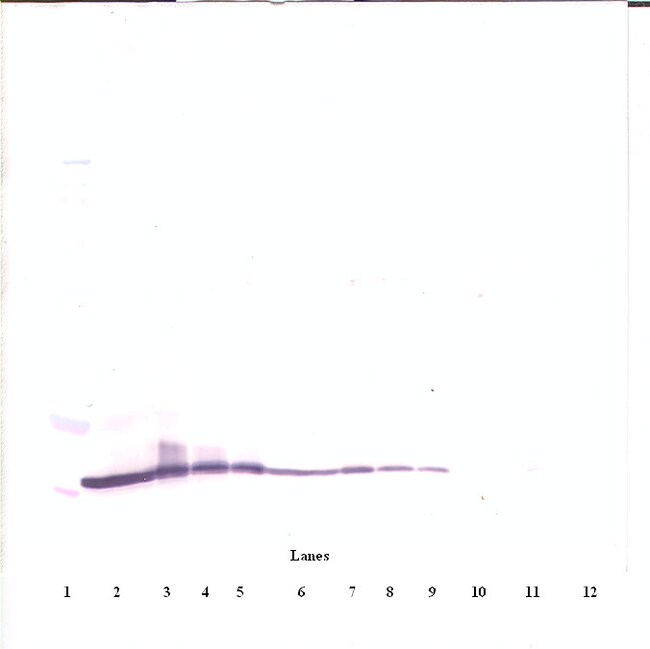
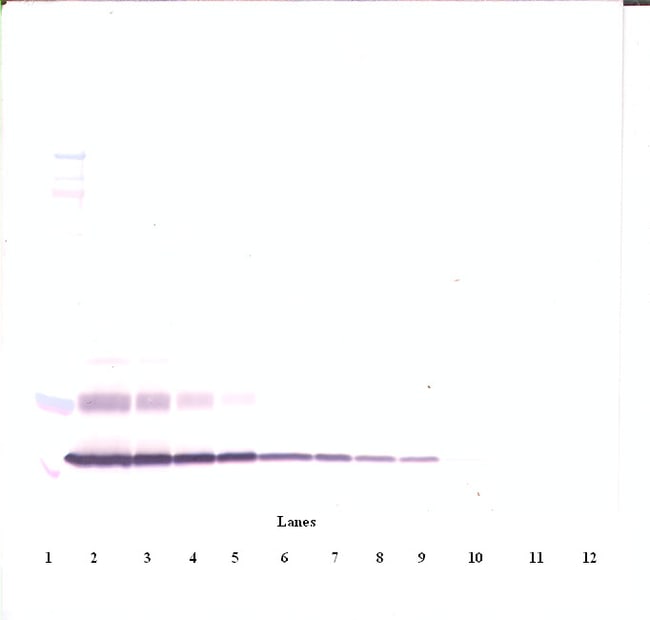
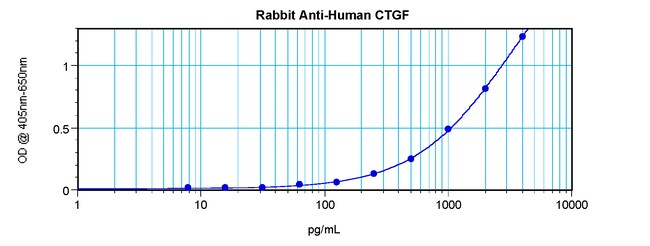
AA Sequence of recombinant protein: GKKCIRTPKI SKPIKFELSG CTSMKTYRAK FCGVCTDGRC CTPHRTTTLP VEFKCPDGEV MKKNMMFIKT CACHYNCPGD NDIFESLYYR KMYGDMA. Preparation: Produced from sera of rabbits immunized with highly pure Recombinant Human CTGF. Anti-Human CTGF-specific antibody was purified by affinity chromatography employing an immobilized Human CTGF matrix. Sandwich ELISA: To detect Human CTGF by sandwich ELISA (using 100 μL/well antibody solution) a concentration of 0.5-2.0 μg/mL of this antibody is required. This antigen affinity purified antibody, in conjunction with PeproTech Biotinylated Anti-Human CTGF (500-P252Bt) as a detection antibody, allows the detection of at least 0.2-0.4 ng/well of Recombinant Human CTGF. Western Blot: To detect Human CTGF by Western Blot analysis this antibody can be used at a concentration of 0.1-0.2 μg/mL. Used in conjunction with compatible secondary reagents the detection limit for Recombinant Human CTGF is 1.5-3.0 ng/lane, under either reducing or non-reducing conditions.

Specifications
Specifications
| Antigen | CTGF |
| Applications | ELISA, Western Blot |
| Classification | Polyclonal |
| Concentration | 0.1-1.0 mg/mL |
| Conjugate | Unconjugated |
| Formulation | PBS with no preservative |
| Gene | CCN2 |
| Gene Accession No. | P29279 |
| Gene Alias | 2-Nov; betaIG-M2; CCN family member 2; Ccn2; Cellular communication network factor 2; connective tissue growth factor; connective tissue growth factor precursor; Connective tissue growth factor precursor (CTGF) (FISP-12 protein) (Hypertrophic chondrocyte-specific protein 24); connective tissue growth-related protein; CTGF; CTGF protein; CTGRP; fibroblast inducible secreated protein; fibroblast inducible secreted protein; Fisp12; fisp-12; Hcs24; H-CTGF; hypertrophic chondrocyte-specific gene product 24; hypertrophic chondrocyte-specific protein 24; IBP-8; IGF-binding protein 8; IGFBP8; IGFBP-8; Insulin-like growth factor-binding protein 8; MGC102839; NOV2; Protein FISP-12; similar to connective tissue growth factor precursor |
| Gene Symbols | CCN2 |
| Show More |
By clicking Submit, you acknowledge that you may be contacted by Fisher Scientific in regards to the feedback you have provided in this form. We will not share your information for any other purposes. All contact information provided shall also be maintained in accordance with our Privacy Policy.