Promotional price valid on web orders only. Your contract pricing may differ. Interested in signing up for a dedicated account number?
Learn More
Learn More
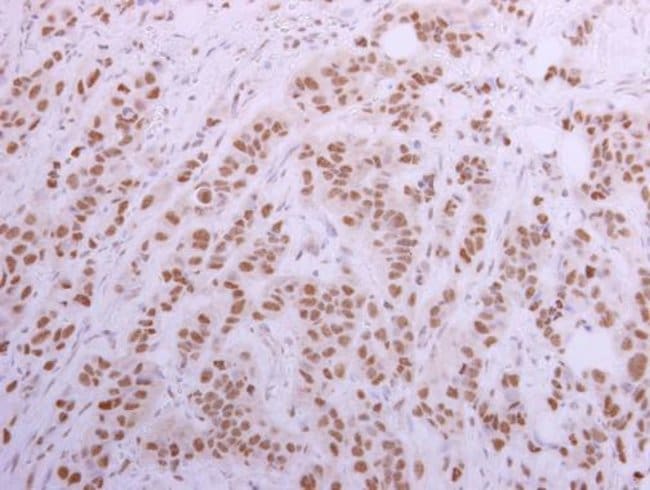
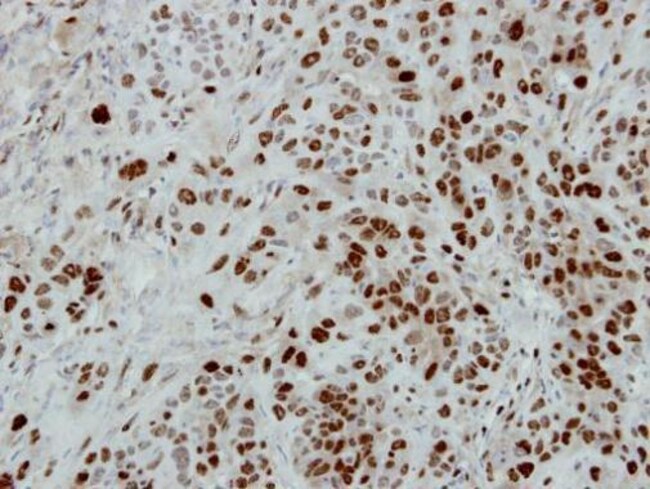
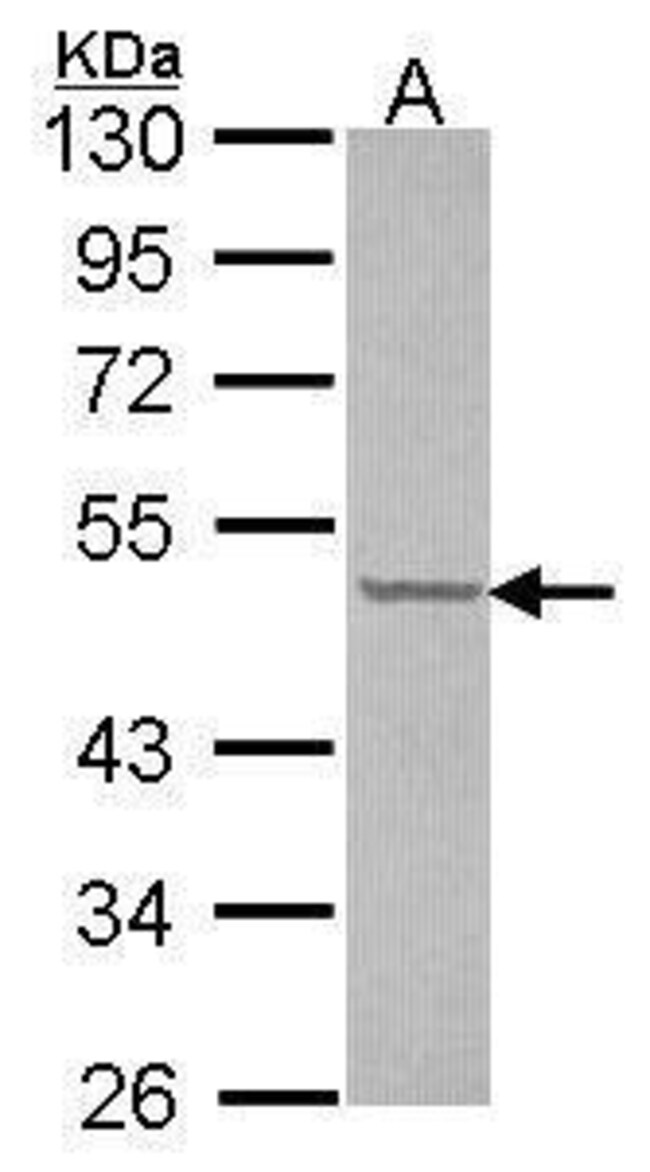
Invitrogen™ CUGBP1 Polyclonal Antibody

Description
Recommended positive controls: A549. Predicted reactivity: Mouse (96%), Rat (96%), Zebrafish (80%), Xenopus laevis (82%), Chicken (95%), Chimpanzee (100%), Bovine (95%). Store product as a concentrated solution. Centrifuge briefly prior to opening the vial.
Myotonic dystrophy (MD) is an autosomal dominant neuromuscular disease that is associated with a (CTG)n repeat expansion in the 3'-untranslated region of the myotonin protein kinase (Mt-PK) gene. A (CUG) n oligonucleotides triplet repeat pre-mRNA/mRNA binding protein may play an important role in DM pathogenesis. HeLa cell protein, CUG-BP1, has been purified based upon its ability to bind specifically to (CUG) 8 oligonucleotides in vitro. CUG-BP1 is the major (CUG) 8 binding activity in normal cells. CUG-BP1 has been identified as isoforms of a novel heterogeneous nuclear ribonucleoprotein (hnRNP), hNab50. The CUG-BP/hNab50 protein is localized predominantly in the nucleus and is associated with polyadenylated RNAs in vivo. In vitro RNA-binding/photocrosslinking studies demonstrate that CUG-BP/hNab50 binds to RNAs containing the Mt-PK 3-UTR. The (CUG) n repeat region in Mt-PK mRNA is a binding site for CUG-BP/hNab50 in vivo, and triplet repeat expansion leads to sequestration of this hnRNP on mutant Mt-PK transcripts.

Specifications
Specifications
| Antigen | CUGBP1 |
| Applications | Immunohistochemistry (Paraffin), Western Blot |
| Classification | Polyclonal |
| Concentration | 0.24 mg/mL |
| Conjugate | Unconjugated |
| Formulation | 0.1M tris glycine with 20% glycerol and 0.01% thimerosal; pH 7 |
| Gene | CELF1 |
| Gene Accession No. | Q92879 |
| Gene Alias | 1600010O03Rik; 50 kDa nuclear polyadenylated RNA-binding protein; AA407467; Brain protein F41; Brunol2; bruno-like 2; bruno-like protein 2; Celf1; CELF-1; CUG RNA-binding protein; CUG triplet repeat RNA-binding protein 1; CUG triplet repeat, RNA binding protein 1; CUG triplet repeat, RNA-binding protein 1; Cugbp; CUG-BP; CUG-BP- and ETR-3-like factor 1; CUGBP Ela; CUGBP Elav-like family member 1; CUGBP, Elav-like family member 1; CUGBP, Elav-like family member 1-like; CUGBP1; CUG-BP1; D2Wsu101e; Deadenylation factor CUG-BP; deadenylation factor EDEN-BP; EDEN-BP; EDEN-BP homolog; embryo deadenylation element binding protein; embryo deadenylation element-binding protein homolog; HNAB50; NAB50; NAPOR; nuclear polyadenylated RNA-binding protein, 50-kD; RNA-binding protein BRUNOL-2; RP23-147D3.7 |
| Gene Symbols | CELF1 |
| Show More |
Product Title
By clicking Submit, you acknowledge that you may be contacted by Fisher Scientific in regards to the feedback you have provided in this form. We will not share your information for any other purposes. All contact information provided shall also be maintained in accordance with our Privacy Policy.
Spot an opportunity for improvement?