Promotional price valid on web orders only. Your contract pricing may differ. Interested in signing up for a dedicated account number?
Learn More
Learn More
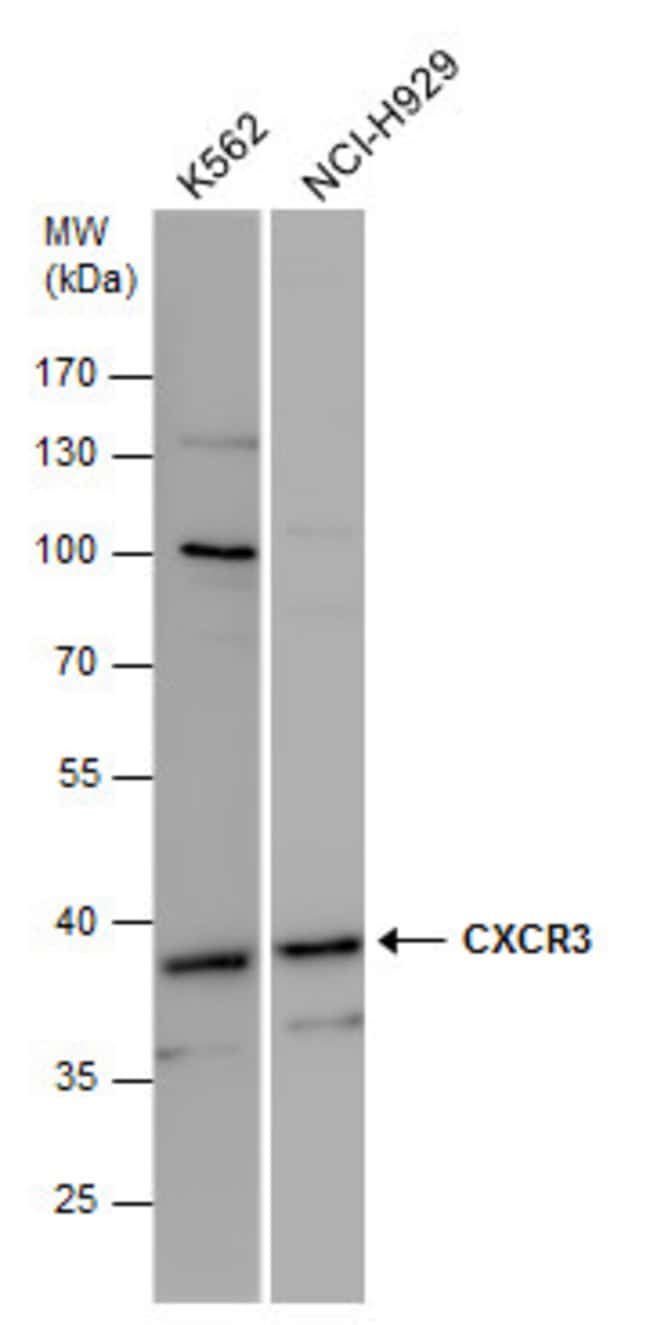
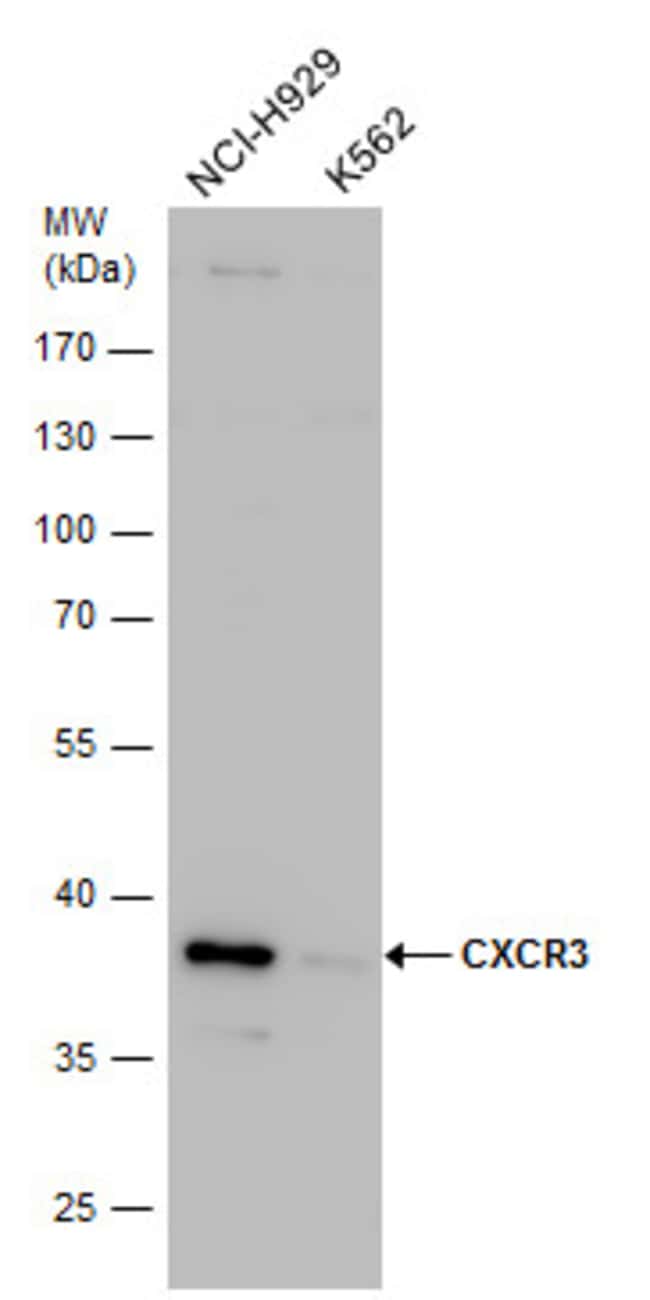
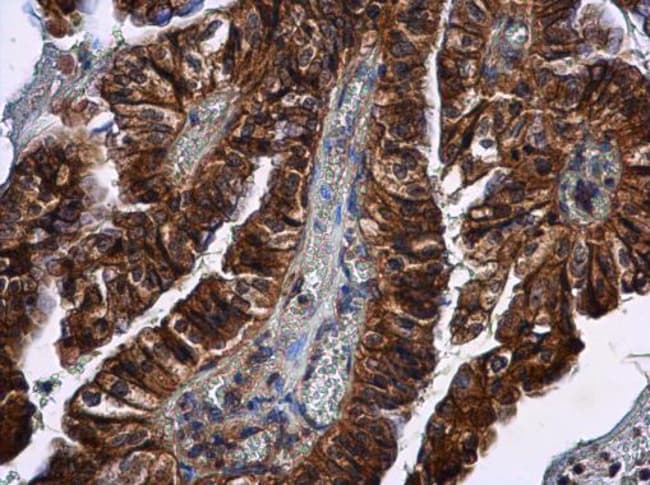
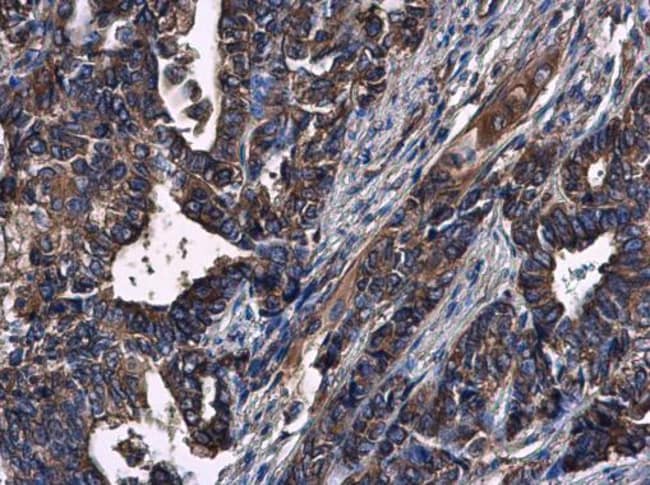
CXCR3 Polyclonal Antibody, Invitrogen™
Description
Recommended positive controls: K562, NCI-H929. Predicted reactivity: Rhesus Monkey (100%). Store product as a concentrated solution. Centrifuge briefly prior to opening the vial.
This gene encodes a G protein-coupled receptor with selectivity for three chemokines, termed IP10 (interferon-g-inducible 10 kDa protein), Mig (monokine induced by interferon-g) and I-TAC (interferon-inducible T cell a-chemoattractant). IP10, Mig and I-TAC belong to the structural subfamily of CXC chemokines, in which a single amino acid residue separates the first two of four highly conserved Cys residues. Binding of chemokines to this protein induces cellular responses that are involved in leukocyte traffic, most notably integrin activation, cytoskeletal changes and chemotactic migration. Inhibition by Bordetella pertussis toxin suggests that heterotrimeric G protein of the Gi-subclass couple to this protein. Signal transduction has not been further analyzed but may include the same enzymes that were identified in the signaling cascade induced by other chemokine receptors. As a consequence of chemokine-induced cellular desensitization (phosphorylation-dependent receptor internalization), cellular responses are typically rapid and short in duration. Cellular responsiveness is restored after dephosphorylation of intracellular receptors and subsequent recycling to the cell surface. This gene is prominently expressed in in vitro cultured effector/memory T cells, and in T cells present in many types of inflamed tissues. In addition, IP10, Mig and I-TAC are commonly produced by local cells in inflammatory lesion, suggesting that this gene and its chemokines participate in the recruitment of inflammatory cells. Therefore, this protein is a target for the development of small molecular weight antagonists, which may be used in the treatment of diverse inflammatory diseases. Multiple transcript variants encoding different isoforms have been found for this gene.

Specifications
Specifications
| Antigen | CXCR3 |
| Applications | Immunohistochemistry (Paraffin), Western Blot |
| Classification | Polyclonal |
| Concentration | 1 mg/mL |
| Conjugate | Unconjugated |
| Formulation | PBS with 20% glycerol and 0.025% ProClin 300; pH 7 |
| Gene | CXCR3 |
| Gene Accession No. | P49682 |
| Gene Alias | an; C Cmotif chemokine; C X C motif chemokine; CC motif chemokine; CCmotif chemokine; CD182; CD183; chemokine (C-X-C motif) receptor 3; chemokine receptor 3; CKR-L2; Cmkar3; CXC; C-X-C chemokine receptor type 3; CXC motif chemokine; C-X-C motif chemokine receptor 3; Cxcr3; CXC-R3; CXCR-3; G protein-coupled receptor 9; GPR9; Interferon-inducible protein 10 receptor; IP10; IP10 receptor; IP-10 receptor; IP10-R; Mig receptor; MigR; Mig-R |
| Gene Symbols | CXCR3 |
| Show More |
Safety and Handling
WARNING: Cancer - www.P65Warnings.ca.gov
Product Title
By clicking Submit, you acknowledge that you may be contacted by Fisher Scientific in regards to the feedback you have provided in this form. We will not share your information for any other purposes. All contact information provided shall also be maintained in accordance with our Privacy Policy.
Spot an opportunity for improvement?