Promotional price valid on web orders only. Your contract pricing may differ. Interested in signing up for a dedicated account number?
Learn More
Learn More
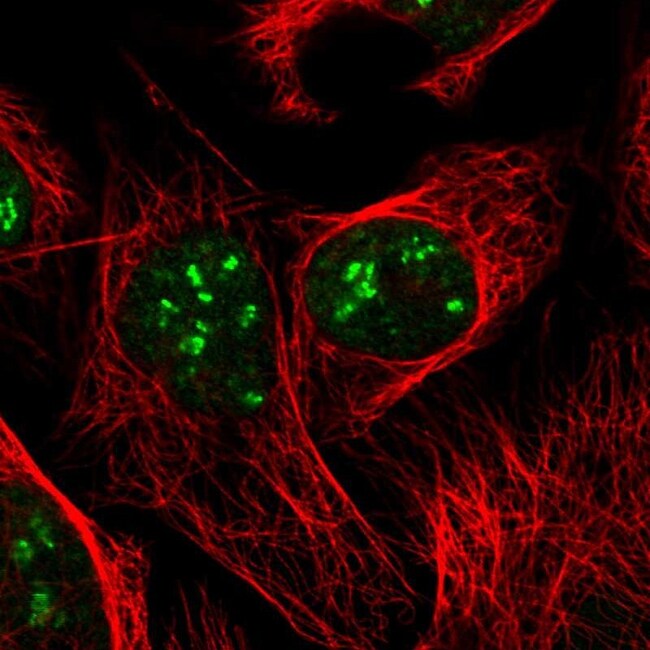
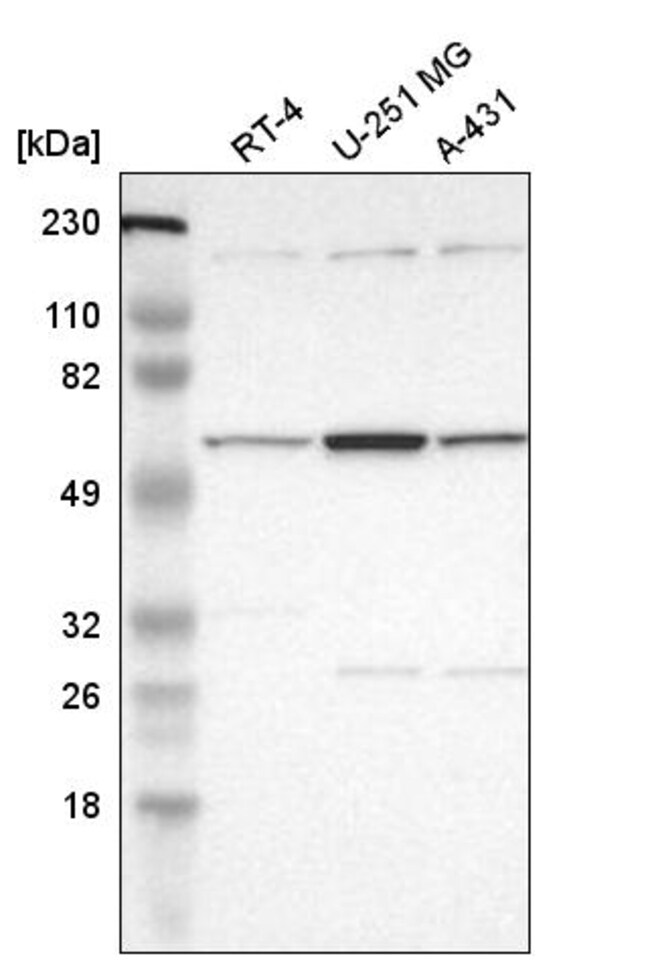
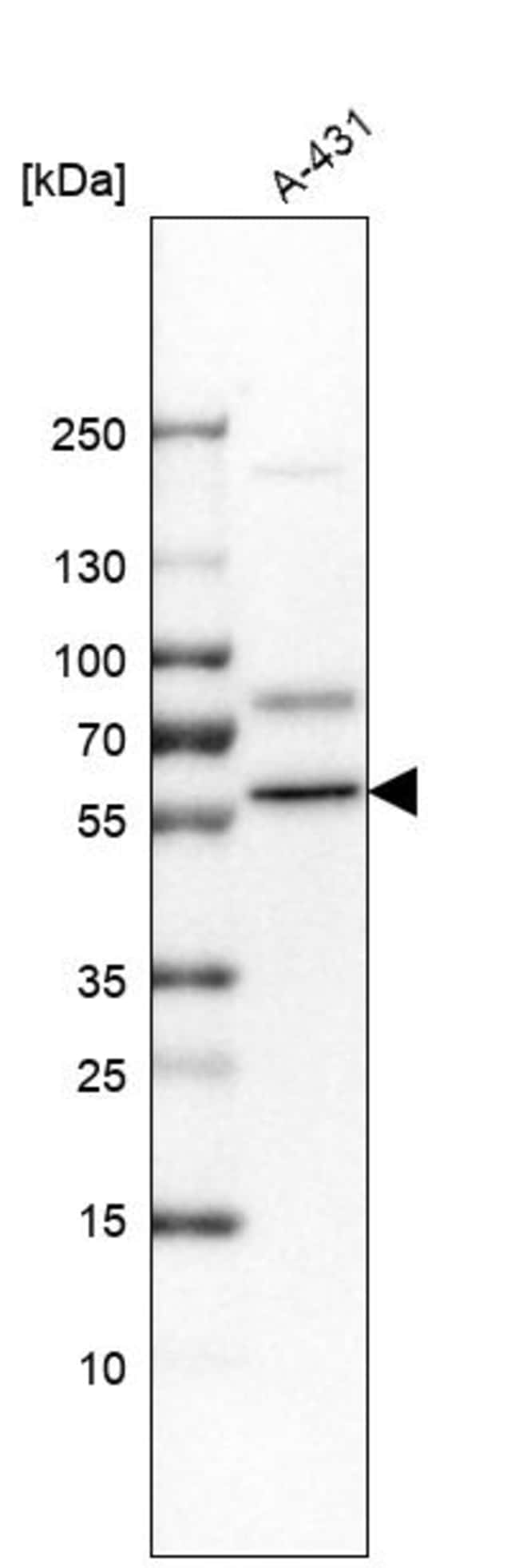
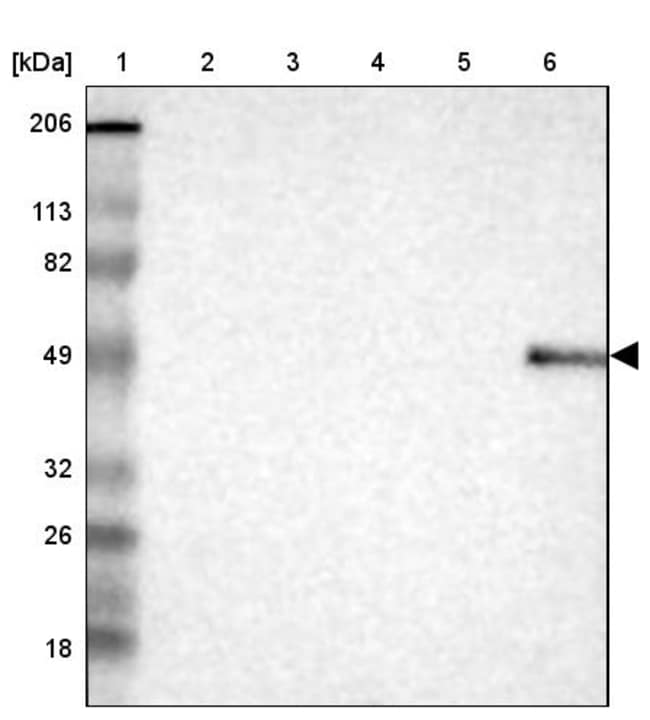
Invitrogen™ DKC1 Polyclonal Antibody

Description
Immunogen sequence: KERKSLPEED VAEIQHAEEF LIKPESKVAK LDTSQWPLLL KNFDKLNVRT THYTPLACGS NPLKREIGDY IRTGFINLDK PSNPSSHEVV AWIRRILRVE KTGHSGTL Highest antigen sequence indentity to the following orthologs: Mouse - 94%, Rat - 86%.
This gene is a member of the H/ACA snoRNPs gene family. snoRNPs are involved in various aspects of rRNA processing and modification and have been classified into two families: C/D and H/ACA. The H/ACA snoRNPs also include the NOLA1, 2 and 3 proteins. The protein encoded by this gene and the three NOLA proteins localize to the dense fibrillar components of nucleoli and to coiled bodies in the nucleus. Both 18S rRNA production and rRNA pseudouridylation are impaired if any one of the four proteins is depleted. These four H/ACA snoRNP proteins are also components of the telomerase complex. The protein encoded by this gene is related to the Saccharomyces cerevisiae Cbf5p and Drosophila melanogaster Nop60B proteins. The gene lies in a tail-to-tail orientation with the palmitoylated erythrocyte membrane protein gene and is transcribed in a telomere to centromere direction. Both nucleotide substitutions and single trinucleotide repeat polymorphisms have been found in this gene. Mutations in this gene cause X-linked dyskeratosis congenita, a disease resulting in reticulate skin pigmentation, mucosal leukoplakia, nail dystrophy, and progressive bone marrow failure in most cases. Mutations in this gene also cause Hoyeraal-Hreidarsson syndrome, which is a more severe form of dyskeratosis congenita. Two transcript variants encoding different isoforms have been found for this gene.

Specifications
Specifications
| Antigen | DKC1 |
| Applications | Western Blot, Immunocytochemistry |
| Classification | Polyclonal |
| Concentration | 0.10 mg/mL |
| Conjugate | Unconjugated |
| Formulation | PBS with 40% glycerol and 0.02% sodium azide; pH 7.2 |
| Gene | DKC1 |
| Gene Accession No. | O60832 |
| Gene Alias | BC068171; CBF5; CBF5 homolog; DKC; DKC1; DKCX; dyskeratosis congenita 1, dyskerin; dyskeratosis congenita 1, dyskerin homolog; dyskerin; dyskerin pseudouridine synthase 1; H/ACA ribonucleoprotein complex subunit 4; H/ACA ribonucleoprotein complex subunit DKC1; Nap57; NOLA4; Nopp140-associated protein of 57 kDa; nucleolar protein family A member 4; Nucleolar protein NAP57; snoRNP protein DKC1; XAP101 |
| Gene Symbols | DKC1 |
| Show More |
Product Title
By clicking Submit, you acknowledge that you may be contacted by Fisher Scientific in regards to the feedback you have provided in this form. We will not share your information for any other purposes. All contact information provided shall also be maintained in accordance with our Privacy Policy.
Spot an opportunity for improvement?