Promotional price valid on web orders only. Your contract pricing may differ. Interested in signing up for a dedicated account number?
Learn More
Learn More
Invitrogen™ DUSP3 Polyclonal Antibody

Description
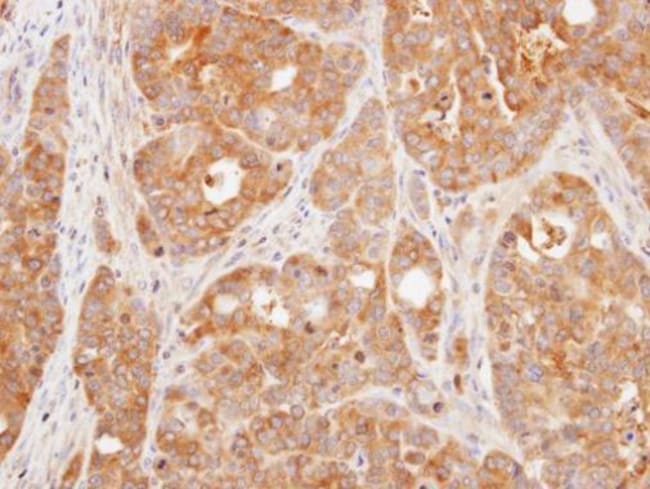
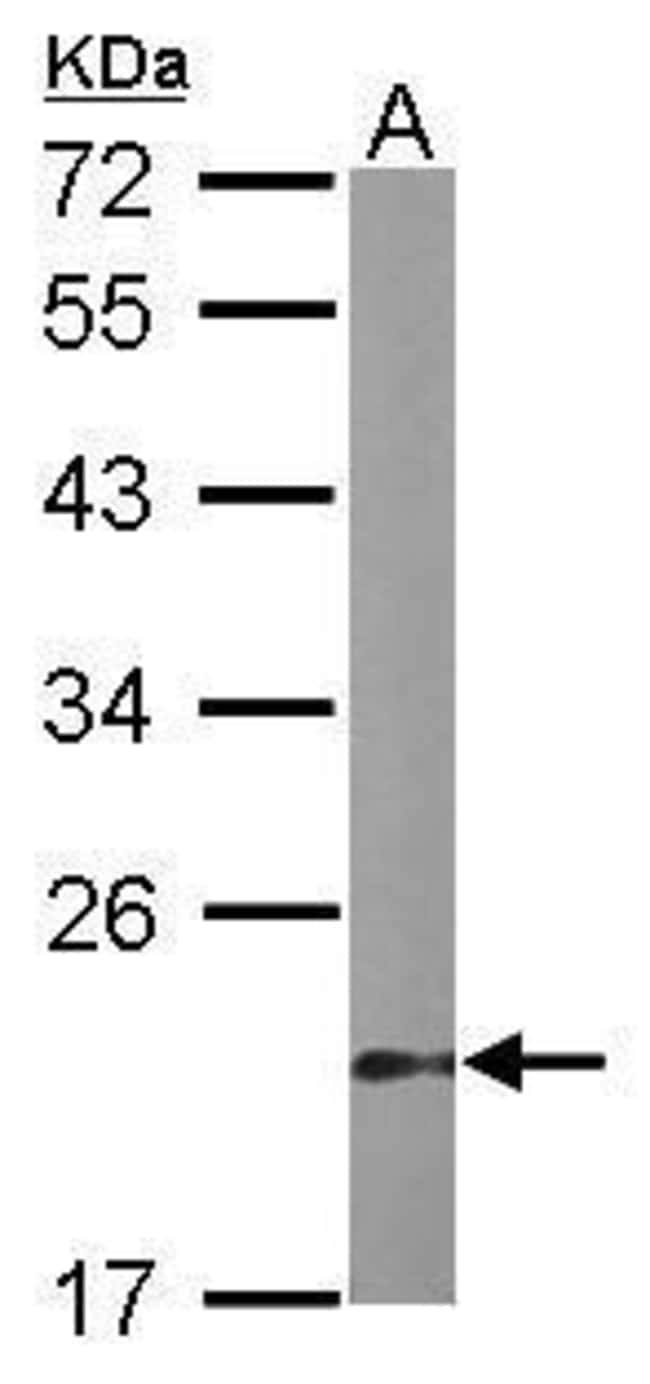
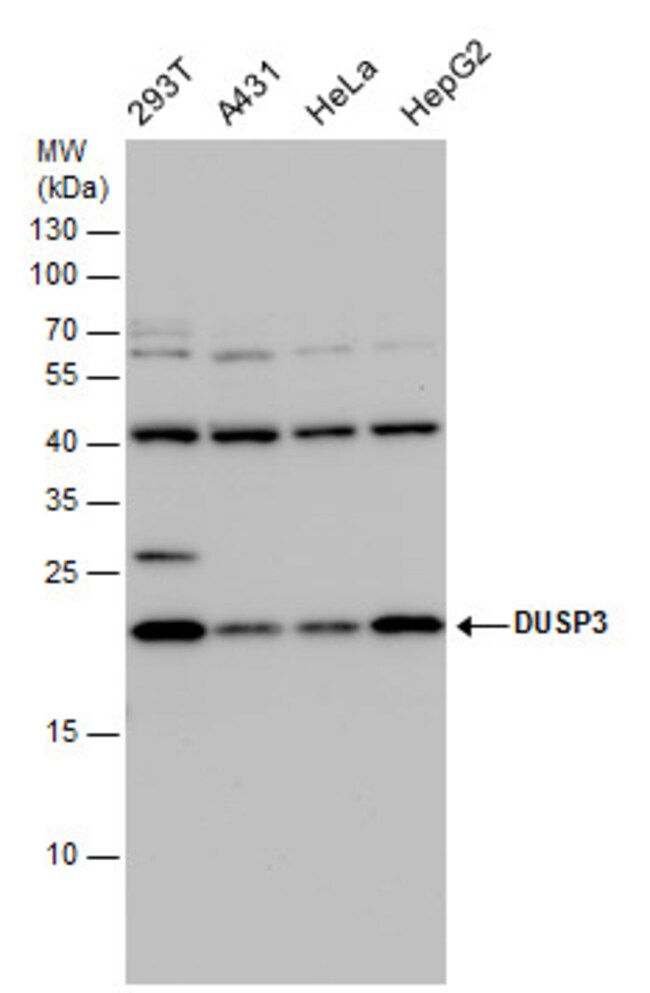
Recommended positive controls: 293T, A431, HeLa, HepG2, mouse stomach. Predicted reactivity: Mouse (93%), Rat (92%), Rhesus Monkey (100%), Bovine (89%). Store product as a concentrated solution. Centrifuge briefly prior to opening the vial.
Protein tyrosine phosphatases (PTPs) are a group of enzymes that remove phosphate groups from phosphorylated tyrosine residues on proteins. Together with tyrosine kinases, PTPs regulate the phosphorylation state of many important signaling molecules, such as the MAP kinase family. Recently, increasing attention has been focused on the growing family of PTPs. Like PTKs, PTPs have been implicated in cell signaling, cell growth and proliferation, and oncogenic transformation. Moreover, some PTPs can be involved in cell cycle regulation and embryogenesis. Dual specificity phosphatases (DSPs) are an emerging subclass of the protein tyrosine phosphatase (PTP) gene superfamily, which appears to be selective for dephosphorylating the critical phosphothreonine and phosphotyrosine residues. The prototypical DSP is the VH1 gene in vaccinia virus expressed in late-stage viral infection. A shallow active site pocket in VHR allows for the hydrolysis of phosphorylated serine, threonine, or tyrosine protein residues, whereas the deeper active site of protein tyrosine phosphatases (PTPs) restricts substrate specificity to only phosphotyrosine.

Specifications
Specifications
| Antigen | DUSP3 |
| Applications | Immunohistochemistry (Paraffin), Western Blot |
| Classification | Polyclonal |
| Concentration | 0.58 mg/mL |
| Conjugate | Unconjugated |
| Formulation | 0.1M tris glycine with 10% glycerol and 0.01% thimerosal; pH 7 |
| Gene | Dusp3 |
| Gene Accession No. | P51452, Q9D7X3 |
| Gene Alias | 2210015O03Rik; 5031436O03Rik; dual specificity phosphatase 3; dual specificity phosphatase 3 (vaccinia virus phosphatase VH1-related); dual specificity phosphatase 3 (vaccinia virus phosphatase VH1-related)-like; dual specificity protein phosphatase 3; Dual specificity protein phosphatase VHR; DUSP 3; DUSP3; DUSP-3; RGD1560049; serine/threonine specific protein phosphatase; T-DSP11; Vaccinia H1-related phosphatase; vaccinia virus phosphatase VH1-related; VHR |
| Gene Symbols | Dusp3 |
| Show More |
Safety and Handling
WARNING: Cancer - www.P65Warnings.ca.gov
Product Title
By clicking Submit, you acknowledge that you may be contacted by Fisher Scientific in regards to the feedback you have provided in this form. We will not share your information for any other purposes. All contact information provided shall also be maintained in accordance with our Privacy Policy.
Spot an opportunity for improvement?