Promotional price valid on web orders only. Your contract pricing may differ. Interested in signing up for a dedicated account number?
Learn More

Invitrogen™ ECE1 Polyclonal Antibody
GREENER_CHOICE

Catalog No. PIPA595430
Change view
Click to view available options
Quantity:
100 μg
1 product options available for selection
Product selection table with 1 available options. Use arrow keys to navigate and Enter or Space to select.
Catalog No. Quantity
PIPA595430 100 μg
Use arrow keys to navigate between rows. Press Enter or Space to select a product option. 1 options available.
1 options
Catalog No. PIPA595430 Supplier Invitrogen™ Supplier No. PA595430
Only null left
Add to Cart
Add to Cart

Rabbit Polyclonal Antibody

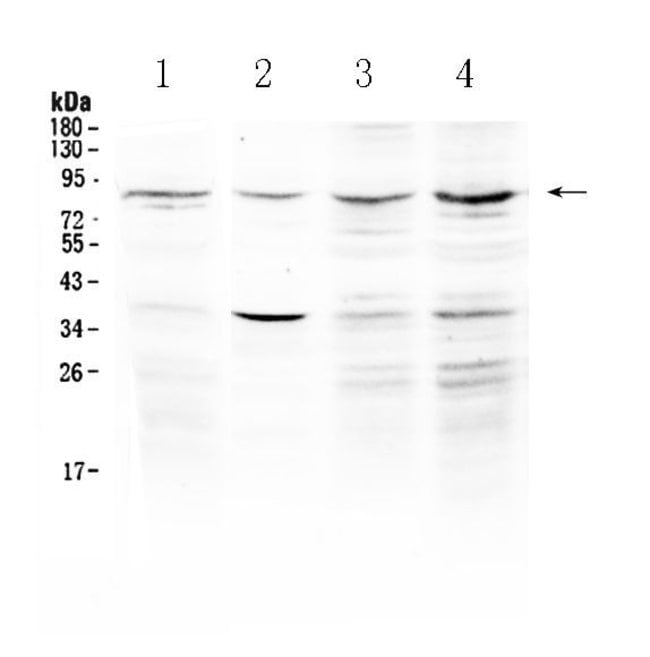
Human ECE1 shares 94% and 93.5% amino acid (aa) sequence identity with mouse and rat ECE1, respectively. Reconstitute with 0.2 mL of distilled water to yield a concentration of 500 μg/mL. Positive Control - WB: rat liver tissue, mouse heart tissue, mouse testis tissue, HELA whole cell. Store at -20°C for one year from date of receipt. After reconstitution, at 4°C for one month. It can also be aliquotted and stored frozen at -20°C for six months. Avoid repeated freeze-thaw cycles.

Endothelin-converting enzyme 1 (ECE1) is located on chromosome 1p36.12 and encodes a zinc metalloprotease involved in the maturation of endothelin peptides, which are critical for vascular tone regulation and blood pressure control. ECE1 processes precursor proteins into active endothelins, particularly endothelin-1, the most potent vasoconstrictor known. This enzyme is expressed in multiple tissues, including endothelial cells, smooth muscle cells, and the central nervous system, where it participates in diverse physiological processes such as vasoconstriction, cell proliferation, and hormone secretion. Beyond its cardiovascular functions, ECE1 is implicated in neural development and neural crest cell migration. Dysregulation of ECE1 activity or endothelin signaling is associated with several pathologies, including hypertension, heart failure, and cancer progression due to its role in controlling vascular dynamics. Research into ECE1 aims to explore its therapeutic potential in managing cardiovascular disorders and its broader implications in systemic pathophysiology.
TRUSTED_SUSTAINABILITY

Specifications

Antigen ECE1
Applications Western Blot
Classification Polyclonal
Concentration 500 μg/mL
Conjugate Unconjugated
Formulation PBS with 4mg trehalose and 0.05mg sodium azide
Gene ECE1
Gene Accession No. P42892, P42893, Q4PZA2
Gene Alias AW322500; Ece; ECE 1; ECE1; ECE-1; ECE-1a; ECE-1b; ECE-1d; endothelin converting enzyme 1; endothelin-converting enzyme 1; endothelin-converting enzyme-1a; endothelin-converting enzyme-1b; endothelin-converting enzyme-1d
Gene Symbols ECE1
Host Species Rabbit
Immunogen E.coli-derived human ECE1 recombinant protein (Position: M18-T233).
Purification Method Affinity chromatography
Quantity 100 μg
Regulatory Status RUO
Primary or Secondary Primary
Gene ID (Entrez) 1889, 230857, 94204
Target Species Human, Mouse, Rat
Content And Storage -20°C
Product Type Antibody
Form Lyophilized
Isotype IgG
Show More Show Less
WARNING: Cancer - www.P65Warnings.ca.gov
Product Title
Select an issue

By clicking Submit, you acknowledge that you may be contacted by Fisher Scientific in regards to the feedback you have provided in this form. We will not share your information for any other purposes. All contact information provided shall also be maintained in accordance with our Privacy Policy.