Promotional price valid on web orders only. Your contract pricing may differ. Interested in signing up for a dedicated account number?
Learn More
Learn More
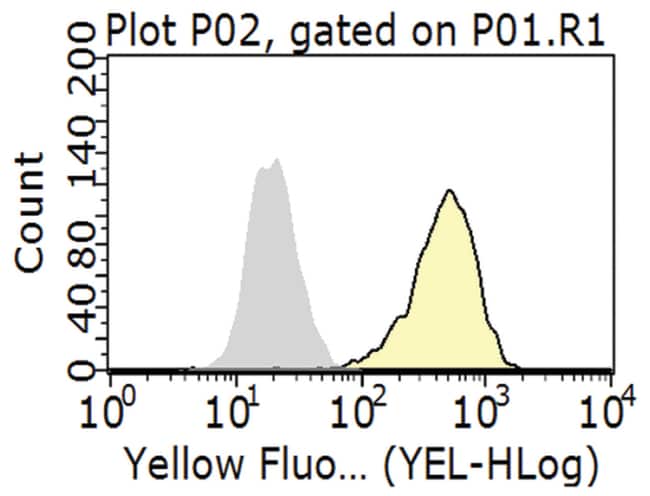
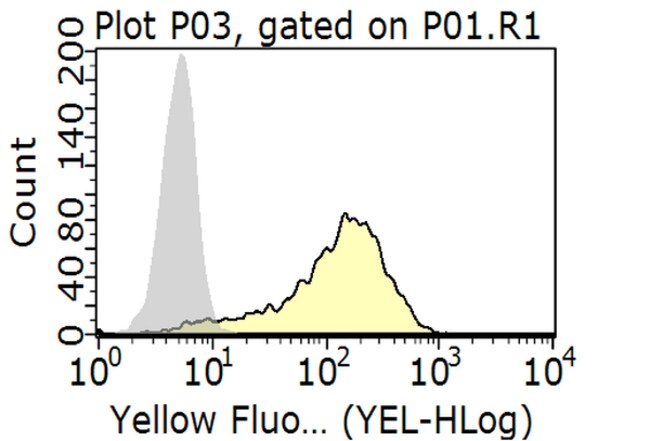
Description
Endothelial protein C receptor (UniProt Q9UNN8; also known as Activated protein C receptor, APC receptor, CD201, Endothelial cell protein C receptor) is encoded by the PROCR (also known as EPCR) gene (Gene ID 10544) in human. The coagulation cascade is an evolutionary conserved pathway in vertebrates that maintains vascular integrity. The procoagulant activity of the tssue factor (TF) pathway is counterbalanced by the protein C (PC) anticoagulant pathway to avoid intravascular thrombosis. EPCR is a CD1d–like immune receptor that binds the γ-carboxyl glutamic acid-rich (Gla) domain of PC and markedly improves PC activation in response to thrombin binding to endothelial cell-expressed thrombomodulin. EPCR also serves as the co-receptor for activated PC (aPC) in vascular protective signaling mediated by activation of PAR1. In addition, EPCR is found on hematopoietic, neuronal and epithelial progenitor populations, as well as among highly aggressive basal-like breast cancer subtypes. Endothelial overexpression of EPCR attenuates metastasis, presumably by dampening thrombin generation that supports metastatic tumor cell survival. EPCR-dependent PAR1 activation by aPC also stimulates breast cancer cell migration and prevents apoptosis of lung cancer cells. EPCR-selected populations of breast cancer cells grow as non-adherent spheroids and have high tumorigenicity when injected at low cell numbers. EPCR is initially produced with a signal peptide (a.a. 1-17), the removal of which yields the mature protein with a large extracellular region (a.a. 18-210), followed by a transmembrane domain (a.a. 211-231) and a short cytoplasmic tail (a.a. 232-238).

Specifications
Specifications
| Antigen | EPCR |
| Applications | Neutralization |
| Classification | Monoclonal |
| Clone | JRK1535 |
| Concentration | Please refer to lot specific datasheet. |
| Conjugate | Unconjugated |
| Formulation | Purified mouse monoclonal IgG1κ antibody in PBS without preservatives. |
| Gene | PROCR, EPCR |
| Gene Accession No. | Q9UNN8 |
| Host Species | Mouse |
| Show More |
For Research Use Only. Not for use in diagnostic procedures.
Product Title
By clicking Submit, you acknowledge that you may be contacted by Fisher Scientific in regards to the feedback you have provided in this form. We will not share your information for any other purposes. All contact information provided shall also be maintained in accordance with our Privacy Policy.
Spot an opportunity for improvement?