Promotional price valid on web orders only. Your contract pricing may differ. Interested in signing up for a dedicated account number?
Learn More

Invitrogen™ EphB1 Polyclonal Antibody
GREENER_CHOICE

Catalog No. PIPA595283
Change view
Click to view available options
Quantity:
100 μg
1 product options available for selection
Product selection table with 1 available options. Use arrow keys to navigate and Enter or Space to select.
Catalog No. Quantity
PIPA595283 100 μg
Use arrow keys to navigate between rows. Press Enter or Space to select a product option. 1 options available.
1 options
Catalog No. PIPA595283 Supplier Invitrogen™ Supplier No. PA595283
Only null left
Add to Cart
Edge
Add to Cart

Rabbit Polyclonal Antibody

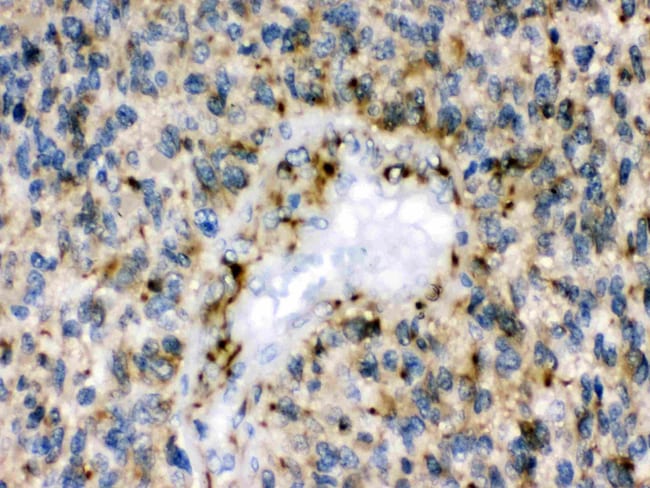
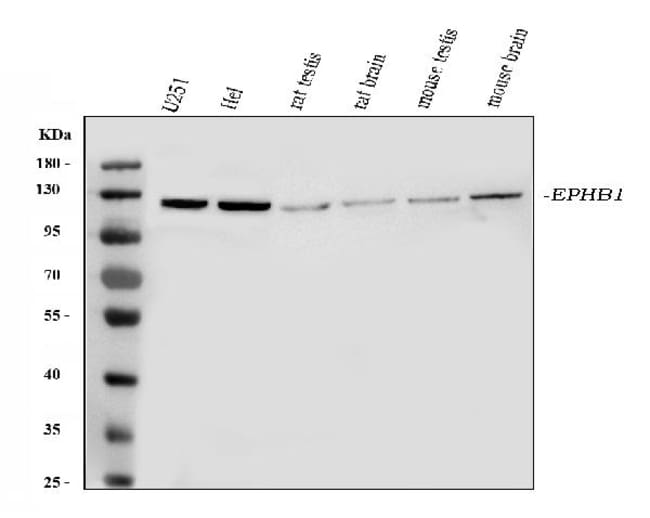
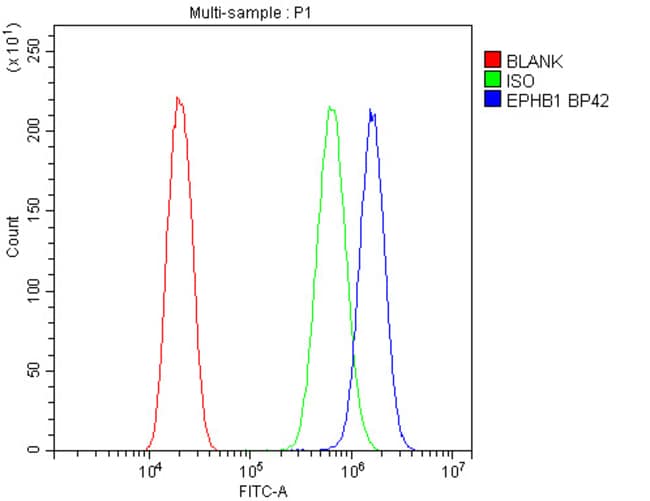
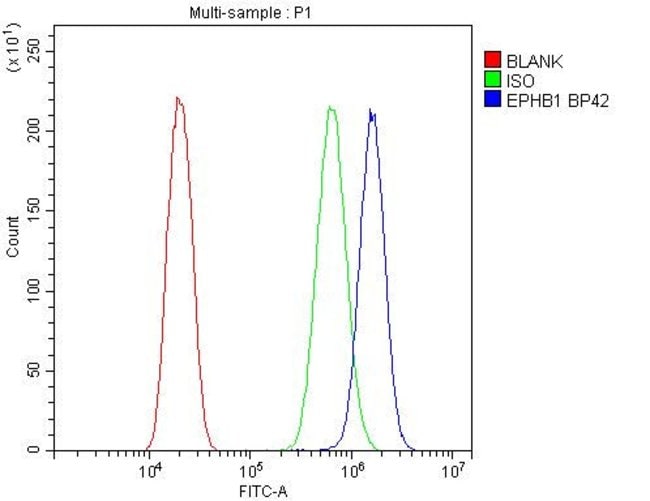
Reconstitute with 0.2 mL of distilled water to yield a concentration of 500 μg/mL. Positive Control - WB: human U251 whole cell, human Hel whole cell, rat testis tissue, rat brain tissue, mouse testis tissue, mouse brain tissue. IHC: Human Glioma tissue. Flow: U20S cell. Store at -20°C for one year from date of receipt. After reconstitution, at 4°C for one month. It can also be aliquotted and stored frozen at -20°C for six months. Avoid repeated freeze-thaw cycles.

EPHB1 is a receptor tyrosine kinase that belongs to the ephrin receptor family. Members of the Eph family of kinases play important roles in diverse biological processes including nervous system development, angiogenesis and neural synapsis formation and maturation. EphB1 and other ephB family members are type 1 membrane spanning proteins, comprised of immunoglobulin, fibronectin type III, and cysteine rich subdomains in the ecto domain, and the single uninterrupted cytoplasmic tyrosine kinase domain upstream of a carboxyterminal sterile alpha motif (SAM) domain. ephB family proteins bind ephrins of the B class, ligands that are also transmembrane spanning proteins capable of transmitting signals. ephB1 is expressed predominantly in developing neural structures in embryos, and in vascular epithelium of kidney, and other tissues. Upon binding to alternatively oligomerized ephrin B1, ephB1 signals regulation of cell attachment and cellcell assembly. Members of this protein family are implicated in neuronal and vascular cell targeting.
TRUSTED_SUSTAINABILITY

Specifications

Antigen EphB1
Applications Flow Cytometry, Immunohistochemistry (Paraffin), Western Blot
Classification Polyclonal
Concentration 500 μg/mL
Conjugate Unconjugated
Formulation PBS with 5mg BSA and 0.05mg sodium azide
Gene EPHB1
Gene Accession No. P09759, P54762, Q8CBF3
Gene Alias 9330129L11; AW488255; C130099E04Rik; Cek6; EK6; ELK; Elkh; ELK-related protein tyrosine kinase; ENSMUSG00000074119; Eph receptor B1; Eph receptor B2 (ELK-related protein tyrosine kinase); eph tyrosine kinase 2; EPHB1; Ephb2; EPH-like kinase 6; Ephrin type-B receptor 1; EPHT2; Epth2; Erk; Hek6; NET; Neuronally-expressed EPH-related tyrosine kinase; soluble EPHB1 variant 1; tyrosine-protein kinase receptor EPH-2
Gene Symbols EPHB1
Host Species Rabbit
Immunogen A synthetic peptide corresponding to a sequence at the N-terminus of human Eph receptor B1 (56-88aa RTYQVCNVFEPNQNNWLLTTFINRRGAHRIYTE).
Purification Method Affinity chromatography
Quantity 100 μg
Regulatory Status RUO
Primary or Secondary Primary
Gene ID (Entrez) 2047, 24338, 270190
Target Species Human, Mouse, Rat
Content And Storage -20°C
Product Type Antibody
Form Lyophilized
Isotype IgG
Show More Show Less
WARNING: Cancer - www.P65Warnings.ca.gov
Product Title
Select an issue

By clicking Submit, you acknowledge that you may be contacted by Fisher Scientific in regards to the feedback you have provided in this form. We will not share your information for any other purposes. All contact information provided shall also be maintained in accordance with our Privacy Policy.