Learn More
Invitrogen™ FTO Recombinant Superclonal™ Antibody (2HCLC)

Description
This antibody is predicted to react with Mouse, Rat, Bovine, Recombinant rabbit Superclonal™ antibodies are unique offerings from Thermo Fisher Scientific. They are comprised of a selection of multiple different recombinant monoclonal antibodies, providing the best of both worlds - the sensitivity of polyclonal antibodies with the specificity of monoclonal antibodies - all delivered with the consistency only found in a recombinant antibody. While functionally the same as a polyclonal antibody - recognizing multiple epitope sites on the target and producing higher detection sensitivity for low abundance targets - a recombinant rabbit Superclonal™ antibody has a known mixture of light and heavy chains. The exact population can be produced in every lot, circumventing the biological variability typically associated with polyclonal antibody production. Note: Formerly called Recombinant polyclonal antibody, this product is now rebranded as Recombinant Superclonal™ antibody. The physical product and the performance remain unchanged.

Specifications
Specifications
| Antigen | FTO |
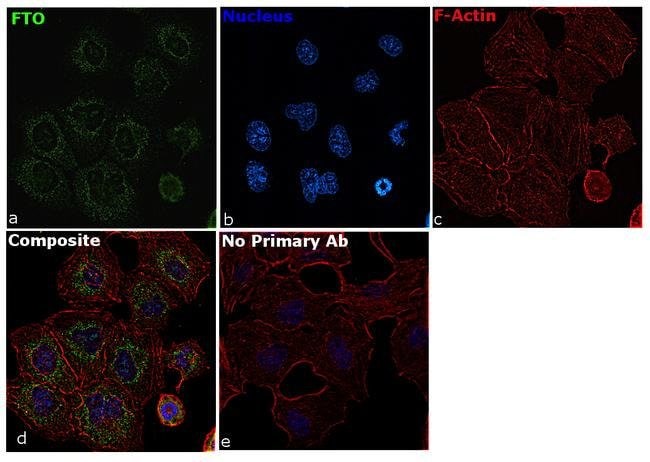
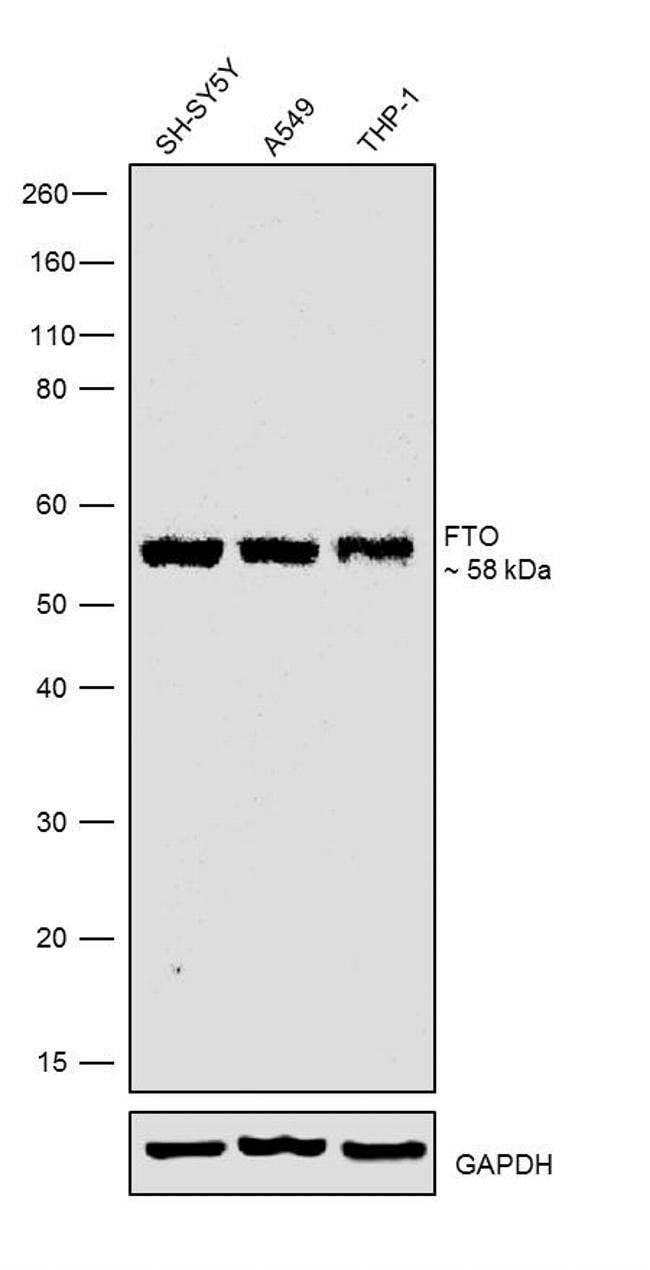
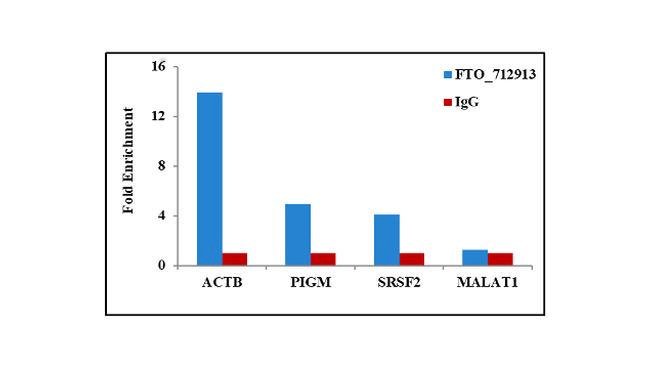
| Applications | Western Blot, RNA Immunoprecipitation, Immunocytochemistry |
| Classification | Recombinant Superclonal |
| Clone | 2HCLC |
| Concentration | 0.5 mg/mL |
| Conjugate | Unconjugated |
| Formulation | PBS with 0.09% sodium azide; pH 7.4 |
| Gene | Fto |
| Gene Accession No. | Q9C0B1 |
| Gene Alias | AlkB homolog 9; ALKBH9; alpha-ketoglutarate-dependent dioxygenase FTO; AW743446; BMIQ14; fat mass and obesity associated; fat mass and obesity-associated protein; fatso; FTO; GDFD; KIAA1752; m6A(m)-demethylase FTO; MGC5149; mKIAA1752; mRNA (2'-O-methyladenosine-N(6)-)-demethylase FTO; mRNA N(6)-methyladenosine demethylase FTO; Protein fatso; protein fto; RGD1305121; tRNA N1-methyl adenine demethylase FTO; U6 small nuclear RNA (2'-O-methyladenosine-N(6)-)-demethylase FTO; U6 small nuclear RNA N(6)-methyladenosine-demethylase FTO |
| Show More |
Safety and Handling
By clicking Submit, you acknowledge that you may be contacted by Fisher Scientific in regards to the feedback you have provided in this form. We will not share your information for any other purposes. All contact information provided shall also be maintained in accordance with our Privacy Policy.