Promotional price valid on web orders only. Your contract pricing may differ. Interested in signing up for a dedicated account number?
Learn More
Learn More
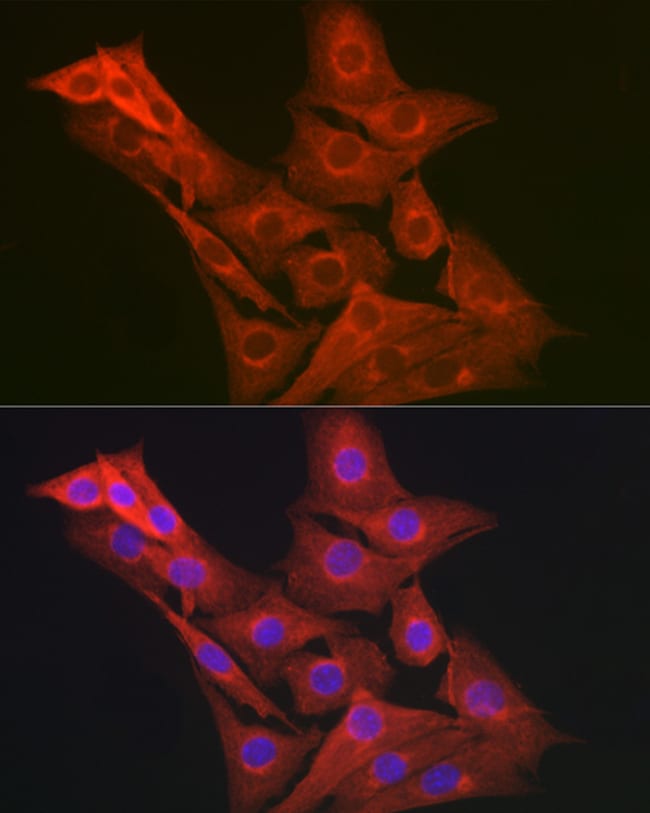
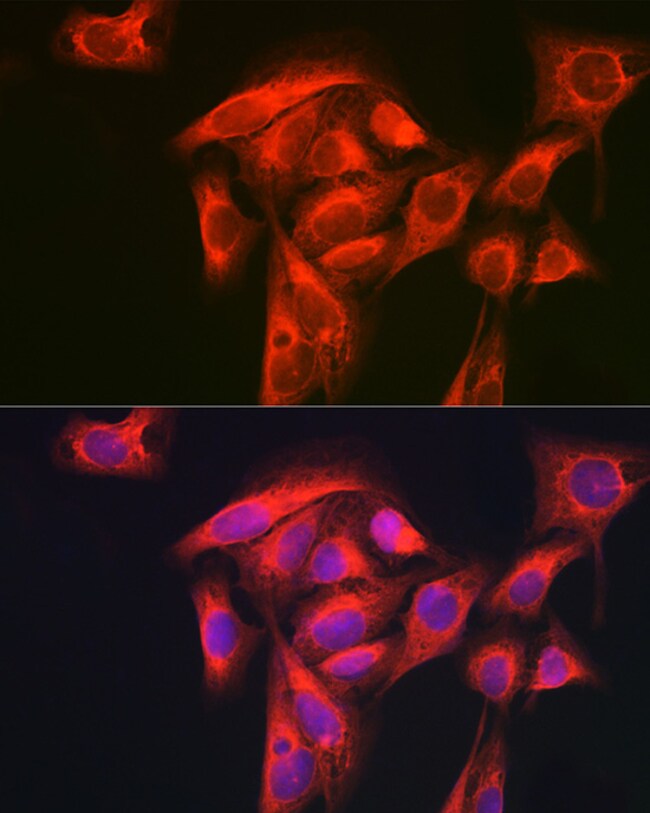
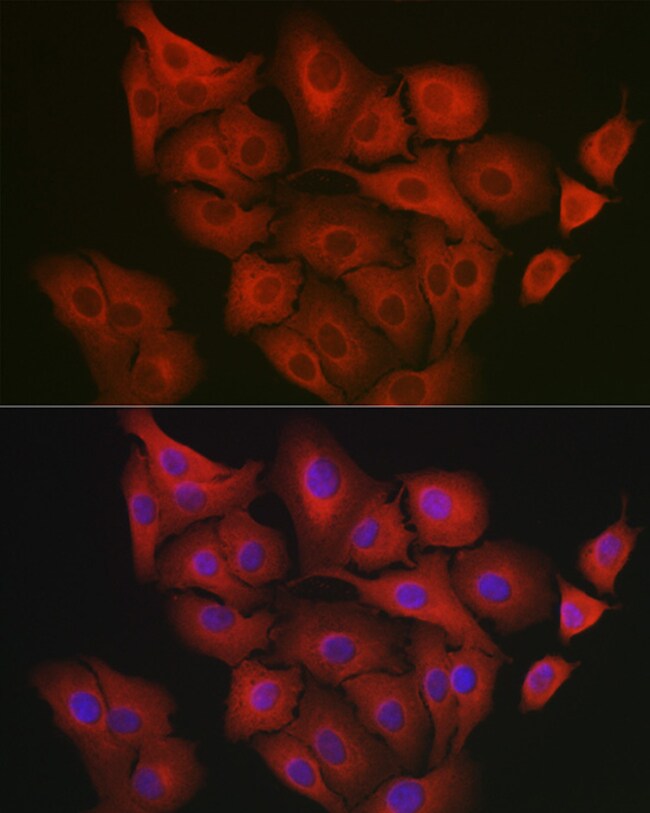
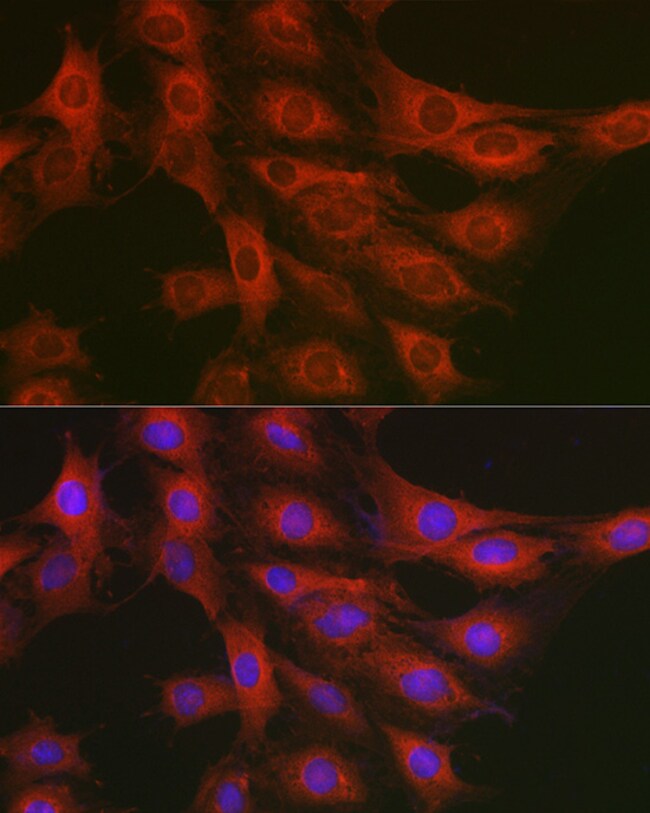
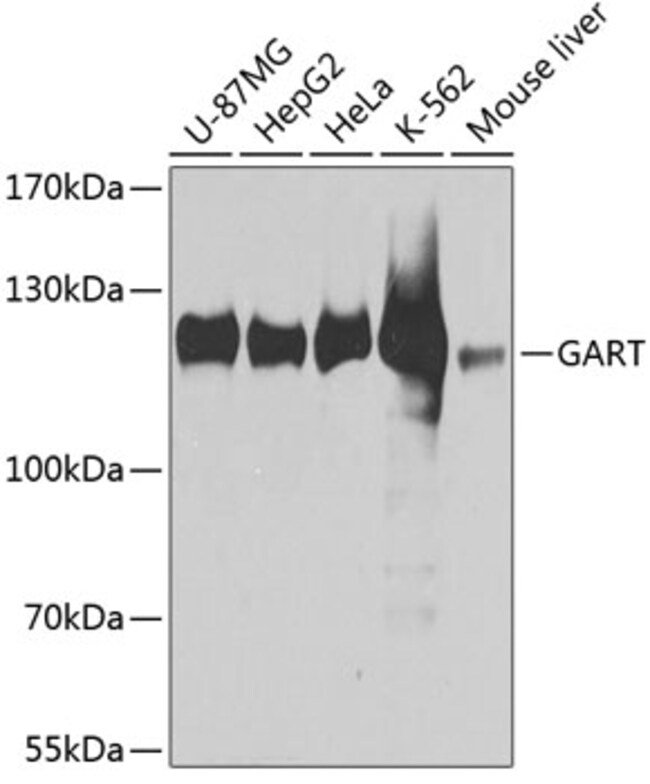
Invitrogen™ GART Polyclonal Antibody

Description
Immunogen sequence: MAARVLIIGS GGREHTLAWK LAQSHHVKQV LVAPGNAGTA CSEKISNTAI SISDHTALAQ FCKEKKIEFV VVGPEAPLAA GIVGNLRSAG VQCFGPTAEA AQLESSKRFA KEFMDRHGIP TAQWKAFTKP EEACSFILSA DFPALVVKAS GLAAGKGVIV AKSKEEACKA VQEIMQEKAF GAAGETIVIE ELLDGEEVSC LCFTDGKTVA PMPPAQDHKR LLEGDGGPNT GGMGAYCPAP QVSNDLLLKI KDTVLQRTVD GMQQEGTPYT GILYAGIMLT KNGPKVLEFN CRFGDPECQV ILPLLKSDLY EVIQSTLDGL.
MERTK is a receptor tyrosine kinase that transduces signals from the extracellular matrix into the cytoplasm by binding to several ligands including LGALS3, TUB, TULP1 or GAS6. Regulates many physiological processes including cell survival, migration, differentiation, and phagocytosis of apoptotic cells (efferocytosis). Ligand binding at the cell surface induces autophosphorylation of MERTK on its intracellular domain that provides docking sites for downstream signaling molecules. Following activation by ligand, interacts with GRB2 or PLCG2 and induces phosphorylation of MAPK1, MAPK2, FAK/PTK2 or RAC1. MERTK signaling plays a role in various processes such as macrophage clearance of apoptotic cells, platelet aggregation, cytoskeleton reorganization and engulfment. Functions in the retinal pigment epithelium (RPE) as a regulator of rod outer segments fragments phagocytosis. Plays also an important role in inhibition of Toll-like receptors (TLRs)-mediated innate immune response by activating STAT1, which selectively induces production of suppressors of cytokine signaling SOCS1 and SOCS3.

Specifications
Specifications
| Antigen | GART |
| Applications | ELISA, Western Blot, Immunocytochemistry |
| Classification | Polyclonal |
| Concentration | 1.11 mg/mL |
| Conjugate | Unconjugated |
| Formulation | PBS with 50% glycerol and 0.02% sodium azide; pH 7.3 |
| Gene | GART |
| Gene Accession No. | P22102, Q64737 |
| Gene Alias | 5'-phosphoribosylglycinamide transformylase; AIR synthase; AIRS; Gaps; GAR transformylase; GARS; Gart; GARTF; glycinamide ribonucleotide formyltransferase; Glycinamide ribonucleotide synthetase; MGC47764; PAIS; PGFT; Phosphoribosylamine--glycine ligase; Phosphoribosyl-aminoimidazole synthetase; Phosphoribosylformylglycinamidine cyclo-ligase; Phosphoribosylglycinamide formyltransferase; phosphoribosylglycinamide formyltransferase, phosphoribosylglycinamide synthetase, phosphoribosylaminoimidazole synthetase; Phosphoribosylglycinamide synthetase; PRGS; Trifunctional purine biosynthetic protein adenosine-3; Trifunctional purine biosynthetic protein adenosine-3-like protein |
| Gene Symbols | GART |
| Show More |
Safety and Handling
WARNING: Cancer - www.P65Warnings.ca.gov
Product Title
By clicking Submit, you acknowledge that you may be contacted by Fisher Scientific in regards to the feedback you have provided in this form. We will not share your information for any other purposes. All contact information provided shall also be maintained in accordance with our Privacy Policy.
Spot an opportunity for improvement?