Learn More
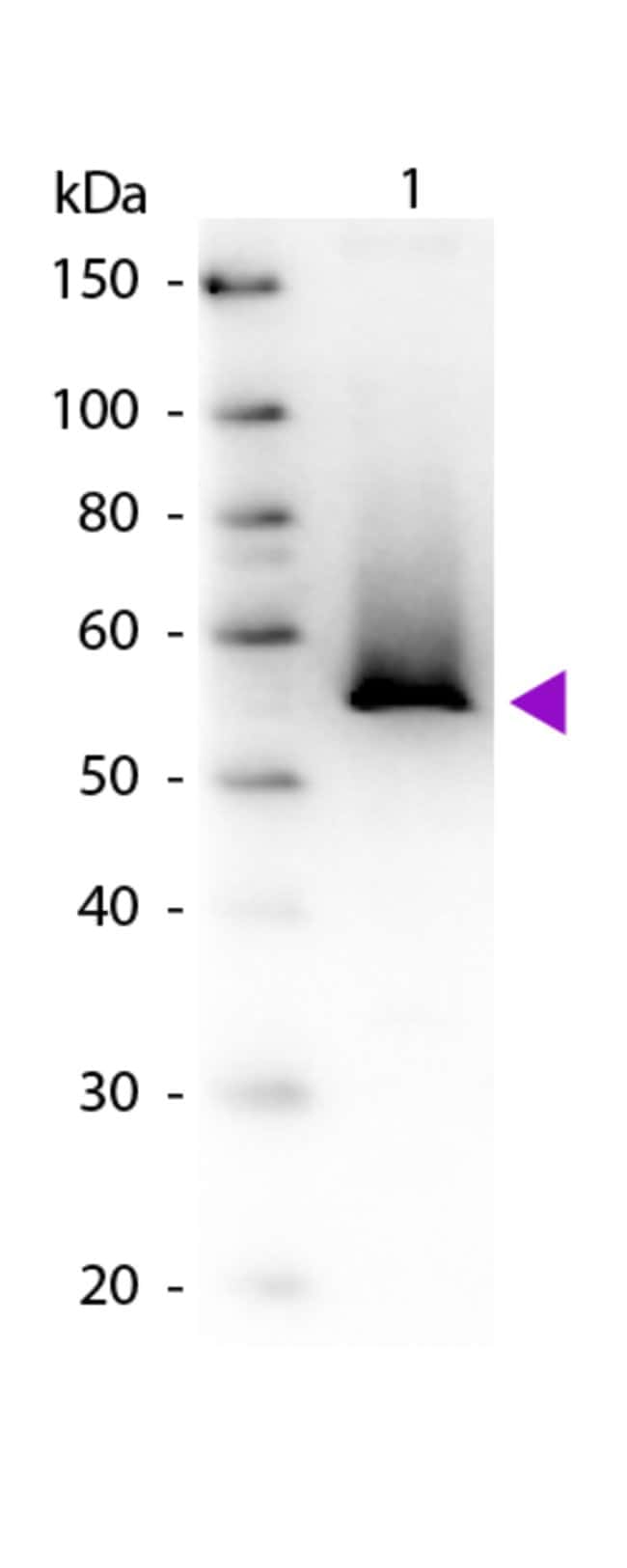
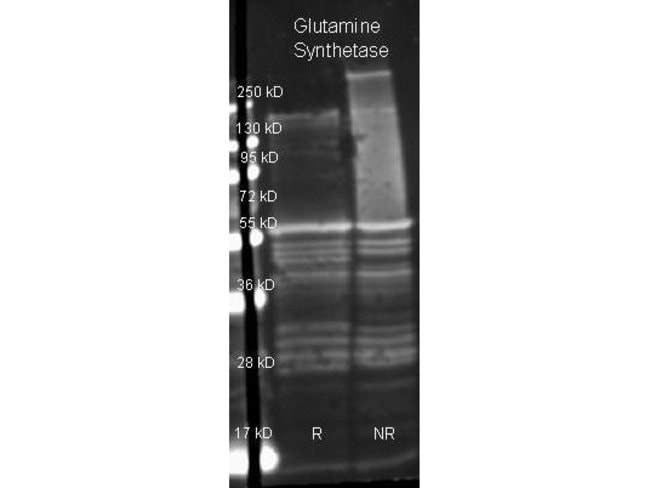
Glutamine Synthetase Polyclonal Antibody, Rockland™


Description
Store vial at 4°C prior to restoration. For extended storage aliquot contents and freeze at -20°C or below. Avoid cycles of freezing and thawing. Centrifuge product if not completely clear after standing at room temperature. This product is stable for several weeks at 4°C as an undiluted liquid. Dilute only prior to immediate use. Anti-Glutamine Synthetase antibody is an IgG fraction antibody purified from monospecific antiserum by a multi-step process which includes delipidation, salt fractionation and ion exchange chromatography followed by extensive dialysis against the buffer stated above. Assay by immunoelectrophoresis resulted in a single precipitin arc against anti-Goat Serum as well as purified and partially purified Glutamine Synthetase [Microbial]. Cross reactivity against Glutamine Synthetase from other sources is unknown.
Specifications
Specifications
| Antigen | Glutamine Synthetase |
| Applications | ELISA, Immunoprecipitation, Western Blot |
| Classification | Polyclonal |
| Concentration | 1 mg/mL |
| Conjugate | Unconjugated |
| Formulation | 0.02M potassium phosphate with 0.15M NaCl and 0.01% sodium azide; pH 7.2 |
| Gene Alias | BOS_16078; cell proliferation-inducing protein 59; GLNA; Glns; Glul; glutamate decarboxylase; glutamate-ammonia ligase; Glutamate--ammonia ligase; glutamate-ammonia ligase (glutamine synthase); glutamate-ammonia ligase (glutamine synthetase); glutamine synthase; Glutamine synthetase; Glutamine synthetase (glutamate-ammonia ligase); glutamine synthetase 1; GS; Palmitoyltransferase GLUL; PIG43; PIG59; proliferation-inducing protein 43 |
| Host Species | Goat |
| Immunogen | Glutamine Synthetase [native from brevibacterium species] |
| Quantity | 25 μL |
| Show More |
By clicking Submit, you acknowledge that you may be contacted by Fisher Scientific in regards to the feedback you have provided in this form. We will not share your information for any other purposes. All contact information provided shall also be maintained in accordance with our Privacy Policy.