Promotional price valid on web orders only. Your contract pricing may differ. Interested in signing up for a dedicated account number?
Learn More
Learn More
Description
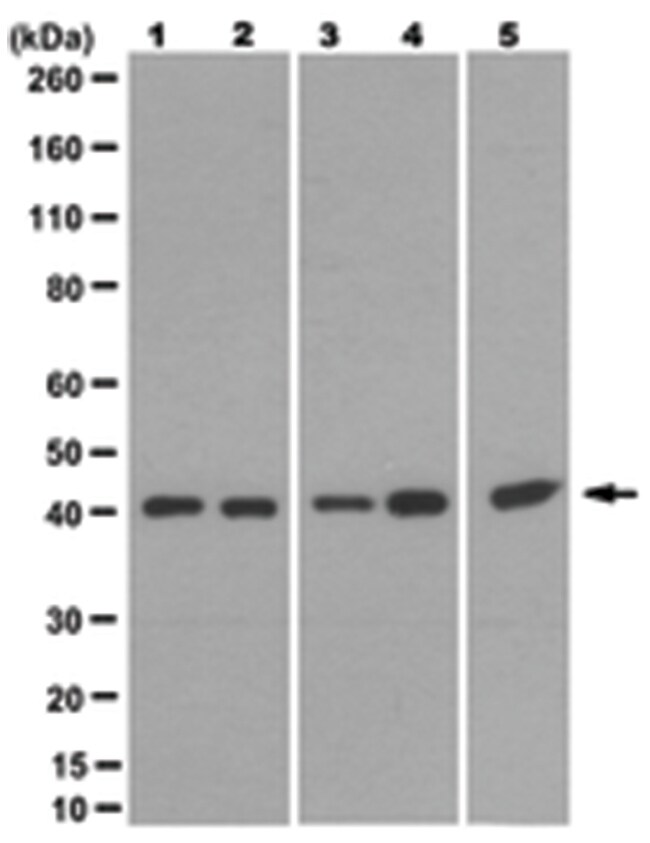
Guanine nucleotide-binding protein G(o) subunit alpha (UniProt P29777; also known as G(o)alpha) is encoded by the GNAO1 (also known as EIEE17) gene (Gene ID 2775) in human. Heterotrimeric G proteins are activated by G protein-coupled receptors (GPCRs) and are composed of alpha, beta, and gamma subunits. There exists also monomeric Ras superfamily of small GTPases that are commonly referred to as small G-proteins. G-proteins mediate signal transduction initiated by GPCRs. Ligand binding activates GPCRs by inducing a conformational change. The activated GPCRs catalyzes the GDP-to-GTP exchange of the G subunit, causing a dissociation of the G dimer from the now GTP-bound G subunit. The G subunit gradually hydrolyzes the bound GTP to GDP and eventually re-associates with G and re-starts the cycle. There exist at least 20 different G subunits, which are separated into four main groups, Gi, Gs, Gq, and G12/13. Five types of Gi alpha subunits exist, Gi (GNAI1, GNAI2, and GNAI3), Go (GNAO1), Gt (GNAT1 and GNAT2), Ggust (GNAT3), and Gz (GNAZ). Gi/o family members inhibit adenylyl cyclase and can reduce neuronal excitability through regulation of ion channels. G(o)alpha plays a key role in presynaptic inhibition of neurotransmitter release through a G-mediated suppression of voltage-gated Ca2+ channels. G(o)alpha is the most abundant G o protein in the mammalian brain, defective G(o)alpha function can result in neurological impairments.

Specifications
Specifications
| Antigen | Goα |
| Applications | Western Blot |
| Classification | Monoclonal |
| Clone | 3D9.1 |
| Concentration | Please refer to lot specific datasheet. |
| Conjugate | Unconjugated |
| Formulation | Mouse monoclonal hybridoma culture supernatant without preservatives. |
| Gene | GNAO1, EIEE17 |
| Gene Accession No. | P29777 |
| Host Species | Mouse |
| Show More |
For Research Use Only. Not for use in diagnostic procedures.
Product Title
By clicking Submit, you acknowledge that you may be contacted by Fisher Scientific in regards to the feedback you have provided in this form. We will not share your information for any other purposes. All contact information provided shall also be maintained in accordance with our Privacy Policy.
Spot an opportunity for improvement?