Learn More
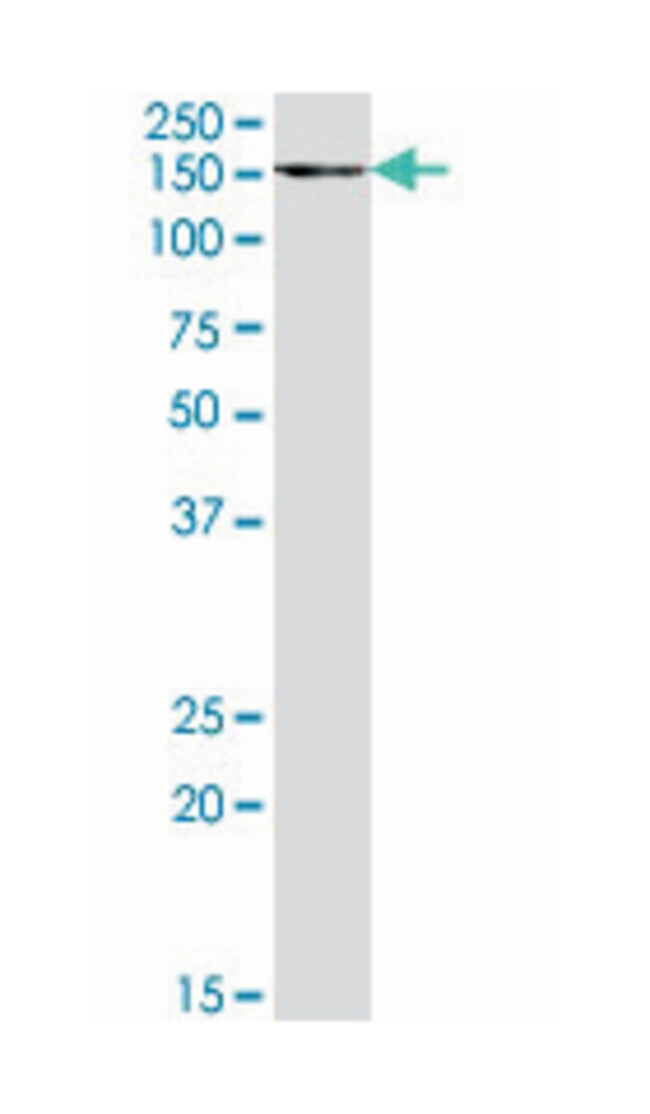
Description
Neurexins function in the vertebrate nervous system as cell adhesion molecules and receptors. Two neurexin genes are among the largest known in human (NRXN1 and NRXN3). By using alternate promoters, splice sites and exons, predictions of hundreds or even thousands of distinct mRNAs have been made. Most transcripts use the upstream promoter and encode alpha-neurexin isoforms; fewer transcripts are produced from the downstream promoter and encode beta-neurexin isoforms. Alpha-neurexins contain epidermal growth factor-like (EGF-like) sequences and laminin G domains, and they interact with neurexophilins. Beta-neurexins lack EGF-like sequences and contain fewer laminin G domains than alpha-neurexins. The RefSeq Project has decided to create only a few representative transcript variants of the multitude that are possible. [provided by RefSeq
Specifications
Specifications
| Antigen | NRXN1 |
| Applications | ELISA, Western Blot |
| Classification | Polyclonal |
| Concentration | 0.5 mg/mL |
| Conjugate | Unconjugated |
| Description | Goat polyclonal antibody raised against synthetic peptide of NRXN1. |
| Dilution | ELISA (1:32000) Western Blot (0.05-0.1 ug/mL) The optimal working dilution should be determined by the end user. |
| Formulation | In Tris saline, pH 7.3 (0.5% BSA, 0.02% sodium azide) |
| Gene | NRXN1 |
| Gene Alias | DKFZp313P2036/FLJ35941/Hs.22998/KIAA0578 |
| Show More |
For Research Use Only
By clicking Submit, you acknowledge that you may be contacted by Fisher Scientific in regards to the feedback you have provided in this form. We will not share your information for any other purposes. All contact information provided shall also be maintained in accordance with our Privacy Policy.