Learn More
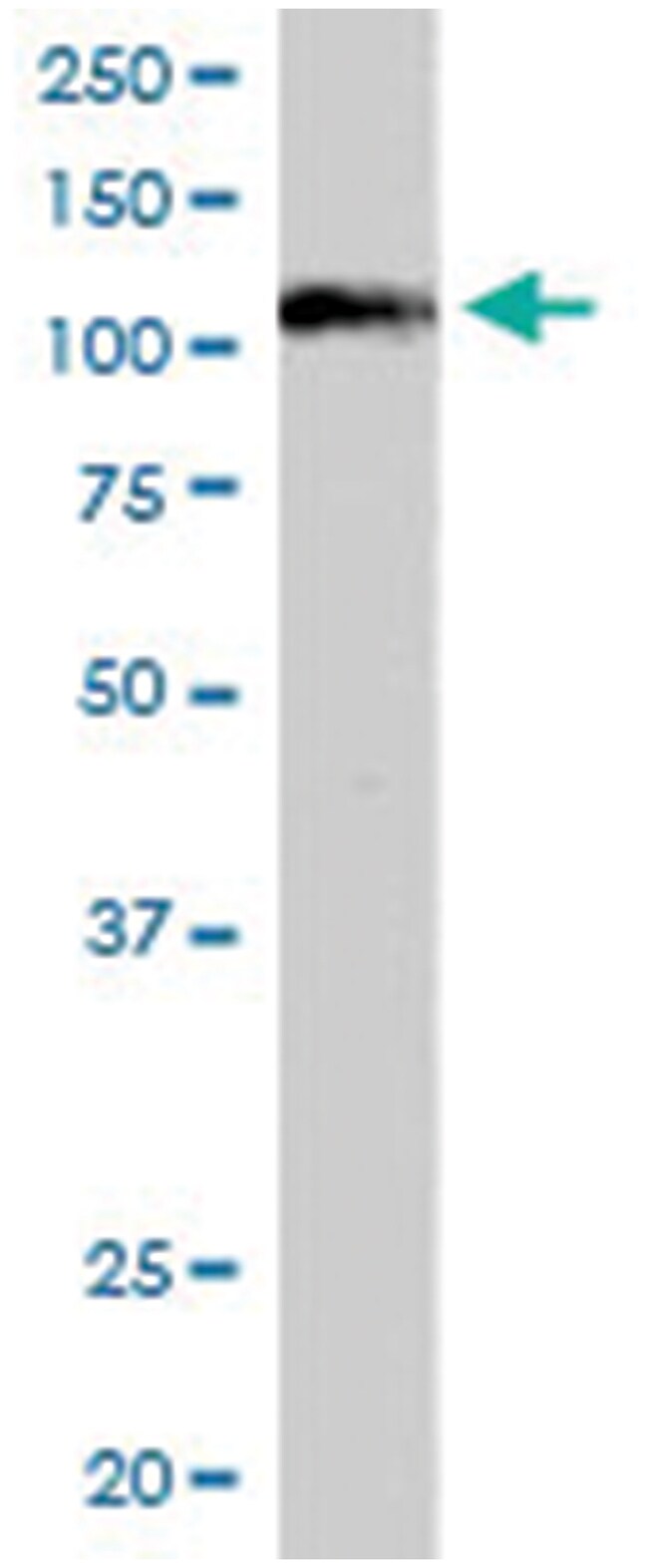
Description
This gene encodes two proteins, the SART1(800) protein expressed in the nucleus of the majority of proliferating cells, and the SART1(259) protein expressed in the cytosol of epithelial cancers. The SART1(259) protein is translated by the mechanism of -1 frameshifting during posttranscriptional regulation; its full-length sequence is not published yet. The two encoded proteins are thought to be involved in the regulation of proliferation. Both proteins have tumor-rejection antigens. The SART1(259) protein possesses tumor epitopes capable of inducing HLA-A2402-restricted cytotoxic T lymphocytes in cancer patients. This SART1(259) antigen may be useful in specific immunotherapy for cancer patients and may serve as a paradigmatic tool for the diagnosis and treatment of patients with atopy. The SART1(259) protein is found to be essential for the recruitment of the tri-snRNP to the pre-spliceosome in the spliceosome assembly pathway. [provided by RefSeq
Specifications
Specifications
| Antigen | SART1 |
| Applications | ELISA, Western Blot |
| Classification | Polyclonal |
| Concentration | 0.5 mg/mL |
| Conjugate | Unconjugated |
| Description | Goat polyclonal antibody raised against synthetic peptide of SART1. |
| Dilution | ELISA (1:64000) Western Blot (0.03-0.1 ug/mL) The optimal working dilution should be determined by the end user. |
| Formulation | In Tris saline, pH 7.3 (0.5% BSA, 0.02% sodium azide) |
| Gene | SART1 |
| Gene Alias | Ara1/HOMS1/MGC2038/SART1259/SNRNP110/Snu66 |
| Show More |
For Research Use Only
By clicking Submit, you acknowledge that you may be contacted by Fisher Scientific in regards to the feedback you have provided in this form. We will not share your information for any other purposes. All contact information provided shall also be maintained in accordance with our Privacy Policy.