Learn More
Description
This gene encodes uromodulin, the most abundant protein in normal urine. Its excretion in urine follows proteolytic cleavage of the ectodomain of its glycosyl phosphatidylinosital-anchored counterpart that is situated on the luminal cell surface of the loop of Henle. Uromodulin may act as a constitutive inhibitor of calcium crystallization in renal fluids. Excretion of uromodulin in urine may provide defense against urinary tract infections caused by uropathogenic bacteria. Defects in this gene are associated with the autosomal dominant renal disorders medullary cystic kidney disease-2 (MCKD2) and familial juvenile hyperuricemic nephropathy (FJHN). These disorders are characterized by juvenile onset of hyperuricemia, gout, and progressive renal failure. While several transcript variants may exist for this gene, the full-length natures of only two have been described to date. These two represent the major variants of this gene and encode the same isoform. [provided by RefSeq
Specifications
Specifications
| Antigen | UMOD |
| Applications | Western Blot |
| Classification | Polyclonal |
| Concentration | 0.5 mg/mL |
| Conjugate | Unconjugated |
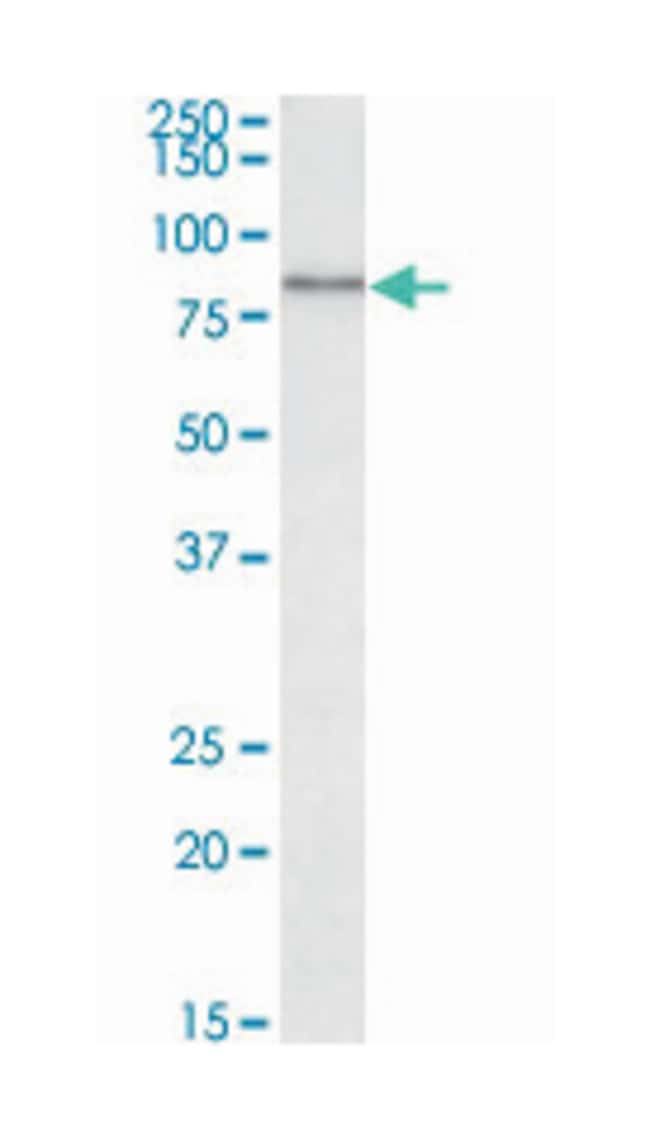
| Description | Goat polyclonal antibody raised against synthetic peptide of UMOD. |
| Dilution | ELISA (1:128000) Western Blot (0.3-1ug/ml) The optimal working dilution should be determined by the end user. |
| Formulation | In Tris saline, pH 7.3 (0.02% sodium azide, 0.5% BSA) |
| Gene | UMOD |
| Gene Alias | ADMCKD2/FJHN/HNFJ/MCKD2/THGP/THP |
| Show More |
For Research Use Only
By clicking Submit, you acknowledge that you may be contacted by Fisher Scientific in regards to the feedback you have provided in this form. We will not share your information for any other purposes. All contact information provided shall also be maintained in accordance with our Privacy Policy.