Promotional price valid on web orders only. Your contract pricing may differ. Interested in signing up for a dedicated account number?
Learn More
Learn More
Hemoglobin beta F Monoclonal Antibody (4B3.B5.F3.B7), Rockland™


Description
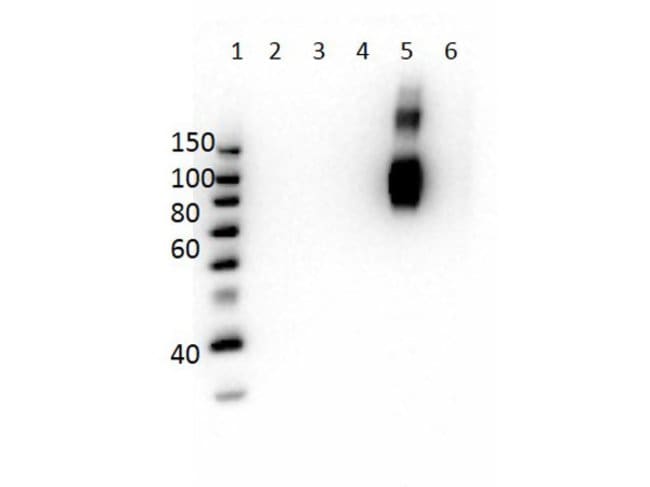
Store vial at -20°C prior to opening. This product is stable at 4°C as an undiluted liquid. For extended storage, aliquot contents and freeze at -20°C or below. Avoid cycles of freezing and thawing. Dilute only prior to immediate use. Reacts specifically with human HbF gamma isoform. This antibody does not react with the HbA, HbS, HbC, or HbA-2 isoforms.
Hemorrhage of cells from an Rh+ fetus into the circulation of an Rh- mother may result in the formation of Rh-reactive antibodies in the mother. Rh hemolytic anemia in a subsequent Rh+ fetus may result from placental transfer of antibodies formed in the mother to the fetus. Although the volume of fetal erythrocytes found in the maternal circulation during pregnancy and immediately post-partum is reported to be small and of uncertain clinical significance in many cases, substantial hemorrhage may result from a number of causes including fetal or maternal trauma and placental defects. Erythrocytes containing fetal hemoglobin may be found in individuals of any age, but with lower amounts of fetal hemoglobin compared to fetal red cells. These cells have been termed F cells. High levels of F cells may also exist in adults with a heterogeneous group of genetic disorders of uncertain etiology, referred to as Hereditary Persistence of Fetal Hemoglobin. Other clinical conditions causing significant levels of anemia may also result in elevated levels of F cells. Several clinical conditions have been described with increased levels of F cells. These conditions include hereditary anemic diseases such as sickle cell anemia and thalassemia major.
Specifications
Specifications
| Antigen | Hemoglobin beta F |
| Applications | ELISA, Immunoprecipitation, Western Blot |
| Classification | Monoclonal |
| Clone | 4B3.B5.F3.B7 |
| Concentration | 1 mg/mL |
| Conjugate | Unconjugated |
| Formulation | 0.02M potassium phosphate with 0.15M NaCl and 0.01% sodium azide; pH 7.2 |
| Gene | HBG1 |
| Gene Accession No. | P69891 |
| Gene Alias | A-gamma globin; alpha-1 globin; gamma A hemoglobin; gamma globin; Gamma-1-globin; Hb F Agamma; HBG1; HBGA; HBGR; HBG-T2; hemoglobin alpha 1; Hemoglobin gamma-1 chain; Hemoglobin gamma-A chain; hemoglobin subunit gamma 1; Hemoglobin subunit gamma-1; hemoglobin, gamma A; hemoglobin, gamma, regulator of; HSGGL1; PRO2979 |
| Show More |
Product Title
By clicking Submit, you acknowledge that you may be contacted by Fisher Scientific in regards to the feedback you have provided in this form. We will not share your information for any other purposes. All contact information provided shall also be maintained in accordance with our Privacy Policy.
Spot an opportunity for improvement?