Promotional price valid on web orders only. Your contract pricing may differ. Interested in signing up for a dedicated account number?
Learn More
Learn More
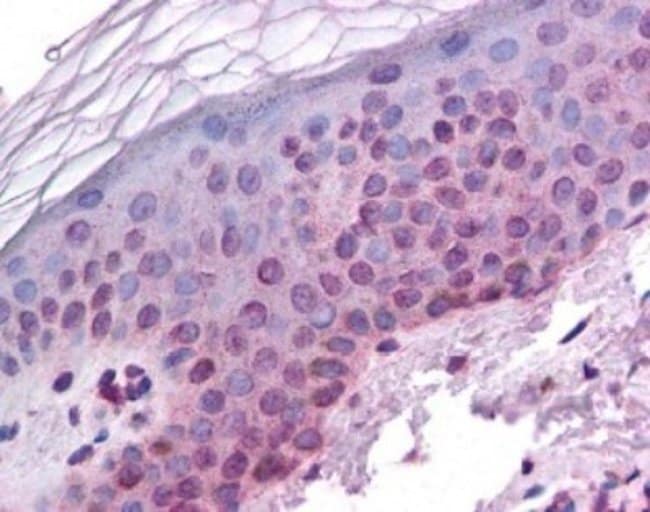

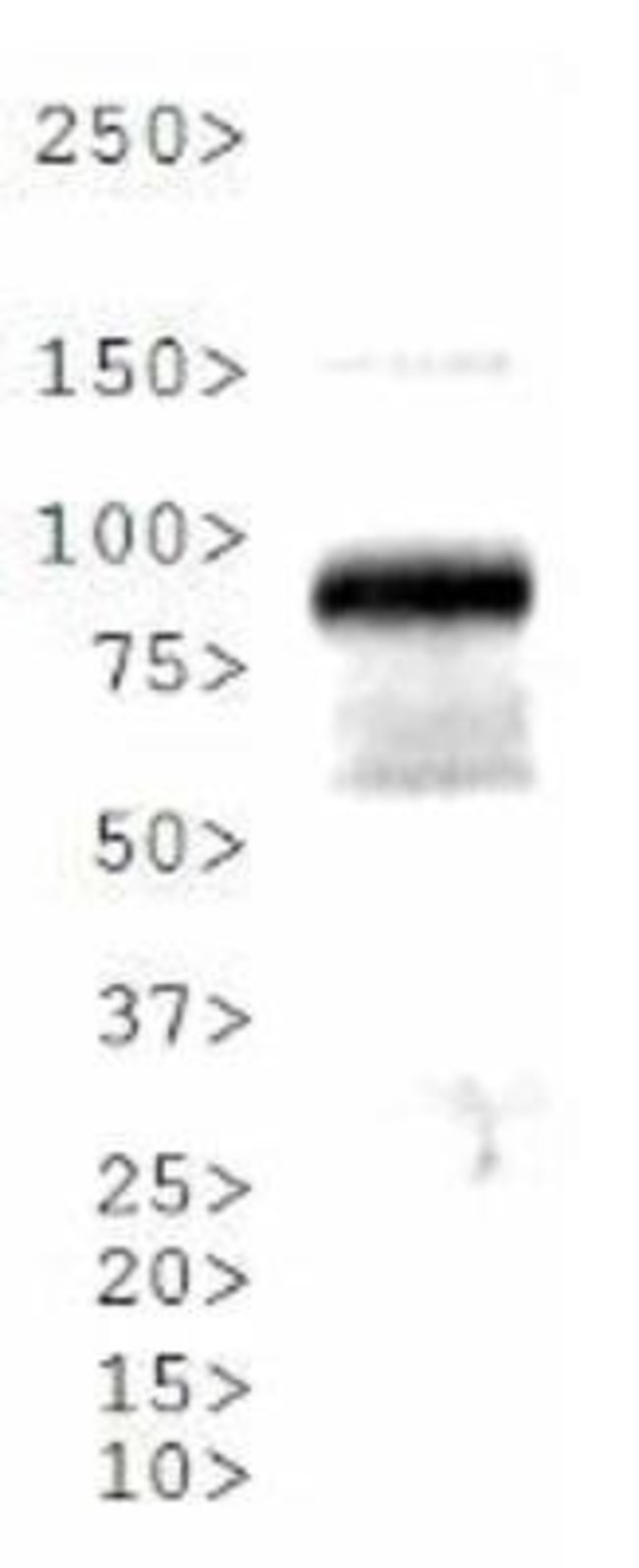
Invitrogen™ HIF-1 beta Polyclonal Antibody

Description
In Western blot, background may increase with whole cell extract preparations. Lower dilutions may be needed for whole cell extract preps. Suggested positive control: MCF-7 human nuclear extracts, MCF-7 whole cell lysate, antigen standard for ARNT (transient overexpression lysate).
HIF-1 beta is a series of aryl hydrocarbon receptor nuclear translocator (ARNT) gene products. Hypoxia contributes significantly to the pathophysiology of major categories of human disease, including myocardial and cerebral ischemia, cancer, pulmonary hypertension, congenital heart disease and chronic obstructive pulmonary disease. Hypoxia contributes significantly to the pathophysiology of major categories of human disease, including myocardial and cerebral ischemia, cancer, pulmonary hypertension, congenital heart disease and chronic obstructive pulmonary disease. HIF-1 is a nuclear protein involved in mammalian oxygen homeostasis. This occurs as a posttranslational modification by prolyl hydroxylation. HIF-1 is a heterodimer composed of HIF-1 alpha and HIF-1 beta subunits. Both subunits are constantly translated. However, under normoxic conditions, human HIF-1 alpha is hydroxylated at Pro402 or Pro564 by a set of HIF prolyl hydroxylases, is polyubiquinated, and eventually degraded in proteosomes. Under hypoxic conditions, the lack of hydroxylation prevents HIF degradation and increases transcriptional activity. Therefore, the concentration of HIF-1 alpha increases in the cell. In contrast, HIF-1 beta remains stable under either condition. HIF-1 beta is a series of aryl hydrocarbon receptor nuclear translocator (ARNT) gene products. Diseases associated with HIF-1 beta dysfunction include hypoxia and renal cell carcinoma.HIF-1 beta is a series of aryl hydrocarbon receptor nuclear translocator (ARNT) gene products. Hypoxia contributes significantly to the pathophysiology of major categories of human disease, including myocardial and cerebral ischemia, cancer, pulmonary hypertension, congenital heart disease and chronic obstructive pulmonary disease. Hypoxia contributes significantly to the pathophysiology of major categories of human disease, including myocardial and cerebral ischemia, cancer, pulmonary hypertension, congenital heart disease and chronic obstructive pulmonary disease. HIF-1 is a nuclear protein involved in mammalian oxygen homeostasis. This occurs as a posttranslational modification by prolyl hydroxylation. HIF-1 is a heterodimer composed of HIF-1 alpha and HIF-1 beta subunits. Both subunits are constantly translated. However, under normoxic conditions, human HIF-1 alpha is hydroxylated at Pro402 or Pro564 by a set of HIF prolyl hydroxylases, is polyubiquinated, and eventually degraded in proteosomes. Under hypoxic conditions, the lack of hydroxylation prevents HIF degradation and increases transcriptional activity. Therefore, the concentration of HIF-1 alpha increases in the cell. In contrast, HIF-1 beta remains stable under either condition. HIF-1 beta is a series of aryl hydrocarbon receptor nuclear translocator (ARNT) gene products. Diseases associated with HIF-1 beta dysfunction include hypoxia and renal cell carcinoma.

Specifications
Specifications
| Antigen | HIF-1 beta |
| Applications | ChIP Assay, Gel Shift, Immunohistochemistry (Paraffin), Immunoprecipitation, Western Blot, Immunocytochemistry |
| Classification | Polyclonal |
| Concentration | Conc. Not Determined |
| Conjugate | Unconjugated |
| Formulation | Whole serum with 0.02% sodium azide |
| Gene | ARNT |
| Gene Accession No. | P27540, P41739, P53762, Q9BE97 |
| Gene Alias | AHA-1; ARNT; ARNT protein; Arnt1; ARNT1a; ARNT1b; aryl hydrocarbon receptor nuclear translocater; Aryl hydrocarbon receptor nuclear translocator; Aryl hydrocarbon receptor nuclear translocator 1; aryl hydrocarbon receptor nuclear translocator type 1a; aryl hydrocarbon receptor nuclear translocator type 1b; bHLHe2; Class E basic helix-loop-helix protein 2; D3Ertd557e; dioxin receptor, nuclear translocator; Drnt; ESTM42; hif 1; HIF1 beta; HIF-1 beta; Hif1b; HIF1BETA; HIF-1beta; HIF-1-beta; HIF1-beta; hypoxia-inducible factor 1 beta; hypoxia-inducible factor 1, beta subunit; hypoxia-inducible factor 1-beta; mKIAA4051; TANGO; W08714; zgc:136664 |
| Gene Symbols | ARNT |
| Show More |
Safety and Handling
WARNING: Cancer and Reproductive Harm - www.P65Warnings.ca.gov
Product Title
By clicking Submit, you acknowledge that you may be contacted by Fisher Scientific in regards to the feedback you have provided in this form. We will not share your information for any other purposes. All contact information provided shall also be maintained in accordance with our Privacy Policy.
Spot an opportunity for improvement?