Promotional price valid on web orders only. Your contract pricing may differ. Interested in signing up for a dedicated account number?
Learn More
Learn More
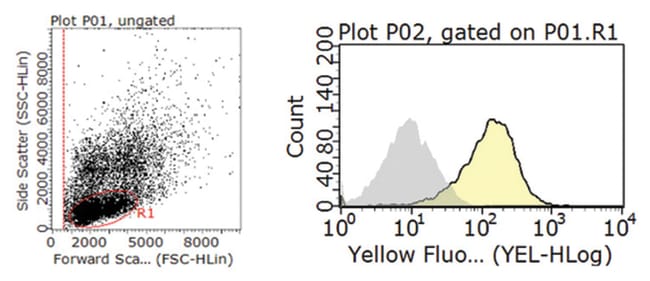
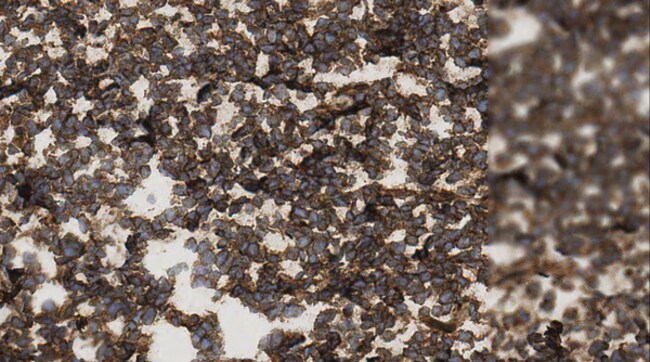
MilliporeSigma™ HLA Class I Antigens, Mouse, Unlabeled, Clone: W6/32,
Shop All MilliporeSigma ProductsDescription
Major histocompatibility complexes (MHCs), also called human leukocyte antigens (HLAs) in human, are cell surface molecules that play a major part of the immune system in all vertebrates by determining histocompatibility. The main function of MHCs is to bind and present peptide fragments derived from pathogens on the surface of antigen presenting cells. MHCs are divided into three classes, class I MHCs are heterodimers composed of a transmembrane alpha chain and a common extracellular beta subunit. The alpha chain contains three domains (alpha1, alpha2, and alpha3), with the alpha1 domain mediating interaction with the beta2 subunit. The alpha1 and alpha2 domains form the antigen-binding groove. Class II MHCs are heterodimers of two single transmembrane chains, alpha and beta, each contains two domains, with the N-terminal alpha1 and beta1 domain from each chain forming the antigen-binding groove. Class III molecules include several secreted proteins with immune functions, including components of the complement system, cytokines, and heat shock proteins. Each human cell expresses six MHC class I alleles (one HLA-A, -B, and -C allele from each parent). Classical MHCs present antigens to the TCRs of CD8+ T lymphocytes. Nonclassical molecules (class IB MHC) exhibit limited polymorphism, expression patterns, and presented antigens. This group is subdivided into a group encoded within MHC loci (e.g. HLA-E, -F, -G) and those not (e.g. ULBPs, Rae1, and H60).

Specifications
Specifications
| Antigen | HLA Class I Antigens |
| Applications | Affinity Purification, Flow Cytometry, Immunohistochemistry, Immunoprecipitation, Neutralization |
| Classification | Monoclonal |
| Clone | W6/32 |
| Concentration | Please refer to lot specific datasheet. |
| Conjugate | Unconjugated |
| Formulation | Purified mouse monoclonal antibody IgG2a in PBS without preservatives. |
| Gene | HLA-A, HLAA, HLA-B, HLAB, HLA-C, HLAC, HLA-E, HLAE |
| Gene Accession No. | P30443;Q96DW9;O19617;P13747 |
| Host Species | Mouse |
| Show More |
For Research Use Only. Not for use in diagnostic procedures.
Product Title
By clicking Submit, you acknowledge that you may be contacted by Fisher Scientific in regards to the feedback you have provided in this form. We will not share your information for any other purposes. All contact information provided shall also be maintained in accordance with our Privacy Policy.
Spot an opportunity for improvement?