Promotional price valid on web orders only. Your contract pricing may differ. Interested in signing up for a dedicated account number?
Learn More

Invitrogen™ HMGB1 Polyclonal Antibody
GREENER_CHOICE

Catalog No. PIPA579373
Change view
Click to view available options
Quantity:
100 μg
1 product options available for selection
Product selection table with 1 available options. Use arrow keys to navigate and Enter or Space to select.
Catalog No. Quantity
PIPA579373 100 μg
Use arrow keys to navigate between rows. Press Enter or Space to select a product option. 1 options available.
1 options
Catalog No. PIPA579373 Supplier Invitrogen™ Supplier No. PA579373
Add to Cart
Add to Cart

Rabbit Polyclonal Antibody

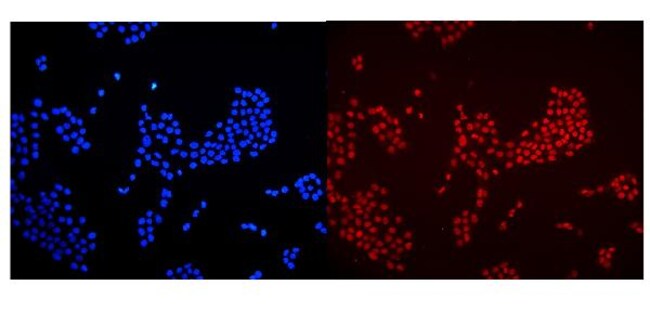
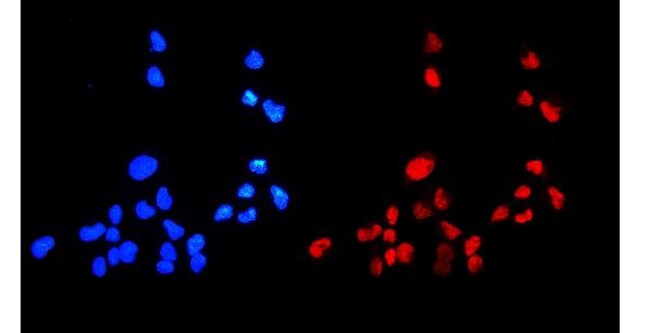
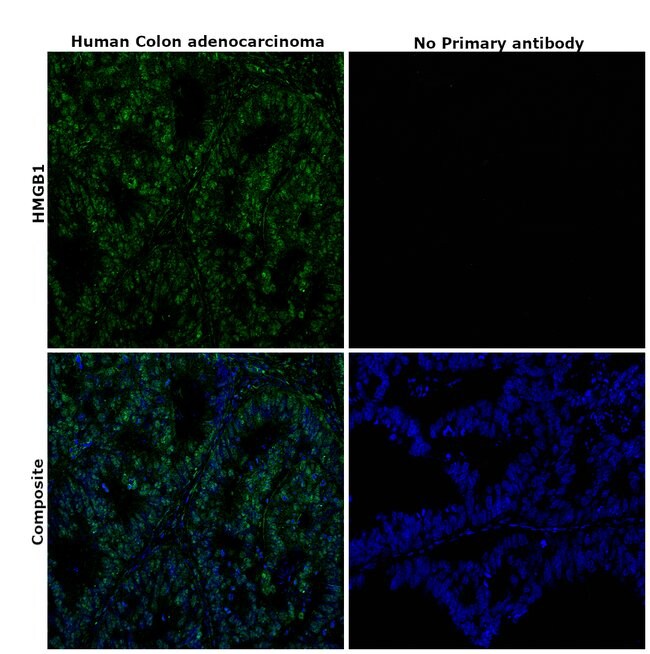
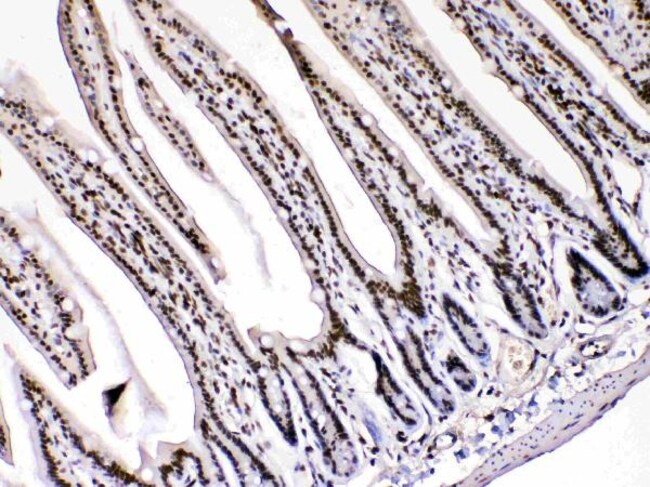
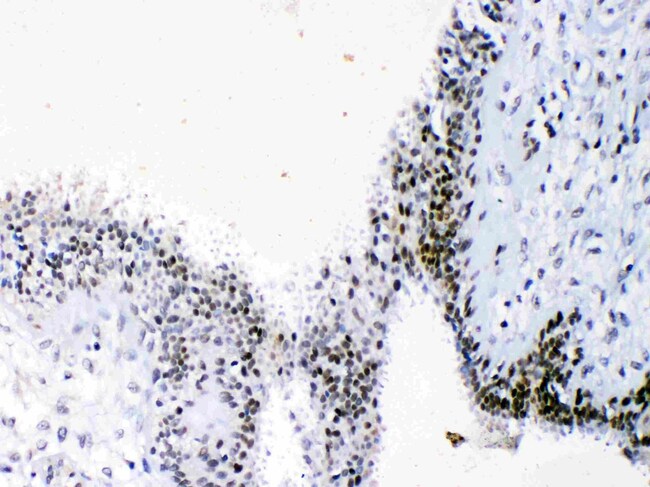
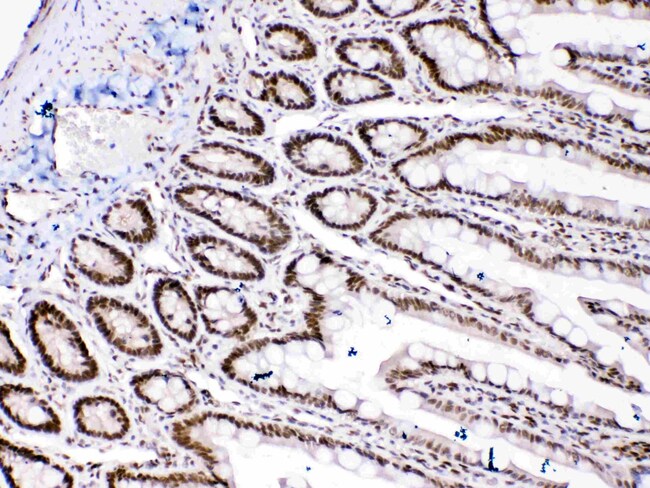
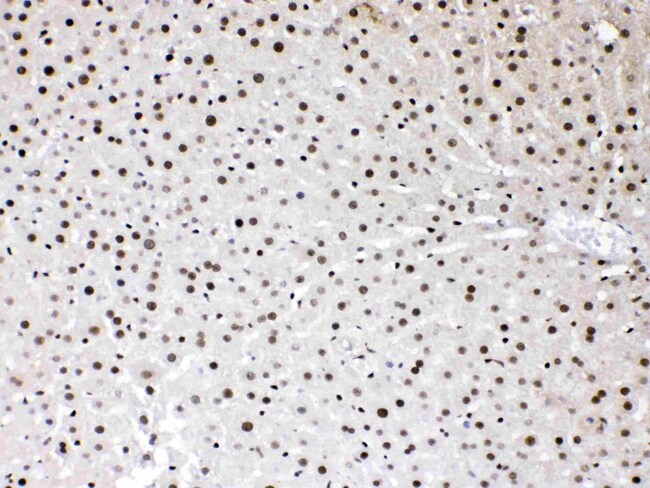
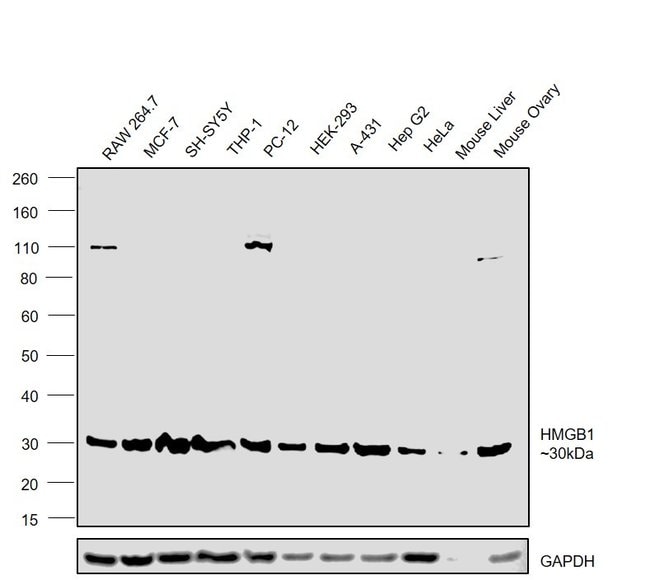
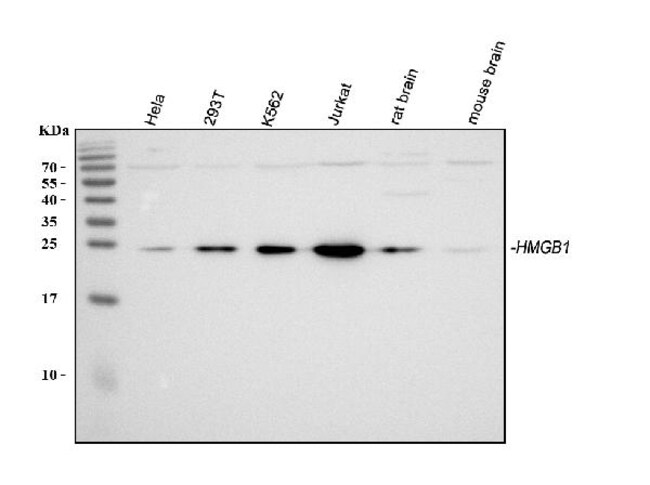
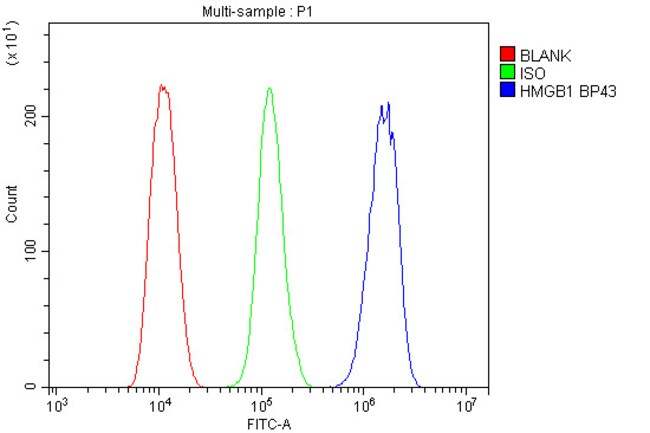
Reconstitute with 0.2 mL of distilled water to yield a concentration of 500 μg/mL. Positive Control - WB: human Hela whole cell, human 293T whole cell, human K562 whole cell, human Jurkat whole cell, rat brain tissue, mouse brain tissue, mouse RAW264.7 whole cell. IHC: mouse intestine tissue, mouse liver tissue, rat intestine tissue, rat liver tissue, human mammary cancer tissue, human placenta tissue,. ICC/IF: U20S cell, A431 cell. Flow: THP-1 cell.

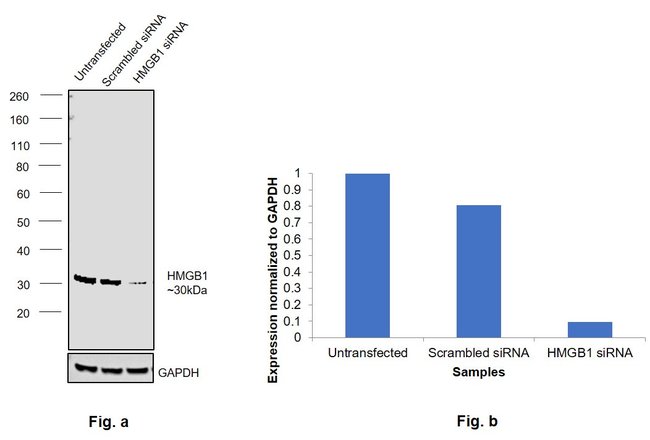
High-mobility group box 1 protein, previously known as HMG-1 or amphoterin, is a member of the high mobility group box family of non-histone chromosomal proteins. Human HMGB1 is expressed as a 30 kDa, 215 amino acid (aa) single chain polypeptide containing three domains: two N-terminal globular, 70 aa positively charged DNA-binding domains (HMG boxes A and B), and a negatively charged 30 aa C-terminal region that contains only Asp and Glu. HMGB1 is expressed at high levels in almost all cells. It was originally discovered as a nuclear protein that could bend DNA. Such bending stabilizes nucleosome formation and regulates the expression of select genes upon recruitment by DNA binding proteins. It is now known that HMGB1 can also act extracellularly, both as an inflammatory mediator that promotes monocyte migration and cytokine secretion, and as a mediator of T cell-dendritic cell interaction. Moreover, HMGB1 is reported that the level of HMGB1 is elevated during sterile tissue injury, infection, lethal endotoxemia or sepsis, collagen-induced arthritis, and ischemia-reperfusion induced tissue injury.
TRUSTED_SUSTAINABILITY

Specifications

Antigen HMGB1
Applications Flow Cytometry, Immunohistochemistry (Paraffin), Western Blot, Immunocytochemistry
Classification Polyclonal
Concentration 500 μg/mL
Conjugate Unconjugated
Formulation PBS with 4mg trehalose and 0.05mg sodium azide
Gene Hmgb1
Gene Accession No. P09429, P63158, P63159
Gene Alias Ac2-008; amphoterin; Amphoterin antibody; DEF; DKFZp686A04236; Heparin-binding protein p30; high mobility group 1; high mobility group 1 protein; high mobility group box 1; high mobility group protein 1; High mobility group protein B1; high mobility group protein HMG1; high-mobility group (nonhistone chromosomal) protein 1; high-mobility group box 1; high-mobility-group protein; Hmg1; HMG-1; HMG3; HMG3 antibody; hmgb 1; HMGB1; hmgb-1; HMGB1 protein; hypothetical protein; non-histone protein HMG1; p30; RCJMB04_15a21; RP11-550P23.1; SBP-1; Sulfoglucuronyl carbohydrate binding protein; unnamed protein product
Gene Symbols Hmgb1
Host Species Rabbit
Immunogen A synthetic peptide corresponding to a sequence at the C-terminus of human HMGB1 (124-154aa DVAKKLGEMWNNTAADDKQPYEKKAAKLKEK).
Purification Method Antigen affinity chromatography
Quantity 100 μg
Regulatory Status RUO
Primary or Secondary Primary
Gene ID (Entrez) 15289, 25459, 3146
Target Species Human, Mouse, Rat
Content And Storage -20°C
Product Type Antibody
Form Lyophilized
Isotype IgG
Show More Show Less
Product Title
Select an issue

By clicking Submit, you acknowledge that you may be contacted by Fisher Scientific in regards to the feedback you have provided in this form. We will not share your information for any other purposes. All contact information provided shall also be maintained in accordance with our Privacy Policy.